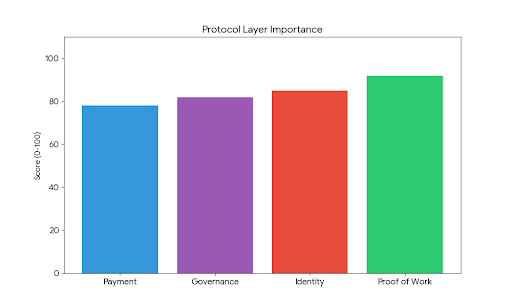
I’ve been thinking about Fabric Protocol for a few days now, not in a deep analytical way, but more like letting the idea sit in the back of my mind. Sometimes when I come across systems like this, I read about them once and move on. But this one stayed with me a bit longer. Maybe because it’s trying to connect robotics, computation, and governance in one place, which isn’t something you see every day. The idea of a global open network for building and coordinating robots feels both exciting and slightly overwhelming at the same time.
One thing that really caught my attention was the idea of verifiable computing. At first it sounded very technical, almost like one of those terms people use in whitepapers that most readers skip over. But the more I thought about it, the more interesting it became. The possibility that a robot’s computation could actually be verified, not just trusted blindly, changes how you think about machines making decisions. It makes the system feel a little more transparent, at least in theory.
Another part that made me pause was the use of a public ledger to coordinate data, computation, and rules. Usually when I hear “public ledger,” my mind immediately jumps to finance or digital currencies. Seeing it connected to robotics felt unusual at first. But the idea seems to be less about transactions and more about accountability and coordination. In a way, it feels like an attempt to make machine behavior more traceable.
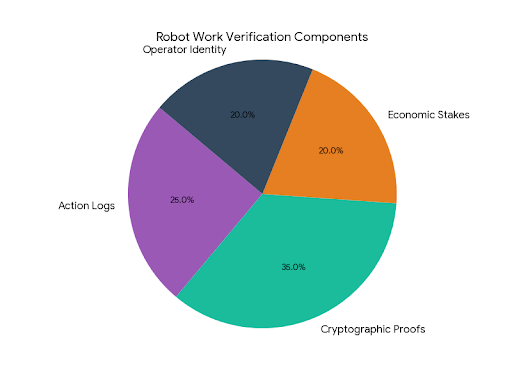
I also noticed that the protocol is supported by the Fabric Foundation. That detail made me stop for a moment. A non-profit structure can sometimes signal a focus on long-term collaboration rather than short-term profit. Of course, structures alone don’t guarantee good outcomes, but it still shapes how I look at the project. It suggests the intention might be to build something shared rather than something controlled by a single company.
The phrase “agent-native infrastructure” also stayed with me. It sounds simple, but it implies that the system is designed with autonomous agents in mind from the beginning. Instead of forcing robots into infrastructure built mainly for humans, the environment is designed to accommodate them naturally. That kind of thinking feels thoughtful, although I’m still curious how it works in practice.
At the same time, I can’t help thinking about how unpredictable the real world is. Robots don’t operate in perfect conditions. Sensors fail, environments change, and unexpected situations happen all the time. It makes me wonder how systems built around verification and structured rules deal with those messy realities. Formal systems are powerful, but the world outside a controlled environment rarely behaves neatly.
Another question that keeps coming back to me is about governance. If robots are going to interact with people and with each other at scale, someone has to define the rules. Fabric seems to be trying to embed governance directly into its infrastructure, which is interesting. But governance isn’t just technical it’s social, political, and sometimes emotional too. I’m curious how those layers will actually play out.
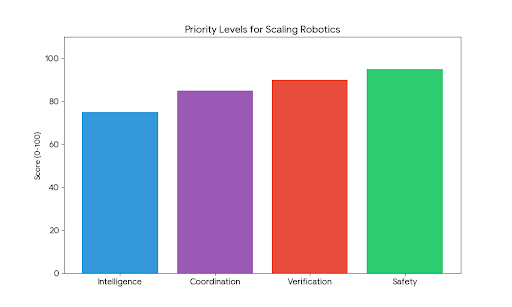
I do appreciate the modular approach the protocol seems to emphasize. Instead of treating robotics as one giant stack, it breaks things into components that can evolve over time. That feels closer to how technology usually grows in the real world. Systems change, tools get replaced, and new ideas slowly reshape the architecture.
At the same time, I know descriptions of systems can sound much cleaner than the reality of using them. Open ecosystems can be incredibly creative, but they can also become fragmented or chaotic. I don’t really know yet where Fabric will land on that spectrum. It’s probably something that will only become clear with time and real-world use.
For now, my thoughts are still pretty open. I’m mostly just observing and trying to understand how all these pieces fit together. There are still a lot of questions in my mind about adoption, governance, and how the technology performs outside controlled settings. But something about the direction is interesting enough that I keep checking back to see how it develops.