
The first time I read about Fabric Protocol, I stopped for a moment. We often hear about artificial intelligence, robotics, and blockchain as separate technologies shaping the future. But what caught my attention here was the idea of bringing them together into one open system. From my perspective, Fabric Protocol isn’t just another tech project—it’s an attempt to build the foundation for how humans and intelligent machines might collaborate in the future.
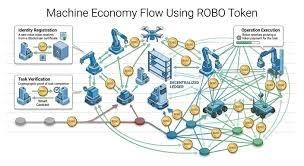
As I explored the project further, it became clear to me that Fabric Protocol is designed as a global open network that helps developers build and manage general-purpose robots. The initiative is supported by the non-profit Fabric Foundation, which focuses on creating a collaborative ecosystem rather than a closed platform controlled by a single company. This approach immediately stood out to me because innovation tends to grow faster when people are allowed to contribute openly.
At its core, Fabric Protocol connects data, computation, and governance through a public ledger. In simpler terms, it uses blockchain technology to coordinate how robots and AI systems operate. Instead of machines working in isolated systems, Fabric allows them to interact through a shared infrastructure that records actions and verifies processes. From what I’ve seen, this kind of transparency could play a major role in building trust between humans and intelligent machines.
One of the biggest challenges in modern robotics is reliability. Robots are becoming smarter and more autonomous, but the systems controlling them are often complex and difficult to verify. If a robot performs a task incorrectly or makes a decision that affects people, it becomes important to understand exactly what happened. Fabric Protocol addresses this challenge through something called verifiable computing.
What caught my attention about this concept is how it allows actions and computations to be proven rather than simply trusted. Instead of assuming that a machine performed a task correctly, the system can verify it through cryptographic processes recorded on a blockchain. From my perspective, this could be a powerful way to bring transparency and accountability to autonomous systems.
Another interesting aspect of Fabric Protocol is its modular infrastructure. Rather than building a single robotic system, the protocol focuses on creating a flexible framework where different components can evolve over time. Developers can plug in tools, data layers, or computing modules without needing to redesign the entire system. This flexibility makes the network adaptable and encourages experimentation.
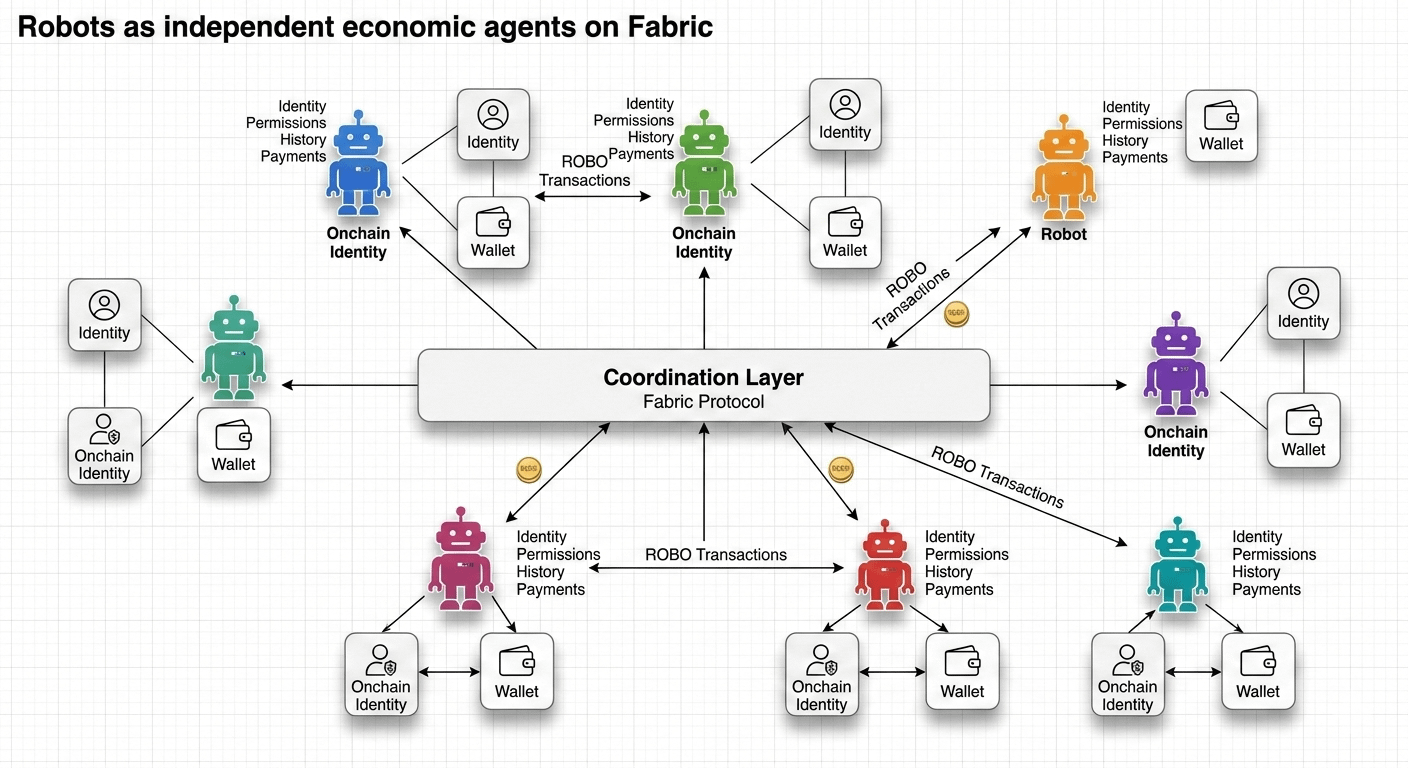
As I continued learning about the project, I noticed that Fabric Protocol is also designed for what the team calls “agent-native infrastructure.” In simple terms, this means the network is built not only for humans but also for intelligent agents—AI programs or robots capable of acting independently. These agents can interact with the network, verify data, access computational resources, and coordinate tasks with other agents.
This idea might sound futuristic at first, but in reality, we are already moving in that direction. Autonomous drones, warehouse robots, and delivery systems are becoming more common every year. The challenge now isn’t just creating these machines—it’s managing how they interact with each other and with humans safely. Fabric Protocol appears to be tackling this coordination problem at the infrastructure level.
From what I’ve observed, this type of system could unlock many real-world use cases. In logistics, for example, fleets of autonomous delivery robots could share data and coordinate routes more efficiently. In manufacturing, robotic systems could verify processes and ensure quality control through transparent records. Even in agriculture, machines could collect and validate environmental data while working collaboratively across farms.
What makes these possibilities exciting is that Fabric Protocol is designed as an open ecosystem. Instead of one company controlling the development of robotic infrastructure, the network encourages collaboration from researchers, developers, and organizations around the world. In my experience, open ecosystems often lead to faster innovation because people can build on each other’s ideas.
Another element that stood out to me is the governance model behind the protocol. As robots and AI systems become more integrated into society, there needs to be a clear framework for how they are regulated and updated. Fabric Protocol incorporates governance mechanisms that allow participants in the network to help shape its rules and evolution.
From my perspective, this kind of shared governance could be important for building long-term trust. If robotic systems are going to operate in public spaces, industries, or critical infrastructure, the decisions guiding those systems should be transparent and collectively managed.
The project also reflects a broader trend happening across the technology landscape. Artificial intelligence is advancing rapidly, but concerns about reliability, transparency, and control continue to grow. By combining blockchain verification with AI and robotics, Fabric Protocol attempts to address these concerns directly.
As I looked at the bigger picture, it became clear that the project isn’t just about building better robots. It’s about creating a digital coordination layer for machines. In the same way that the internet connects people and information, Fabric Protocol aims to connect intelligent machines and the systems they rely on.
This idea has huge potential implications. If robots and AI agents can operate within a transparent and verifiable network, it could significantly reduce the risks associated with automation. Businesses could deploy machines with greater confidence, and individuals could interact with intelligent systems knowing there is accountability behind them.
Of course, building such an ambitious infrastructure will take time. Robotics, AI development, and global regulatory systems evolve slowly, and real-world deployment requires careful testing and adaptation. But from my perspective, the direction Fabric Protocol is heading feels aligned with the future of technology.
As intelligent machines become more capable, the world will need systems that ensure they operate safely, transparently, and collaboratively. Fabric Protocol is attempting to build exactly that kind of foundation.
When I step back and reflect on the project, what stands out most is its long-term vision. Instead of focusing on a single product or application, Fabric Protocol is trying to create the infrastructure that could support an entire ecosystem of intelligent machines.
If that vision becomes reality, the impact could extend far beyond robotics. It could reshape how humans interact with technology, how machines collaborate with each other, and how trust is built in automated systems.
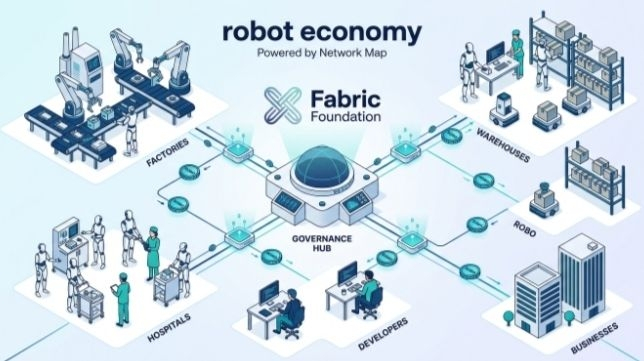
From where I stand, Fabric Protocol feels like an early step toward a future where humans and machines don’t just coexist—they work together through systems designed for transparency, cooperation, and shared progress. And if the project succeeds in building that foundation, it could play a meaningful role in shaping the next era of technological innovation.