
When you first hear about $ROBO, it is easy to assume it is just another token riding the robotics or AI narrative. But the project starts to make more sense when you stop looking at it through a typical market lens and focus on the problem it is trying to solve.
At the center of everything is Fabric. The idea behind it is fairly straightforward, yet surprisingly important. If machines are going to interact with each other in meaningful ways, they need a reliable framework for identity, context, and trust. Not in an abstract sense, but in a very practical one. A machine needs a way to recognize what another machine actually is, whether the data it receives is legitimate, whether a shared instruction or capability is authentic, and whether the action being requested should even be executed. Fabric is trying to build that layer.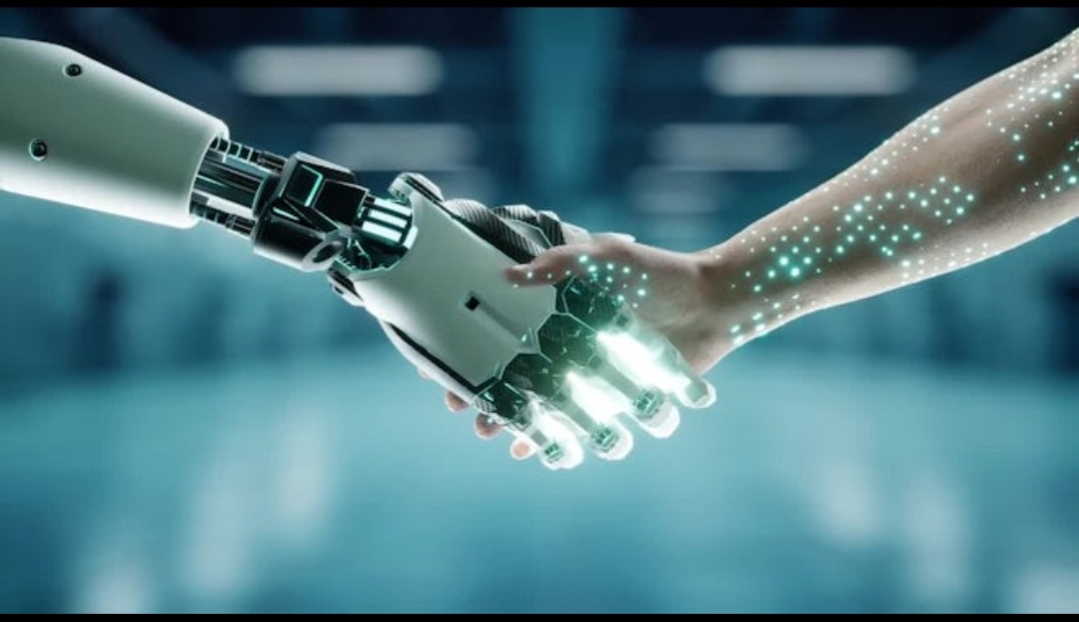
This is what gives the project more depth than many other crypto names that loosely attach themselves to robotics or artificial intelligence. Instead of borrowing the theme of automation just to create a narrative, Fabric focuses on a real coordination problem. As machines become more autonomous, the challenge is no longer only about what they are capable of doing. The bigger question becomes how they interact with each other in systems where trust cannot simply be assumed.
Humans rely heavily on informal signals. We read tone, reputation, and context almost automatically. Machines do not have that advantage. For them, trust has to be built directly into the structure of the system. That is where the role of $ROBO begins to matter.
The token is tied to a network designed around machine coordination, not just machine activity. That difference is important. Many projects talk about making AI more powerful, more efficient, or more scalable. Fabric is looking at something more fundamental. Before machines can cooperate at scale, they need a way to establish legitimacy with each other. Identity has to be verifiable. Context needs to travel with the data. Instructions should carry proof of where they came from.
Without that foundation, you do not really have a machine economy. What you get instead are isolated systems that cannot safely interact with one another.
What makes Fabric interesting is that it starts from this bottleneck. Rather than focusing on flashy applications or market narratives, it looks at the conditions that must exist for machine interaction to work in the first place. A robot or AI agent might be extremely capable on its own, but if there is no trusted framework around it, it becomes unreliable inside a larger network.
Fabric is trying to solve that by creating a system where machines can be understood and verified by other machines. In a sense, the goal is not to make machines smarter. It is to make them legible to each other.
That perspective also explains why the project often gets misunderstood. Calling it a robotics token misses the point. Calling it an AI token does not quite capture it either. A more accurate description is infrastructure for trust in machine-to-machine environments. It sits deeper in the stack than the flashy applications people usually focus on. But those deeper layers are often the ones that matter the most over time.
If you imagine a future where robots, autonomous agents, and connected devices constantly exchange data, tasks, and payments, the trust problem becomes unavoidable. Questions immediately start appearing. Who issued the instruction? Where did the data originate? Has the capability being transferred actually been verified? Is the other participant operating within the correct permissions?
These are not minor details. They determine whether large machine networks can function safely at all.
Fabric is built around that reality. It focuses on the invisible structure that needs to exist behind a machine economy. While most discussions center on hardware improvements, better AI models, or visible applications, Fabric is looking at the framework that allows all those pieces to interact reliably.
That is why $ROBO is worth paying attention to. The project is essentially betting that identity, trust, and verifiable context will become core infrastructure as machine ecosystems grow more complex. It may not sound as exciting as some of the louder narratives in the market, but it is a serious thesis.
Of course, the real test will always be execution. Ideas like this need to prove themselves in real environments, not just in theory. Fabric will need to show that a shared trust layer is genuinely useful when different machines, operators, and systems start interacting at scale.
Still, the direction is interesting. Instead of asking how machines can simply do more, Fabric is asking how they can participate in shared systems without breaking trust. And if machine coordination becomes a major part of blockchain in the coming years, the projects that matter most may not be the ones with the loudest stories, but the ones quietly building the infrastructure everything else depends on.