

I've been watching the AI landscape explode, but lately, I've noticed a major disconnect. Everyone is talking about digital intelligences—chatbots and creative tools—but very few are discussing the critical interface where AI actually meets the real world: physical robotics.
The complexity of orchestrating thousands of autonomous machines, ensuring they align with human intent, and maintaining a transparent network without central choke points is an enormous challenge. That’s why I was so compelled by the approach of the Fabric Protocol and its utility token, $ROBO.
The moment ROBO was listed on Binance (around March 4, 2026), it signaled a major shift. This isn't just another digital asset; it's the governance mechanism for what is essentially the first decentralized, on-chain OS for autonomous machines.
Here is my take on how ROBO holders are actively voting on the future of the robotics economy and why this model is the missing piece of the AI puzzle.
The Governance Gap in Physical AI
We face a critical moment. Traditional robotics are vertically integrated monopolies. One company builds the machine, writes the software, controls the data, and collects the revenue. As these machines gain autonomy through AI, this model becomes dangerous. It creates walled gardens and centralized control over critical real-world infrastructure.
The goal must be open-source coordination. We need decentralized physical infrastructure networks (DePIN) for robotics. Fabric addresses this by treating robots not as closed systems but as on-chain agents. But who sets the rules for these agents?
This is where the ROBO token and its governance come in. Holders don’t just speculate on value; they decide how the entire automated economy operates.
Phase 1: Validating the Network (Proof of Robot)
Before a robot can participate in the economy, the network must verify that the machine is what it claims to be. Fabric utilizes a concept known as Proof of Robot (PoR).
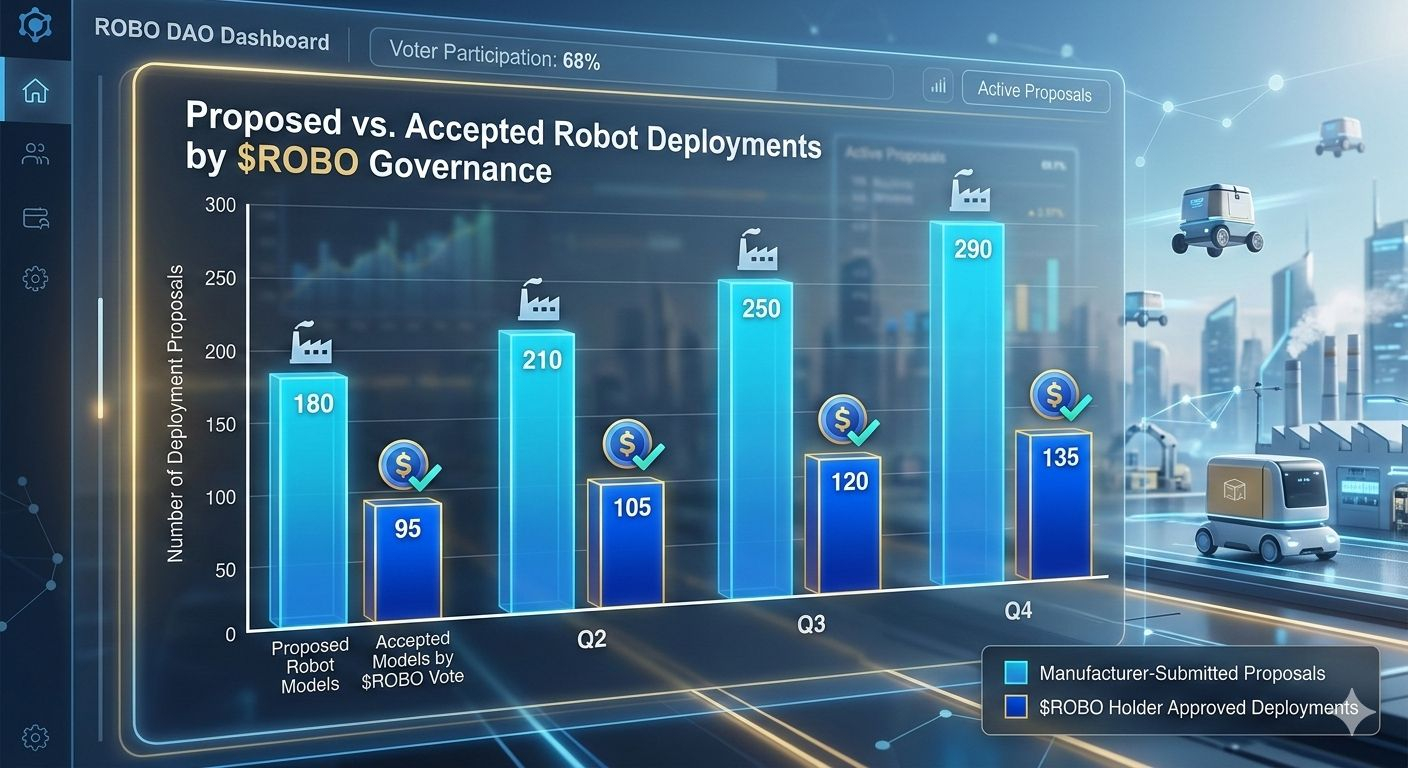
$ROBO holders define the technical standards and cryptographic proofs required for onboarding new hardware. When a new manufacturer submits a proposal for their "Model X" logistics bot to join the Fabric ecosystem, $ROBO holders vote to validate that the manufacturer is trustworthy and that their hardware meets safety standards.
This decentralized validation prevents rogue machines from disrupting the network.
Phase 2: Allocating Capital through the 'Robot Economy'
Once robots are active, they perform real-world tasks (warehouse picking, last-mile delivery, agricultural work). These robots generate revenue. A crucial function of ROBO governance is managing the protocol’s internal economy—determining how this value is distributed.
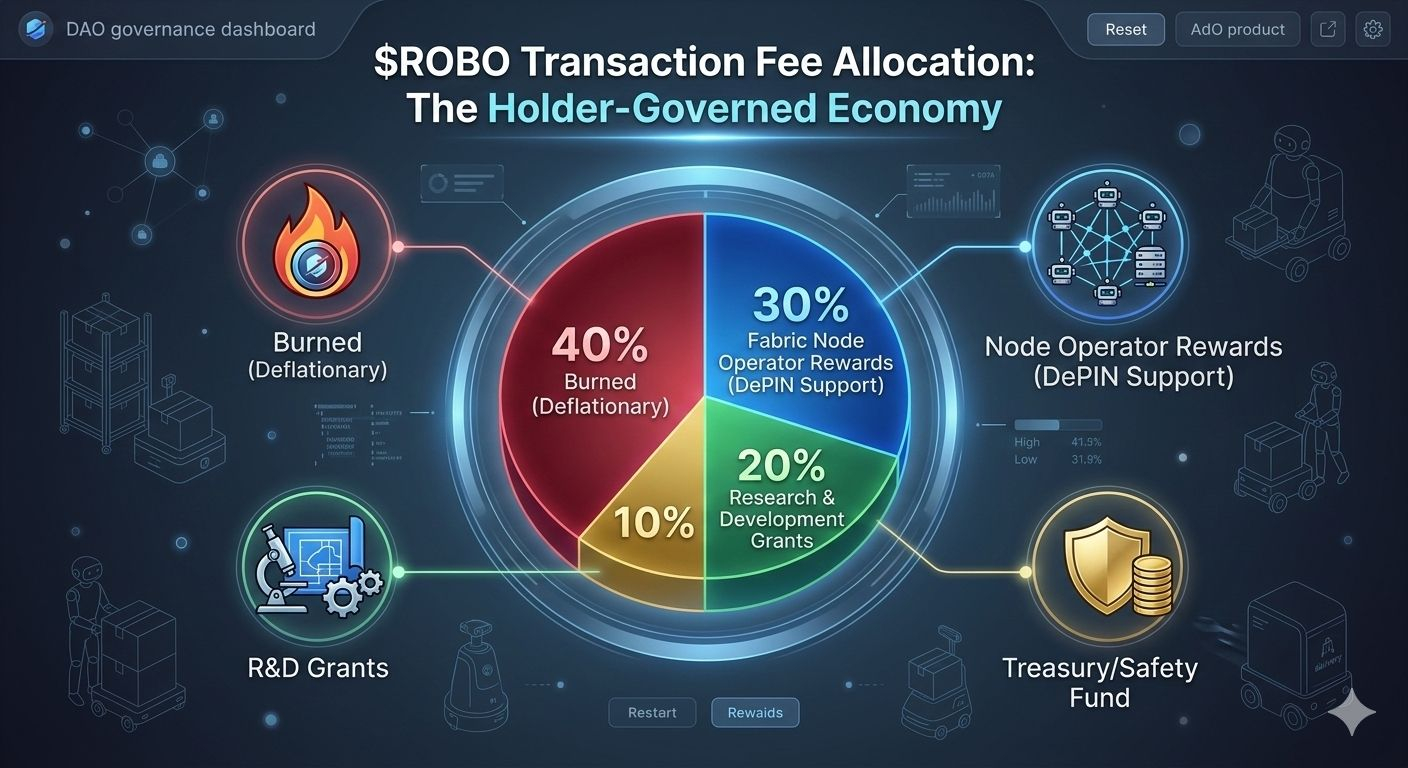
This isn’t simple token inflation; it's a dynamic fee-burning and incentivization model. Holders vote on parameters such as:
The percentage of transaction fees derived from robot work that is burned (providing deflationary pressure on $ROBO).
The incentives paid to node operators supporting the robotic mesh networks (the DePIN layer).
The grants issued for new open-source robotic libraries.
We are essentially building a decentralized central bank for machines, where the ROBO community sets the "interest rates" (inflation vs. burn) to maximize network growth and stability.
Phase 3: Solving the Human-Machine Alignment Problem
The most profound impact ROBO governance will have is on the question of alignment. As these robotic systems gain greater autonomy through sophisticated AI agents running on the Fabric protocol, ensuring they adhere to human intent becomes critical.
This isn't just about technical rules; it's about ethical and safety protocols.
If a swarm of agricultural robots on the network is accidentally damaging soil quality due to an efficiency-seeking AI update, ROBO holders can submit and vote on governance proposals that override the AI’s local objectives. They can establish core "alignment constraints"—immutable rules that the AI must prioritize above optimization.
We, as ROBO holders, are essentially programming the first laws of a decentralized, collective robotics operating system. By staking our tokens, we signal which alignment protocols (e.g., safety constraints over speed; privacy preservation over data collection) are mandatory for any robot seeking access to the Fabric network's economic layer.
This is decentralized human oversight in its purest form.
Why the Market is Paying Attention (The Listing Effect)
The listing of ROBO on global exchanges, like Binance, was a seminal event because it converted this entire model from a theoretical whitepaper into a live, participating ecosystem. It wasn’t just about providing liquidity for speculation; it democratized access to governance.
The narrative of "AI and Robotics" is the engine, but DePIN is the physical track. By participating in ROBO governance, we aren't just betting on a protocol; we are actively voting on whether the future of automation will be defined by walled monopolies or by a collective, on-chain human consensus.
For me, being a ROBO holder is no longer optional if you want a say in how the physical world merges with the Age of AI. #robo #ROBO #Robo