
When Machines Start Earning: Exploring Fabric Protocol and the Future of Machine Economies I find myself thinking about a strange question: if a robot completes a task and creates real value, who actually earns the money? At first, the question sounds unusual. But as artificial intelligence and robotics continue to evolve, it becomes increasingly realistic.
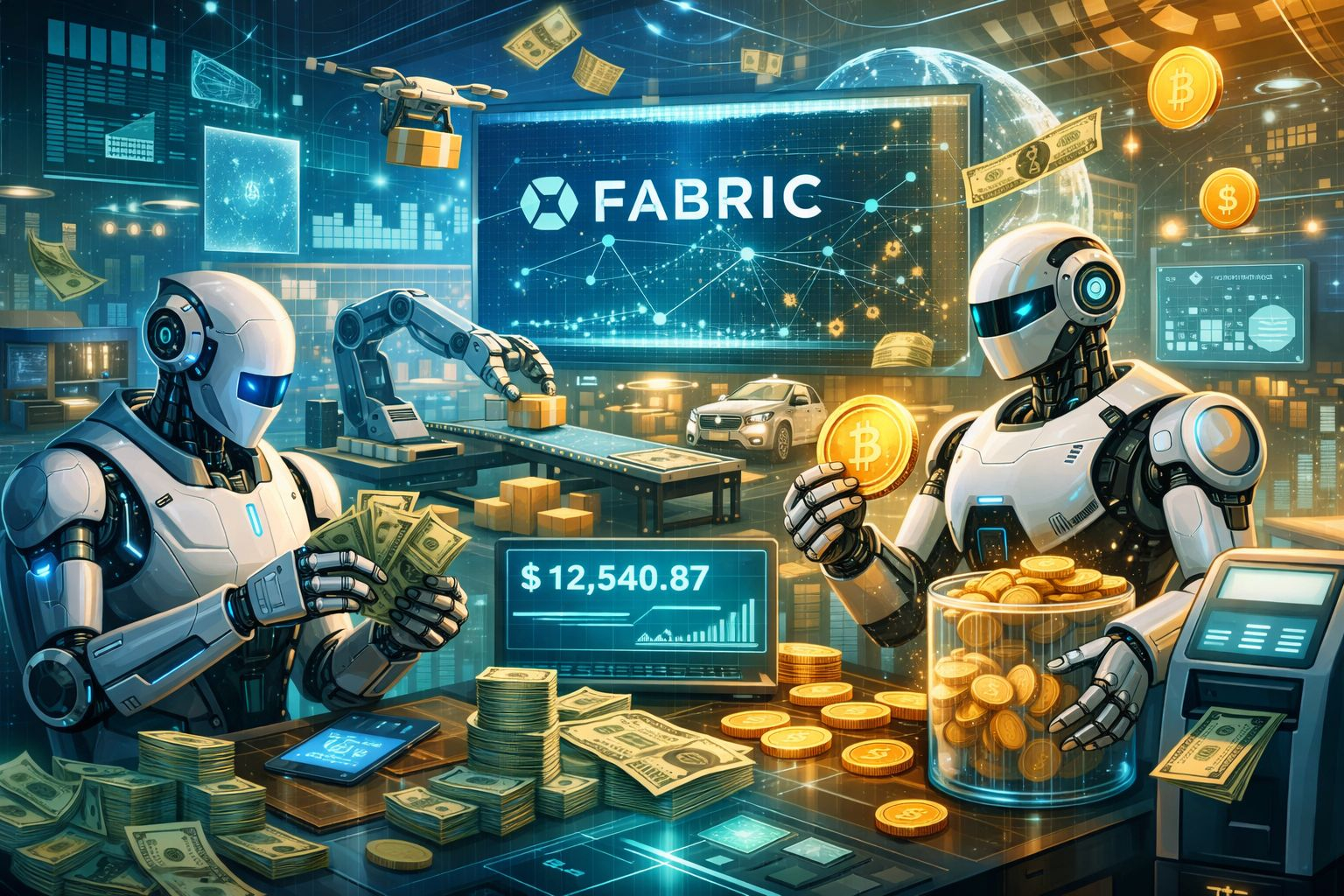
In today’s systems, when a machine performs a task, the payment rarely goes to the machine itself. Instead, the reward usually ends up in a company’s bank account, a developer’s wallet, or a platform that manages the service. In other words, the machine does the work, but the economic structure still revolves around humans.
As automation grows, this gap becomes more visible.
This is where projects like Fabric Protocol begin to explore a different model. The idea is to create an open network where robots, AI agents, and autonomous systems can operate within a shared infrastructure. Instead of existing as isolated machines, these systems could interact with one another, exchange data, and coordinate tasks inside a broader digital environment.
But once machines start interacting inside a network, another question naturally appears: how would the economic layer of that system actually work?
This is where $ROBO enters the discussion.
Within the Fabric ecosystem, the token is designed to function as a coordination mechanism for activity across the network. If an autonomous system contributes data, performs computation, or provides services, the network’s token could serve as the incentive and payment layer supporting those actions.
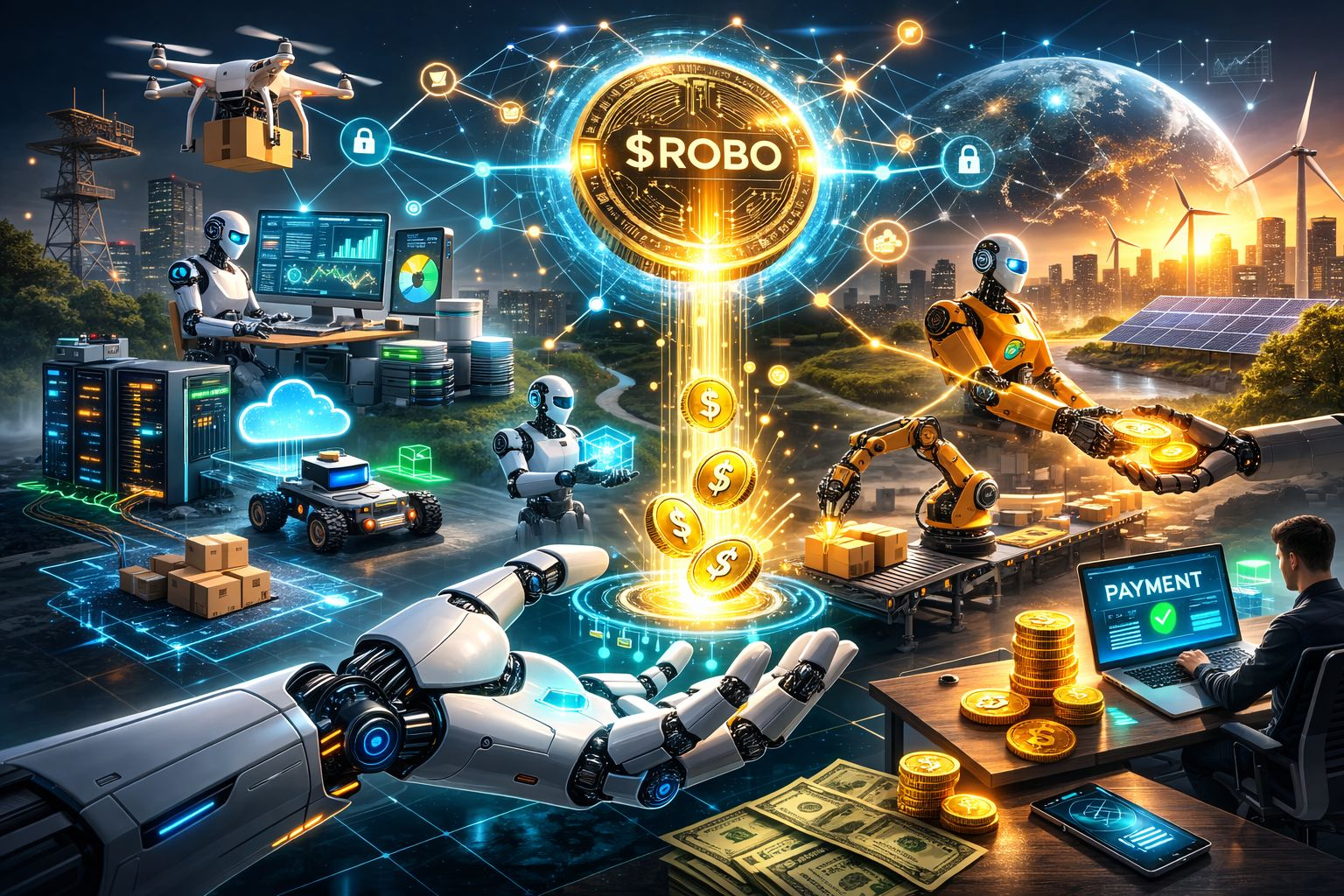
Another key idea within the protocol is verifiable computing. When machines collaborate in decentralized systems, their outputs must be trustworthy. Fabric proposes mechanisms that allow robotic work and computational results to be recorded and verified. In this framework, the protocol’s token could encourage participants to validate tasks, confirm data accuracy, and maintain the reliability of the system.
Looking further ahead, the concept of a machine-to-machine economy becomes particularly interesting.
Imagine a logistics warehouse where one robot organizes goods, another collects environmental data, and an AI system optimizes the entire workflow. If these systems operate within the same network, they could potentially exchange services directly with each other. In such a scenario, a native digital token could function as the medium through which machines automatically compensate one another.
However, an important question still remains.
Will large-scale robotic networks actually emerge where machines interact economically without human intermediaries? Or will robotics continue to develop mainly within closed ecosystems controlled by companies and centralized platforms?
The answer is still uncertain.
What makes Fabric Protocol interesting is not only the technology it proposes, but the broader question it raises about the future of automation. If machines eventually become independent participants in digital infrastructure, systems like this could become necessary.
And if that future arrives, the economic layer represented by $ROBO may end up playing a much more practical role than it does today.