
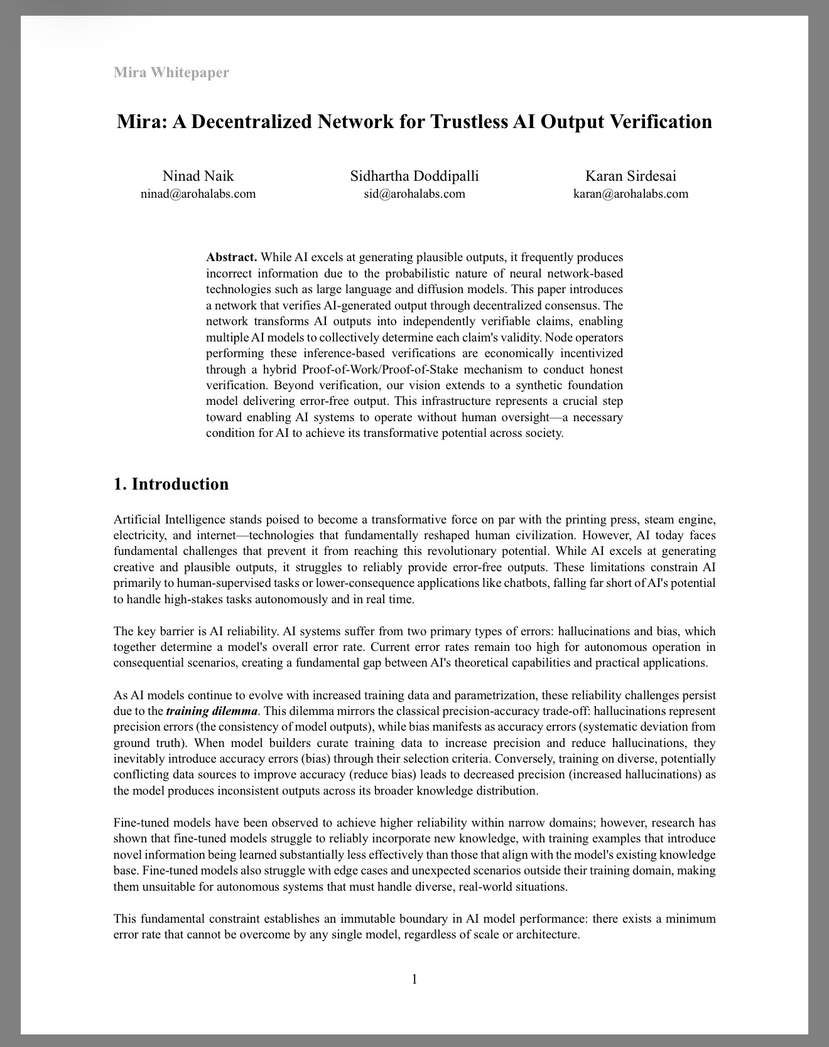
After going through more than 100 research reports and analyses on $MIRA , studying the whitepaper, examining what the project is building, and reviewing the background of the founders and investors behind it, I started to form a clearer understanding of what Mira Network is trying to accomplish.
What stood out to me the most is the core problem Mira Network is attempting to solve.
We are currently living in the era of mass AI adoption. AI tools are everywhere. People use them for writing, coding, research, problem-solving, and even everyday tasks. Businesses are integrating AI into their products, and developers are building applications on top of large language models at an incredible pace.
But despite this explosive growth, there is a fundamental problem that still hasn’t been properly solved.
There is no reliable system to verify the output produced by AI.
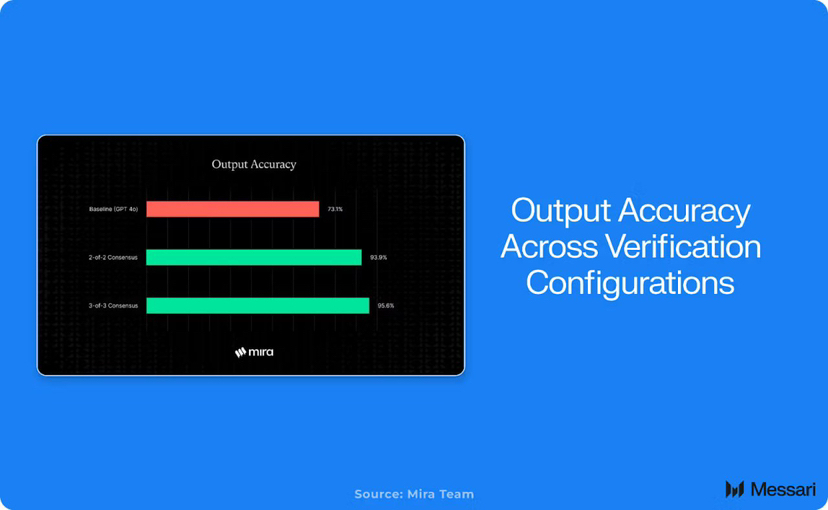
AI models can generate impressive responses, but they can also produce incorrect information, hallucinations, biased answers, or noisy data. In many cases, users simply accept the output without knowing whether it is accurate or trustworthy.
For researchers, developers, companies, and everyday users, this creates a serious issue.
How do you know if an AI-generated answer is actually correct?
Right now, most people don’t have a clear way to verify it.
This is exactly the gap that Mira Network is trying to address.
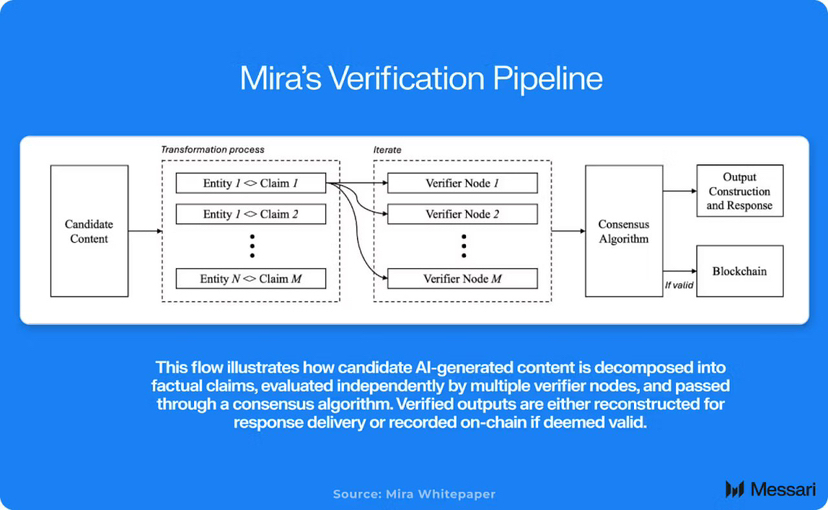
Mira Network is building what can be described as a decentralized AI verification layer. In simple terms, the idea is to create a system where AI outputs can be independently verified by multiple nodes before the information is considered reliable or trusted.
Instead of relying on a single model’s response, the system introduces a verification process where multiple participants validate the results. By doing this, the network can increase confidence in AI-generated outputs and reduce the risk of misinformation.
If implemented successfully, this type of infrastructure could play a very important role in the future AI ecosystem.
The approach Mira Network is exploring could potentially help:
• increase trust in AI-generated information
• reduce hallucinations and incorrect outputs
• create a verification layer for AI-driven applications
• provide accountability for AI systems
As AI adoption continues to grow globally, the demand for verification, trust, and reliability will likely become much more important.
AI systems are already influencing research, business decisions, software development, and digital products. As these systems become more deeply integrated into society, the need for trust infrastructure around AI will only increase.
Looking at the current ecosystem metrics, Mira Network already shows some interesting early traction.
Across BNB Smart Chain and Base, the project currently has around 16,000 holders. The network’s Total Value Locked (TVL) is estimated to be between $20M and $25M, which suggests that there is already some level of participation and capital flowing into the ecosystem.
Another notable metric is the user base connected through Klok App, which has reportedly reached over 4.5 million users. If that level of adoption continues to grow, it could provide an important gateway for onboarding more participants into the Mira ecosystem.
At the moment, the project’s market capitalization is roughly around $21M, which places it in the smaller-cap category within the broader crypto market.
Considering how rapidly the AI sector has been expanding over the past few years, a project focused on AI verification infrastructure operating at this valuation could still have room to grow if adoption increases and the technology proves useful.
From a technical analysis perspective, the chart is also starting to show some interesting behavior.
On the daily timeframe, the price has been consolidating heavily around the $0.085 level. What’s particularly noticeable is the presence of repeated long lower wicks, which typically signal that buyers are stepping in whenever the price dips into that area.
At the same time, selling pressure appears to be gradually decreasing while the price continues to compress into a tighter range. This kind of structure often forms when the market is building a base before a larger move.
If momentum returns and buyers manage to push the price higher, the $0.15 zone could potentially become the next key level to watch.
Beyond the technology and market structure, another aspect worth paying attention to is the team and investors behind Mira Network.
The project is led by Karan Sirdesai, the Co-Founder and CEO. Before starting Mira, he worked at Accel, where he focused on investments in AI and crypto projects, and he also gained experience at Boston Consulting Group.
The CTO, Sidhartha Doddipalli, previously served as CTO at Stader Labs, a liquid staking protocol that once surpassed $1 billion in Total Value Locked across multiple blockchains.
The product team also includes Ninad Naik, who has previously held product leadership roles at Uber and Amazon, bringing additional experience from large-scale technology companies.
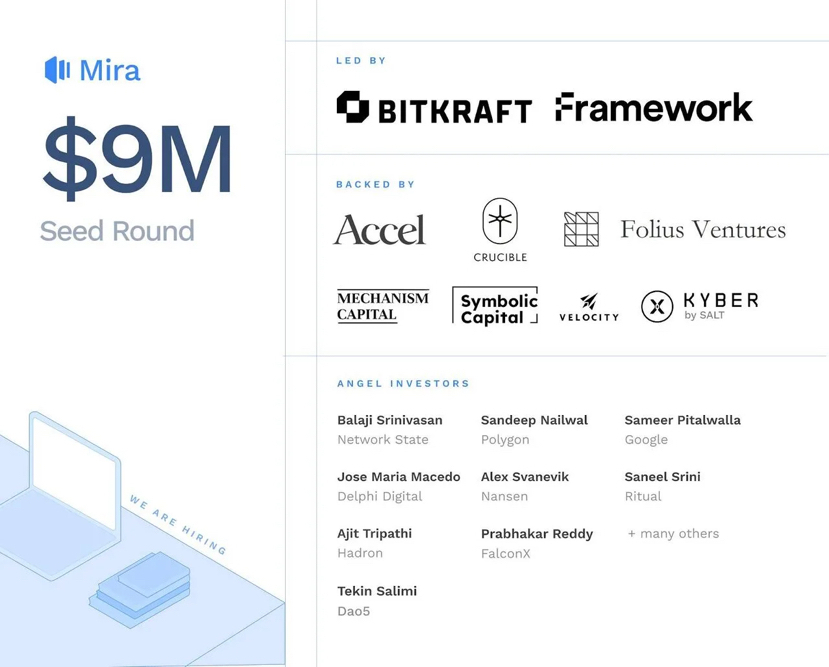
On the investment side, Mira Network has raised approximately $9 million in seed funding. The funding round was led by BITKRAFT Ventures and Framework Ventures, with participation from several well-known firms including Accel, Mechanism Capital, Folius Ventures, and SALT Fund.
When looking at both the founding team and the list of investors, it’s clear that the project has backing from several established names within the crypto, AI, and technology ecosystem.
This type of support can provide more than just capital. It can also bring industry connections, strategic guidance, and long-term ecosystem development opportunities.
Of course, it’s important to remember that the crypto market is highly volatile, and every project carries risks. Not every promising idea ends up achieving large-scale adoption.
However, when considering the AI verification narrative, the growing ecosystem metrics, the experienced team, and the relatively small market capitalization, Mira Network is definitely a project that deserves attention.
For now, it remains one of those early-stage projects worth keeping on the watchlist as the intersection between AI and blockchain infrastructure continues to evolve.