
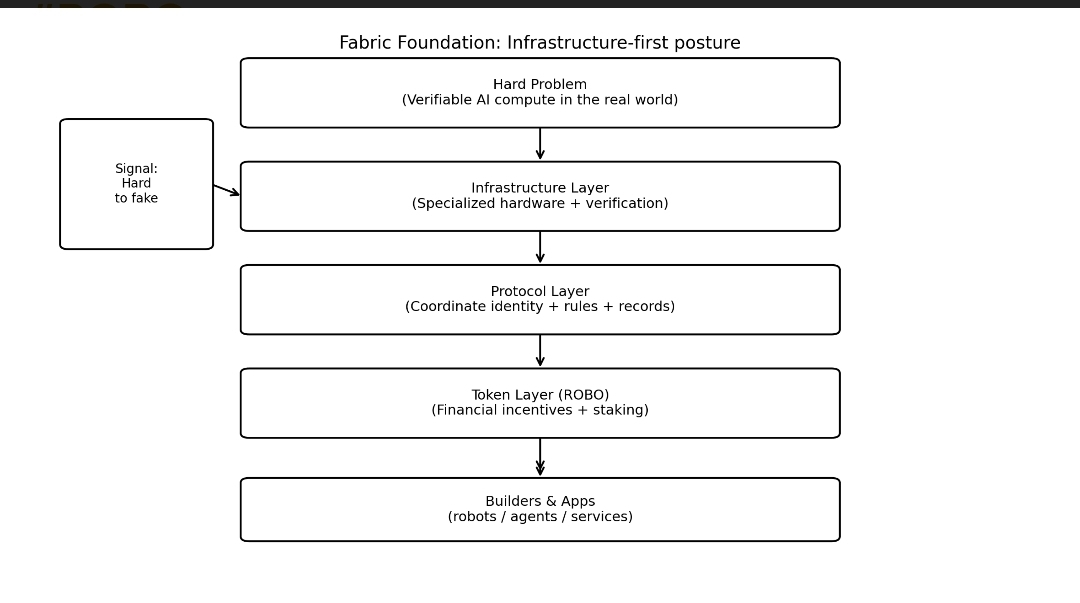
I originally assumed most robotics tokens were just another narrative. You know the type. Big vision about machines and automation but not much explanation about how the system actually works.
Then I read a section explaining “robot identity and payments” inside the Fabric ecosystem and that’s when the idea started making more sense.
Because the moment robots begin operating outside labs another problem appears.
How do those machines interact with economic systems.
Humans already have infrastructure for that. We have bank accounts, passports, payment networks and legal identities. Those systems allow us to send money, verify who we are and coordinate work across organizations.
Robots don’t have that infrastructure.
A robot cannot open a bank account.
A robot cannot hold a passport.
A robot cannot sign into traditional financial systems.
But if machines start delivering services or performing tasks they still need a way to receive payments, verify actions and coordinate activity.
That’s the gap “Fabric Protocol” is trying to address.
Instead of only focusing on building smarter robots the project focuses on “the coordination layer that allows robots and humans to interact inside open networks”.
Inside this system machines operate through “onchain identities and crypto wallets” rather than traditional accounts.
Every interaction inside the network — identity verification, coordination, payments — happens using “$ROBO”.
So the token isn’t just a speculative asset. It becomes the utility layer powering robot activity inside the protocol.
Another piece that stood out to me is the staking mechanism.
Participants who want to access certain network functions or help coordinate robotic activity need to stake “ROBO tokens”.
That staking doesn’t represent ownership of robots. It simply aligns incentives between contributors and developers interacting with the network.
Builders who want to create applications on top of Fabric also need to buy and stake ROBO which ties ecosystem growth directly to the network token.
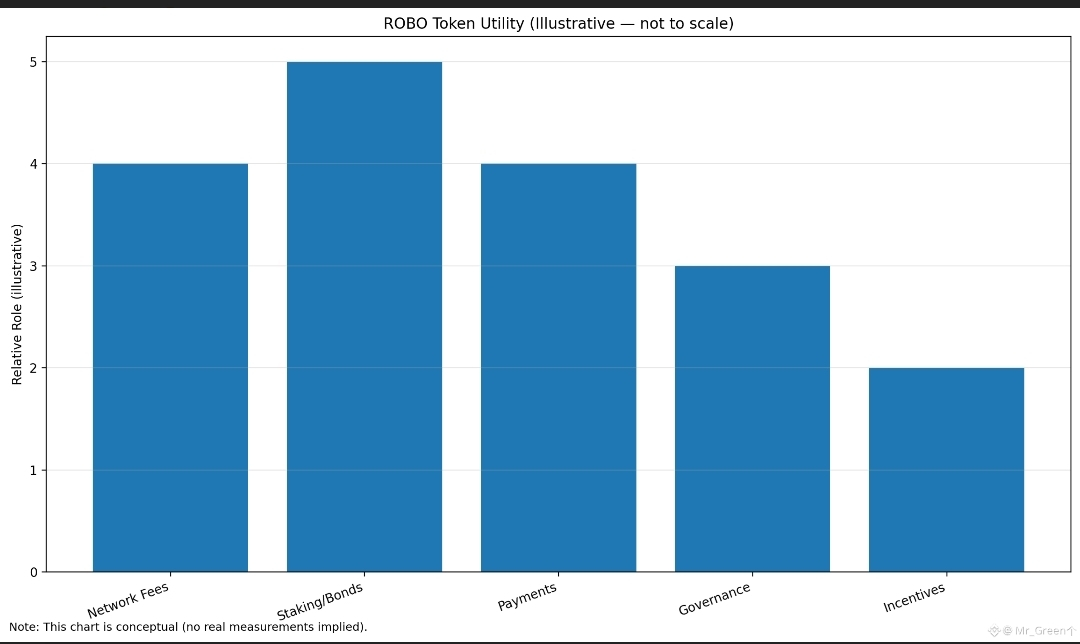
Over time that creates an environment where robotic actions, verification and coordination can happen through shared infrastructure rather than closed company platforms.
And that part feels important.
Because if robotics really expands across logistics infrastructure and services the biggest challenge might not be intelligence.
It might be “coordination between machines and human systems”.
Identity for robots.
Payments for robotic work.
Verification of machine actions.
Governance over how robots operate in networks.
Fabric Protocol is basically building the rails for that future.
Instead of asking “how smart robots can become” the project asks a different question.
“How do robots actually participate in the economy once they exist at scale”
And once you look at robotics through that lens the role of “$ROBO” becomes much easier to understand.