


Cryptocurrency markets are known for their volatility and rapid price movements. Over time, these markets have demonstrated recurring cycles that include periods of rapid growth followed by corrections or consolidation. Understanding crypto market cycles can help observers analyze long-term trends and identify patterns that have shaped the development of digital assets.
While each cycle is unique, historical patterns often provide valuable insights into how the crypto market evolves.
What Are Crypto Market Cycles?
A market cycle refers to the sequence of phases that financial markets move through over time. In the cryptocurrency industry, these cycles are typically characterized by periods of strong price increases, followed by corrections and accumulation phases.
Major digital assets such as Bitcoin have experienced several notable market cycles since their early development.
These cycles often attract new participants during growth phases while testing long-term investors during downturns.
Common Phases of Crypto Market Cycles
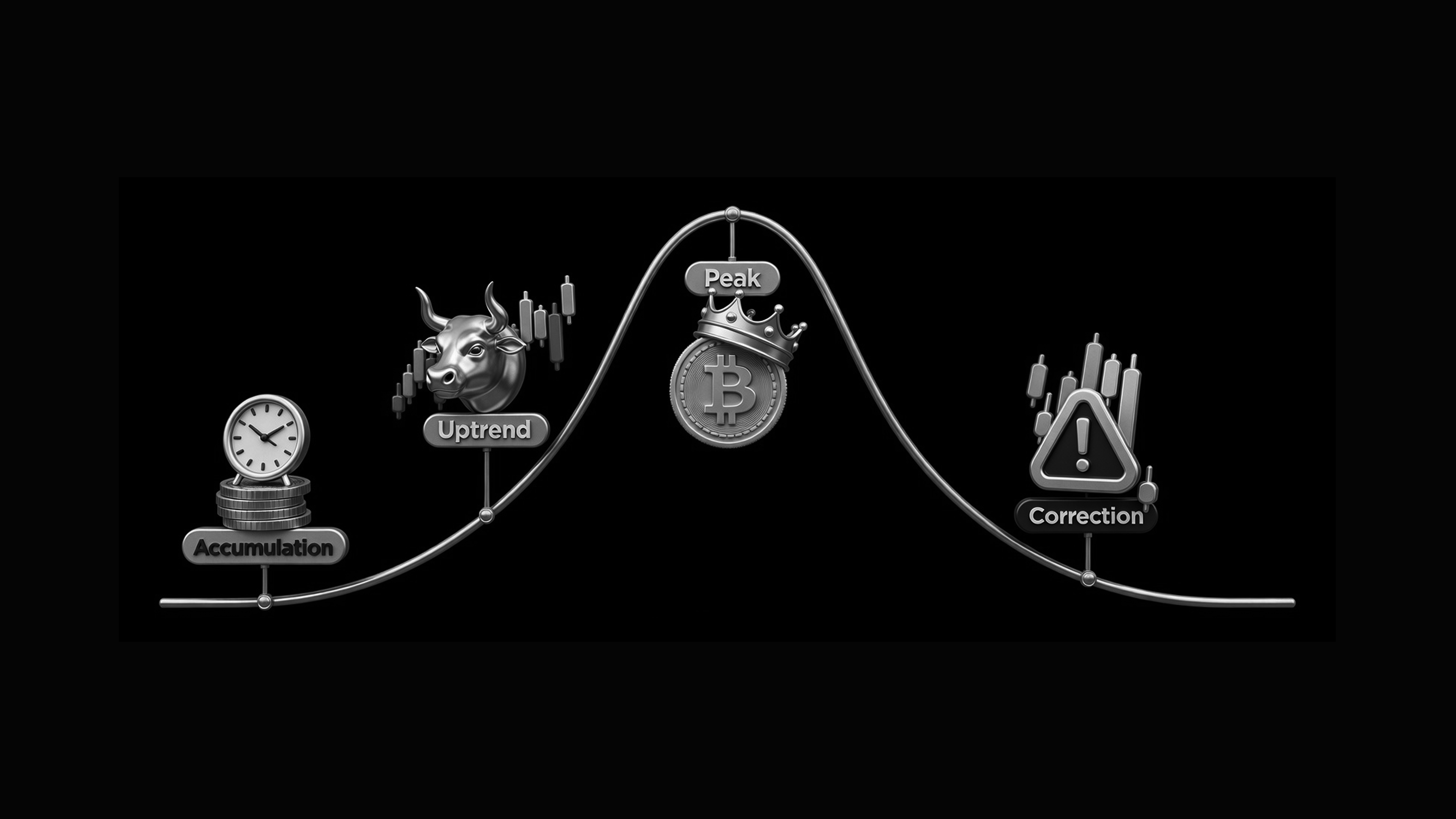
Although crypto cycles can vary in duration and intensity, they often follow several recognizable stages.
Accumulation Phase
During this period, market activity remains relatively quiet while long-term participants gradually accumulate assets.
Expansion Phase
Growing interest from investors leads to rising prices and increased trading activity.
Peak or Distribution Phase
Market enthusiasm reaches high levels, often accompanied by significant price volatility.
Correction Phase
Prices decline as market sentiment shifts and participants reassess valuations.
These phases collectively shape the broader structure of crypto market cycles.
Factors That Influence Market Cycles
Several factors can influence the timing and intensity of crypto market cycles.
Technological Developments
New blockchain innovations or platform upgrades may drive increased market interest.
Macroeconomic Conditions
Global financial trends and monetary policies can influence investor behavior.
Market Liquidity
The availability of capital entering the crypto ecosystem plays an important role.
Network Events
Events such as supply adjustments in blockchain networks can affect market dynamics.
For example, supply mechanisms within networks like Ethereum may influence long-term token economics.
Role of Investor Psychology
Market psychology often plays a major role in the formation of crypto cycles. As prices rise, positive sentiment can attract new investors, which further increases demand.
Conversely, during market corrections, fear and uncertainty may lead to reduced trading activity and lower prices.
Understanding these behavioral patterns can help explain why markets sometimes move beyond purely fundamental factors.
Lessons From Historical Cycles
Historical crypto cycles have demonstrated several recurring characteristics:
Rapid growth during innovation periods
Increased public attention during price rallies
Market corrections following speculative activity
Long consolidation periods before the next growth phase
These patterns highlight the dynamic nature of digital asset markets.
Limitations of Cycle Analysis
While historical patterns can offer useful insights, predicting exact market movements remains extremely difficult. Crypto markets are influenced by many variables, including technological changes, regulatory developments, and global economic trends.
As a result, past cycles do not guarantee future outcomes.
The Long-Term Evolution of Crypto Markets
Despite periodic volatility, the cryptocurrency industry has continued to evolve through multiple market cycles. Each cycle has introduced new technologies, infrastructure improvements, and broader adoption of blockchain systems.
As the ecosystem matures, future cycles may reflect deeper integration between blockchain networks and the global financial system.
--
Disclaimer: The information provided herein is offered "as is" for illustrative and informational purposes only, with no representation or warranty whatsoever. This information is not intended to vouch for financial, legal, or other professional advice, nor does it endorse the purchase of any particular product or service.