

The first time I tried to understand Fabric’s roadmap, I expected something familiar.
A few phases. A token launch. Maybe some ecosystem grants. Partnerships. The usual structure most crypto projects follow when they talk about “the future.”
But the more I looked at it, the less it felt like a marketing timeline.
It felt more like an infrastructure plan.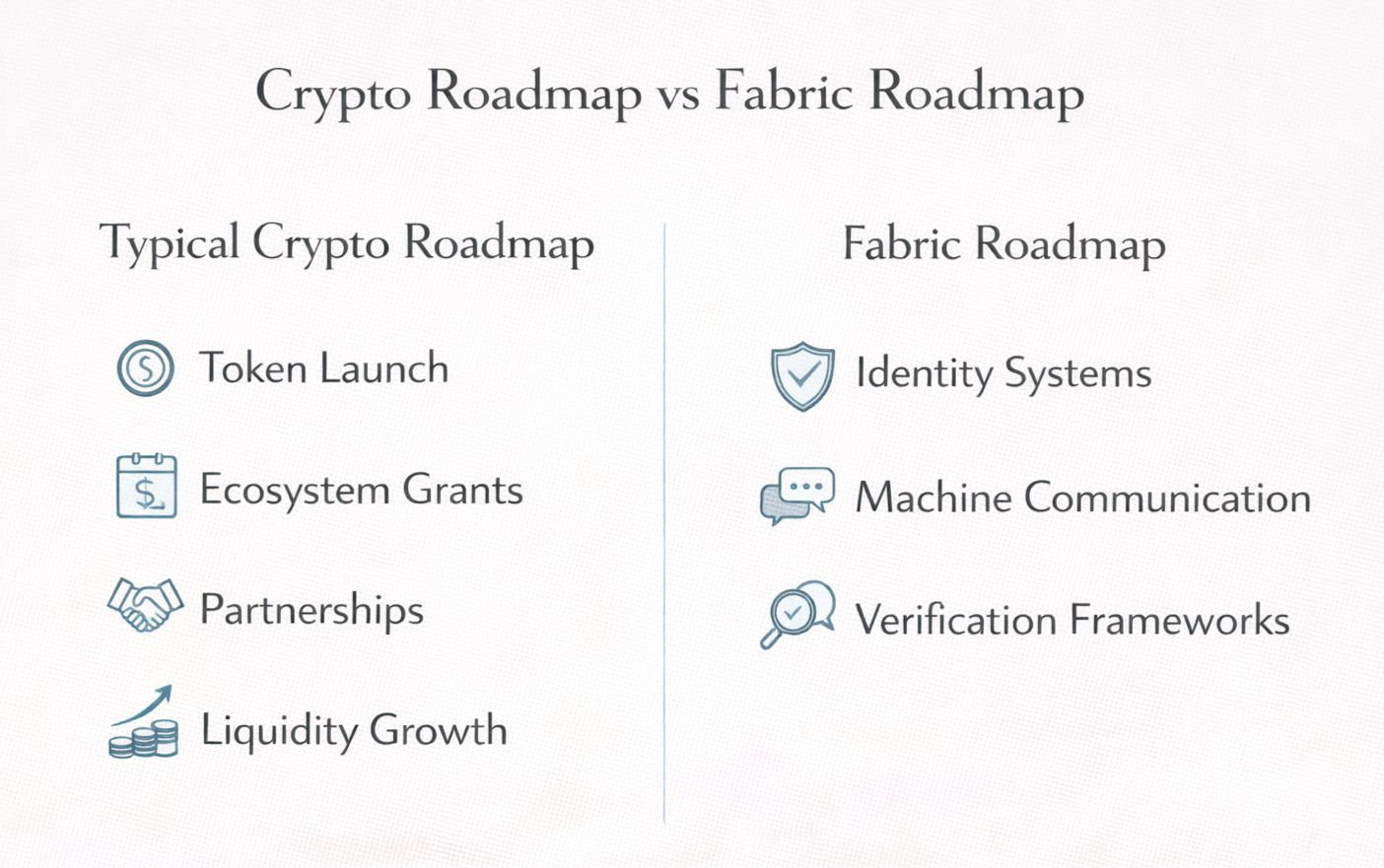
That difference raised a question almost immediately: what exactly is Fabric trying to build step by step?
Most roadmaps in crypto are built around growth milestones. More users. More liquidity. More integrations. Fabric’s roadmap seems to revolve around something quieter — coordination systems.
And that’s where it starts to get interesting.
The early phases seem focused on building the basic layers of the network. Identity systems. Communication between machines. Verification frameworks. At first glance, those pieces don’t sound flashy. But they raise an important question.
If autonomous systems are supposed to interact economically, what actually allows them to trust each other?
Fabric appears to treat that problem as foundational. Before machines can exchange value or coordinate tasks, they need identities, rules, and verification mechanisms. Without that, the entire concept of a machine-driven ecosystem falls apart.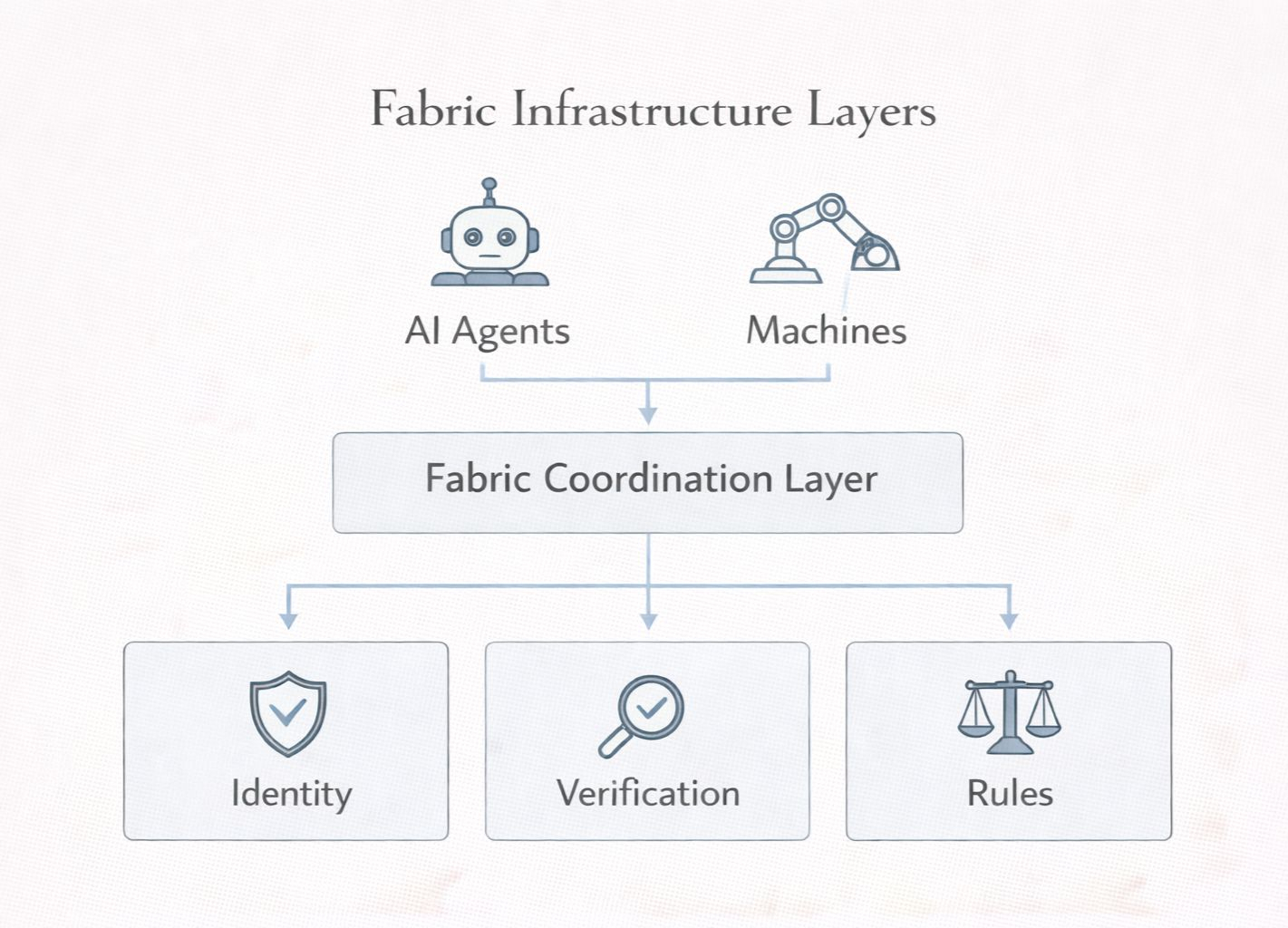
But another question naturally follows.
Is the world actually ready for that infrastructure yet?
Right now most AI systems are still tightly controlled by companies and platforms. Even bots and automated services usually operate within centralized environments. So when Fabric builds tools for machine-to-machine coordination, it’s hard not to wonder:
Is this infrastructure early… or necessary?
The roadmap suggests the team is thinking in layers.
First comes the network foundation — the core protocol that allows machines and agents to exist within a shared environment. Then comes the coordination tools that allow them to interact, exchange data, and verify outcomes.
Only after those layers exist does the ecosystem start to make sense.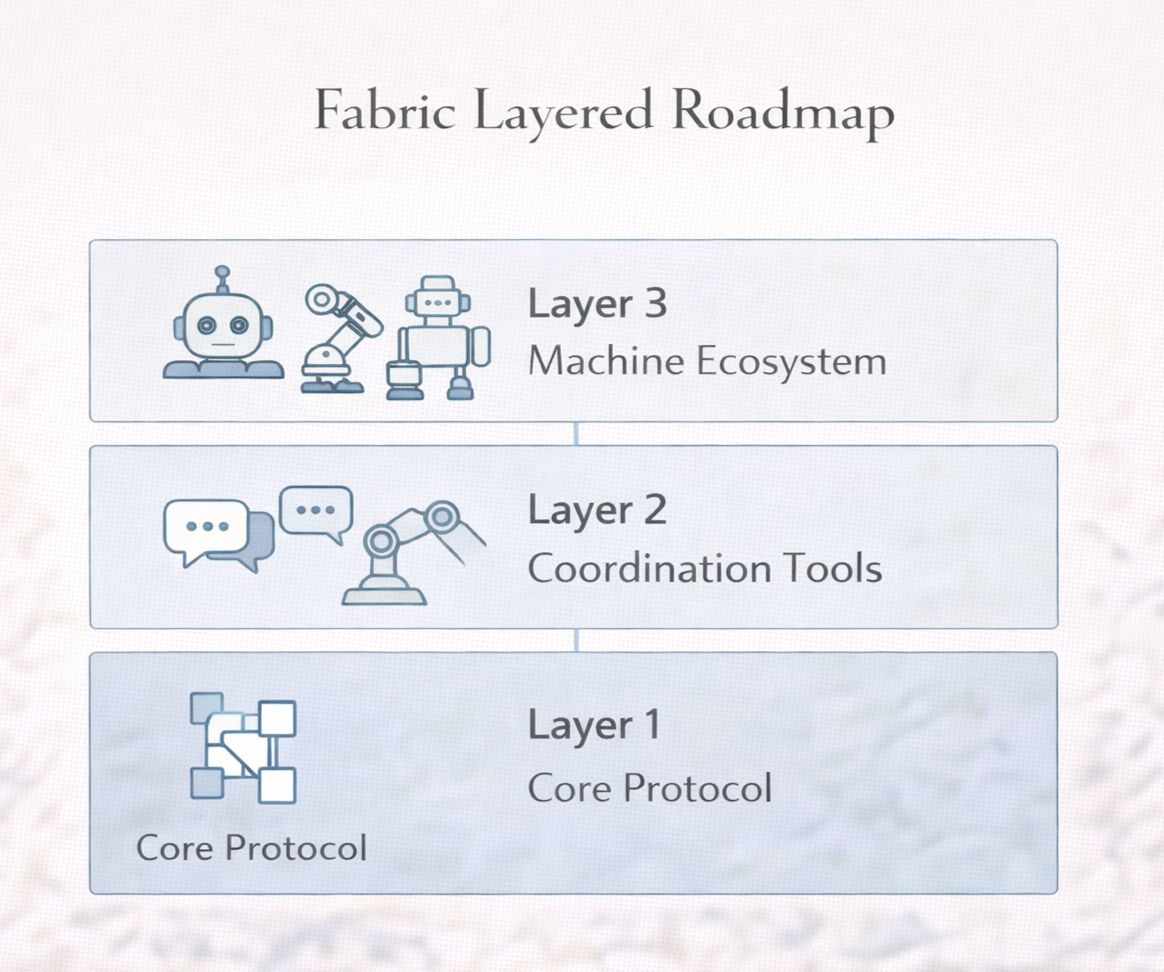
That approach raises another interesting point.
Fabric doesn’t seem to start with consumer applications. Instead, it appears to focus on infrastructure for builders. Why prioritize the underlying architecture first?
Maybe because coordination between autonomous systems is not something that can simply be added later. If the foundation isn’t designed properly, the rest of the ecosystem becomes fragile.
But that also creates a challenge.
Infrastructure-first roadmaps often take longer to show visible results. When users can’t immediately see products or applications, momentum becomes harder to maintain. That leads to another question worth asking.
Will developers actually build on top of these systems?
A roadmap can outline technical milestones, but adoption ultimately depends on whether builders see real value in the infrastructure. If autonomous systems truly start interacting more frequently — AI agents requesting services, machines verifying tasks, automated networks exchanging value — then Fabric’s roadmap begins to look more logical.
If that shift happens slowly, progress might feel invisible for a while.
Another thing that stands out is the absence of urgency. Many crypto roadmaps feel designed around hype cycles. Big announcements. Token launches. Rapid ecosystem expansion.
Fabric’s roadmap feels quieter.
It reads less like a race for attention and more like preparation for a system that may take years to mature.
But that raises one more question.
Is patience a strength… or a risk in crypto markets?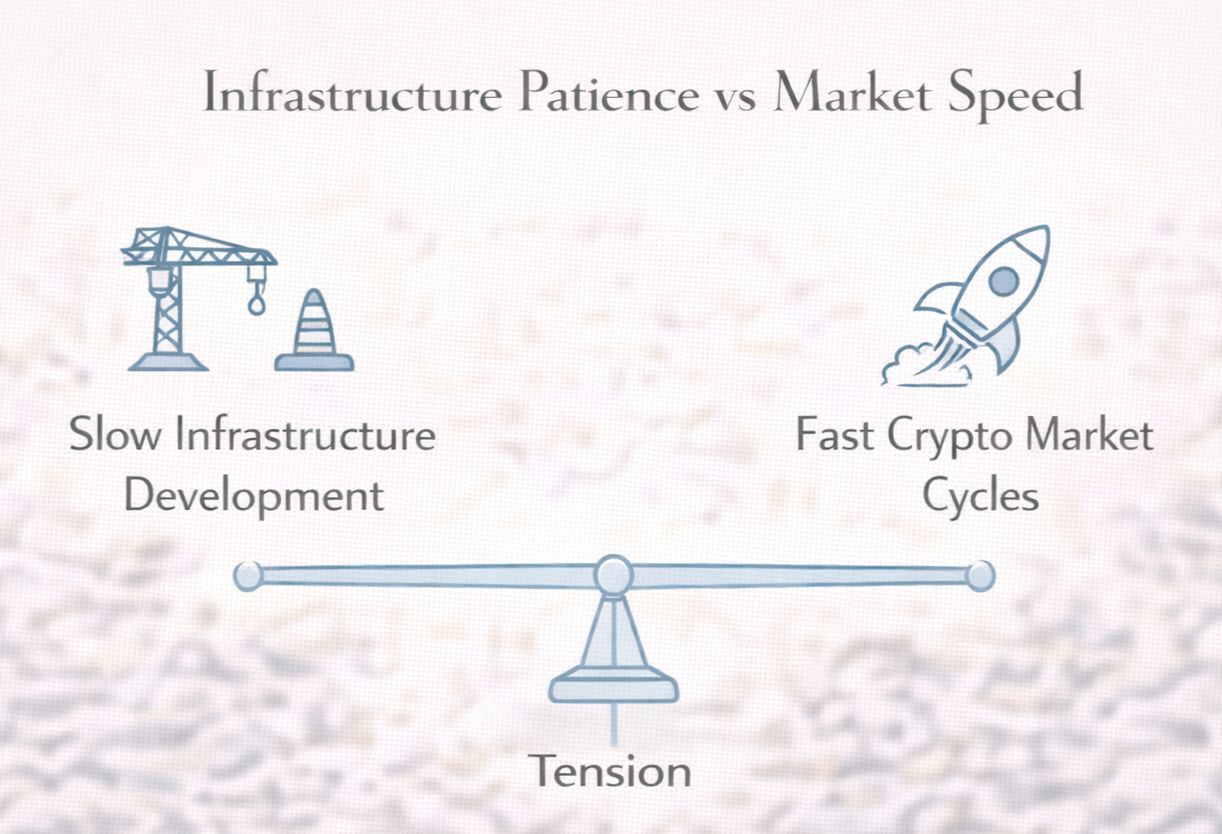
The industry rarely rewards slow infrastructure development in the short term. Attention moves quickly. Narratives change. Projects that build quietly sometimes struggle to stay visible.
Yet at the same time, some of the most important infrastructure in technology was built long before people realized they needed it.
That’s the tension inside Fabric’s roadmap.
It seems to assume that machine-to-machine coordination will eventually become important enough to justify a new layer of infrastructure. The roadmap outlines the steps needed to build that layer.
But whether that vision aligns with how the ecosystem actually evolves is still uncertain.
For now, the roadmap feels less like a promise of quick growth and more like a long-term construction plan.
And that raises a final question worth thinking about.
Is Fabric building something ahead of its time…
or simply building the groundwork for a system we haven’t fully entered yet?