

Crude oil prices are surging to multi-year highs as the US-Israel-Iran conflict worsens. On March 6, 2026, WTI crude jumped past $85 and touched $92—its highest since April 2024. Brent crude climbed to $94, driven by massive disruptions in the Middle East.
The biggest worry is the Strait of Hormuz, a narrow waterway that carries about 20% of the world’s oil. Iranian strikes on tankers, plus attacks and a major Saudi refinery shutdown, have scared shipping companies.
Insurance costs soared, many tankers are avoiding the route or waiting anchored, creating a huge “risk premium” on prices—even if actual supply losses aren’t huge yet.
This week, WTI posted its biggest gain since early 2022, up roughly 19% since late February. Traders are betting on more trouble ahead, pushing prices higher despite OPEC+ planning a small output increase starting April 2026.
Charts show strong bullish trends: WTI holds above key support at $73, eyeing $88–$95, while Brent tests $85 resistance with room to $97+ if chaos continues. In extreme cases, prices could spike to $100+ or even $120–$150.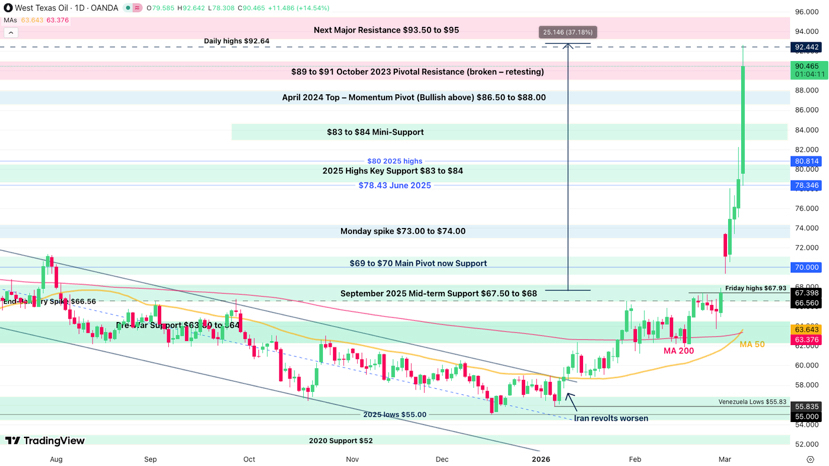
For everyday people: Higher oil means more expensive gas, heating, and goods. Governments might release emergency stockpiles to cool things down, but volatility is high—expect swings. Stay alert for news on the conflict; it’s driving everything right now.
Here are relevant images to illustrate the surge, charts, and geopolitical risks:
WTI crude oil price charts showing surge to $92+