
Artificial intelligence has reached a point where its outputs influence decisions across finance, healthcare, infrastructure, and governance. Yet the fundamental weakness of modern AI systems remains unchanged: they generate answers that appear confident but are not always correct. Hallucinations, bias, and unverifiable reasoning make autonomous AI risky in environments where reliability matters. The challenge is not simply improving models, but creating systems that can verify whether AI outputs should be trusted. Mira Network approaches this problem from a blockchain design perspective, treating verification itself as a decentralized protocol rather than a centralized responsibility.
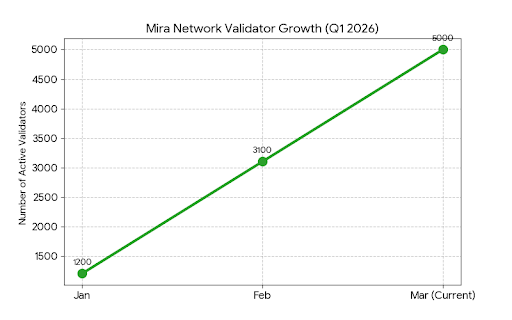
NoTraditional blockchains were designed to secure financial transactions. Their architecture assumes that once a validator set is established, those validators maintain relatively stable participation in consensus. While mechanisms such as staking, slashing, and reputation exist, the validator set often becomes semi-persistent. Over time, the same actors repeatedly validate blocks and interact with the same peers. From a purely financial perspective, this design has proven effective. However, when verification extends beyond financial state transitions to something as complex as AI-generated information, static validator relationships introduce subtle security risks.
In a verification network for AI outputs, the objective is not only to confirm that a transaction is valid, but to confirm that a statement about reality is credible. That requires diversity in verification, independence between validators, and resistance to collusion. If the same validators repeatedly evaluate the same claims, patterns of coordination can emerge, whether intentional or accidental. Trust begins to accumulate around validator identity rather than around the verification process itself. Mira Network attempts to avoid this structural weakness by rejecting the assumption that validators should remain static participants.
The design philosophy treats validators as dynamic participants in a continuously rotating verification environment. Rather than maintaining persistent validator relationships, the network repeatedly changes which validators interact with one another. Each verification task is distributed to a different subset of participants, and those participants are rotated frequently. This means that the same validators rarely validate the same claims together twice. Over time, this rotating architecture prevents stable coalitions from forming and reduces the probability that a coordinated group could manipulate verification outcomes.
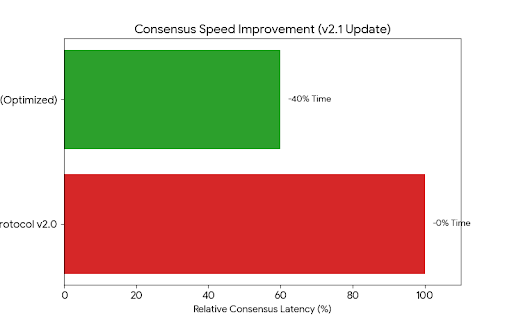
Security in this model emerges not from long-term reputation alone, but from unpredictability. A validator does not know in advance which claims it will verify or which other validators it will work alongside. Because assignments change constantly, collusion becomes operationally difficult. Even if an attacker controlled several validators, coordinating them in the correct combination for a specific verification task becomes statistically unlikely. The result is a system where verification integrity is maintained through randomness, rotation, and economic incentives rather than through static trust relationships.
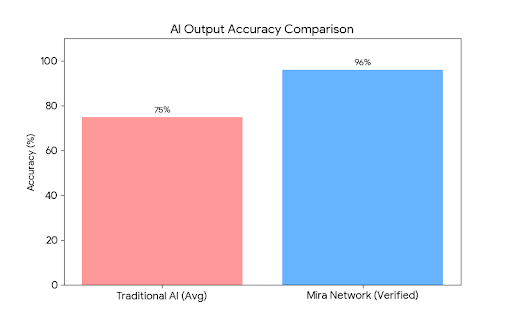
Another implication of this design is that verification itself becomes modular. AI-generated outputs are not treated as single monolithic responses but are decomposed into smaller claims that can be independently validated. Each claim is evaluated by a rotating group of validators and independent AI models. The blockchain layer records the consensus outcome, creating a verifiable audit trail of how each claim was validated. Instead of asking whether an entire AI response is correct, the system asks a series of smaller questions that can be verified more rigorously.
This approach aligns with a broader shift in blockchain architecture toward minimizing assumptions about trusted participants. Early networks assumed that economic incentives alone would discourage malicious behavior. While incentives remain important, modern infrastructure increasingly recognizes that protocol design should minimize opportunities for coordination attacks in the first place. By constantly rotating validator interactions, Mira Network reduces the structural stability required for collusion to succeed.
The architecture also reflects a deeper philosophical perspective about decentralization. In many systems, decentralization is measured by how many participants exist in the validator set. However, diversity of participants does not automatically guarantee diversity of interactions. If the same validators repeatedly interact with one another, the effective structure of the network may be less decentralized than it appears. True decentralization requires not only many participants but also constantly shifting relationships between them.
From this perspective, Mira Network can be understood as applying cryptographic verification principles to the reliability problem of artificial intelligence. Instead of trusting a single model, or even a fixed committee of models, the system distributes verification across a constantly changing network of validators and AI agents. The blockchain acts as the coordination layer, ensuring that verification tasks are assigned unpredictably and that outcomes are recorded transparently.
The long-term significance of this design may extend beyond AI verification. As decentralized systems begin to interact with increasingly complex information, the need for dynamic validator architectures will likely grow. Static validator sets were sufficient when blockchains primarily secured financial ledgers. But when networks begin verifying knowledge itself, the assumptions underlying consensus must evolve.
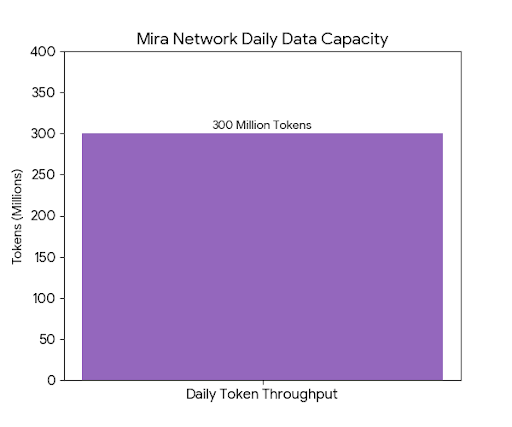
Mira Network represents an experiment in that evolution. Its design suggests that the future of decentralized verification may depend less on who the validators are and more on how they interact. By ensuring that validators never operate in predictable or permanent relationships, the network shifts the foundation of trust away from identity and toward process. In a world where AI systems generate vast amounts of information, that shift may prove essential for building infrastructure capable of separating reliable knowledge from confident speculation.
#Mira @Mira - Trust Layer of AI $MIRA
