Silver is doing what silver does best right now — keeping everyone guessing. After that breathtaking spike to ninety-six dollars earlier this week followed by a brutal thirteen percent collapse, $XAG has settled into a tense consolidation around the low eighties. For traders trying to map out their next moves, this is exactly the kind of moment where patience separates the professionals from the casualties.
The technical picture speaks in contradictions. The twenty-day exponential moving average has gone flat near eighty-four dollars, essentially throwing its hands up and admitting it has no clue which way this market wants to break. You've got lower highs tracing back from that hundred and ten dollar zone through the recent ninety dollar area, which tells you the momentum that drove silver to those dizzying January heights has definitely cooled. Yet the relative strength index sitting comfortably in the middle of its range suggests we are not looking at panic selling or euphoric buying — just a market catching its breath and waiting for the next catalyst.
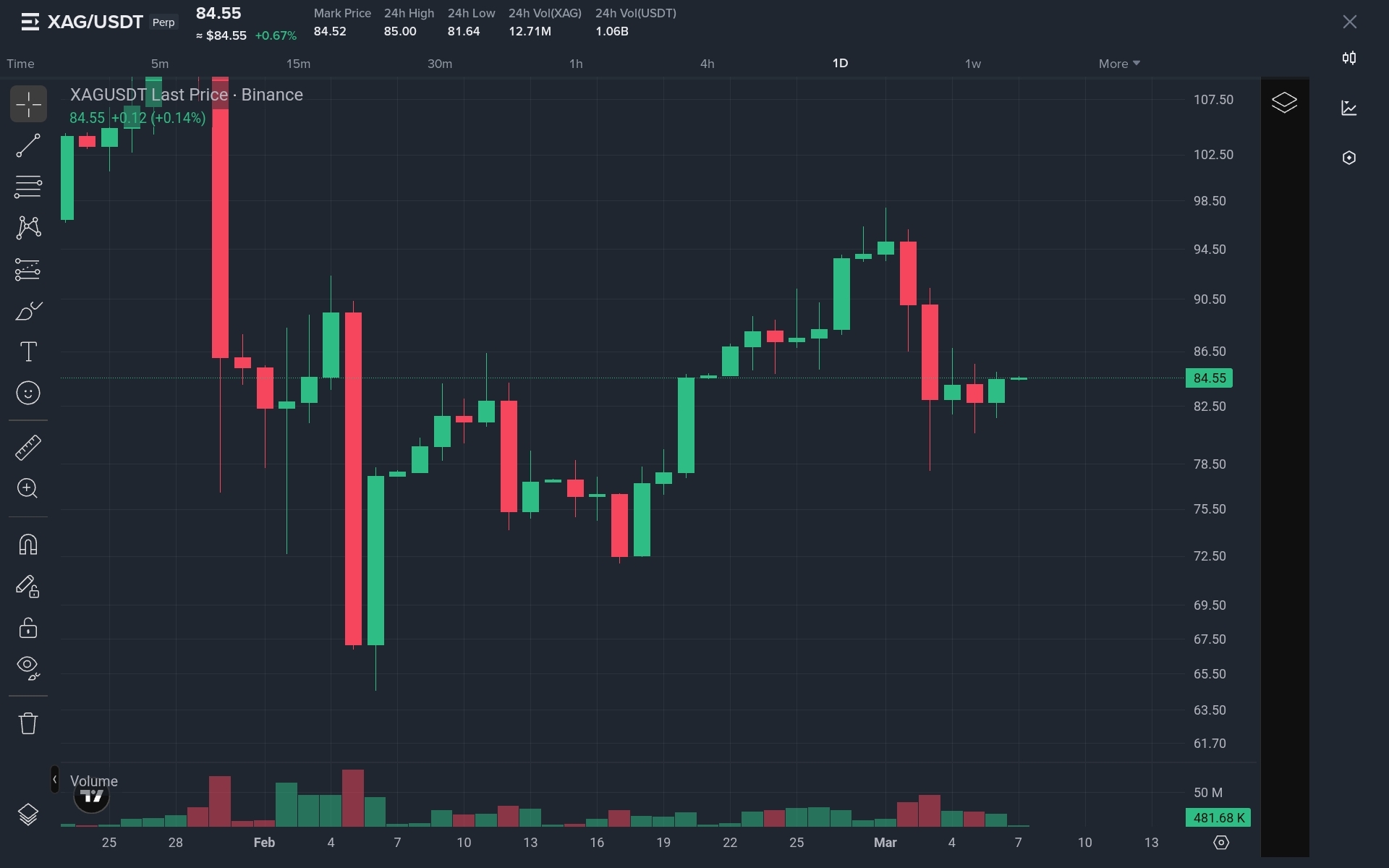
The support story is interesting here. That eighty to eighty-two dollar zone has become surprisingly sticky, anchored by the fifty-day moving average and reinforced by February's consolidation floor. It is the kind of level where you can practically feel the algos and institutional desks lined up with their buy orders. But here is the thing about silver — sticky support can turn into a trapdoor without warning. If we start seeing sustained closes below seventy-eight, the path opens quickly toward seventy dollars and potentially even lower. The February low in the mid-sixties is still out there as a reminder of how fast this metal can retrace.
On the flip side, getting back above ninety dollars changes the whole conversation. That level has become a psychological barrier of sorts, and more importantly, a break there would likely trigger some serious short covering. The market still remembers what happened when silver squeezed higher in January — desks got caught offsides, and the move to one hundred and twenty dollars happened faster than anyone thought possible. Nobody wants to be short if that kind of momentum reignites.
What makes silver so much trickier than gold right now is its split personality. When geopolitical fears spiked earlier this week, silver initially surged alongside gold as the safe-haven bid kicked in. But then the market started doing the math — higher oil prices, fewer Federal Reserve rate cuts on the horizon, potential industrial demand destruction — and suddenly silver faced selling pressure from both its precious metal side and its industrial commodity side. Gold managed to hold its bid through that transition. Silver did not.
This dual identity is what creates those violent swings that define silver trading. We saw it in January when the metal gained over sixty percent in less than a month, hit one hundred twenty-one dollars, then crashed forty-five percent to sixty-seven dollars within days. We saw it again when gold's nine percent single-day selloff translated into a twenty percent collapse in silver. The pattern is consistent — silver outperforms dramatically when the wind is at its back, but the exits are narrower and the drops are steeper when sentiment shifts.
For the immediate trading horizon, the play seems to be range-bound precision. Long positions make sense on confirmed holds above eighty-two dollars, with eyes on the mid-eighties and that eighty-seven dollar area where the two-hundred period moving average currently sits. But you absolutely need tight stops below eighty dollars because once that level gives way, the selling tends to accelerate quickly. Short setups work on clear rejections at eighty-five or ninety dollars, targeting that eighty to eighty-two support zone.
Looking further out, the structural bull case has not disappeared. Industrial demand from solar installations, electric vehicles, and the explosion of artificial intelligence electronics continues to underpin consumption. Central bank diversification trends and the broader de-dollarization narrative still favor precious metals as an asset class. But the near-term reality is that JP Morgan's full-year average forecast of eighty-one dollars suggests we could be grinding around these levels for longer than impatient traders would prefer.
The key levels to watch are straightforward but critical. A daily close above ninety dollars would be genuinely bullish, reopening the path toward triple digits and potentially beyond. The eighty dollar test is happening essentially in real time — how it holds or breaks will determine whether we are looking at a deeper washout toward seventy dollars or a stabilization that sets up the next leg higher. A weekly close below seventy dollars would be the kind of structural damage that forces a complete reassessment of the bull thesis.
Risk management in this environment cannot be overstated. Silver's average true range is sitting near a dollar, which in percentage terms means you need to be prepared for ten percent single-day moves as a baseline expectation. Position sizing should reflect that reality — two percent risk per trade maximum, wider stops than you would use in gold or currencies, and the mental preparation to see your trade go deeply underwater before potentially resolving in your favor.
Silver at eighty-two dollars is neither cheap nor expensive in any absolute sense. It is exactly where the market's consensus forecast suggested it would spend much of this year. The metal that hit one hundred twenty-one dollars in January and sixty-seven dollars in February is now searching for its next narrative, its next catalyst, its next reason to move. For traders, the plan is to respect that uncertainty, trade the levels that the charts provide, and let the market reveal whether the next major move is a retest of those triple digits or a deeper washout that tests the patience of even the most committed silver bulls. In this market, the only certainty is that volatility will continue to surprise us.