
Bitcoin is still the main character of crypto. No matter what season the market is in, people come back to BTC because it feels like the most “real” asset in the space.
Here is a monthly Bitcoin/Dollar index chart from TradingView showing price action from 2018 to 2028.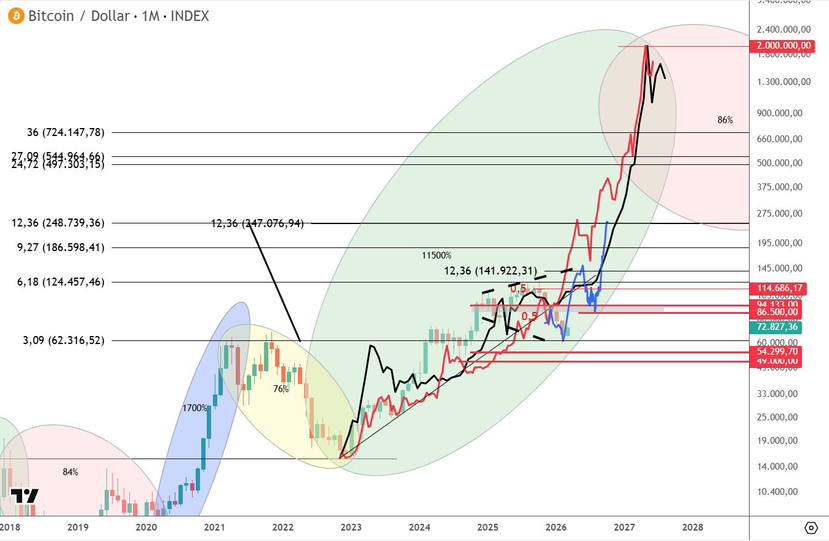
But in March 2026, a different kind of Bitcoin conversation is getting loud:
Not “Should I buy Bitcoin?”
More like: “What else can Bitcoin do now?”
That is why Bitcoin Layer-2s and Bitcoin yield ecosystems have turned into one of the hottest narratives right now.
The simple truth: Bitcoin is powerful, but it is not built for everything
Bitcoin is trusted because it is conservative by design.
It is secure.
It is stable.
It does not change fast just because the market wants new features.
That is a strength.
But it also means Bitcoin is not naturally optimized for the stuff that modern crypto users expect today: fast interactions, low fees, smooth apps, and constant activity.
So the industry’s answer is not “change Bitcoin.”
The answer is: build on top of Bitcoin.
What a Bitcoin Layer-2 really is (without the tech headache)
A Bitcoin Layer-2 is basically a way to do more activity around Bitcoin without clogging the main chain.
If Bitcoin’s base layer is the vault, then:
Bitcoin L1 is where you store the gold.
Bitcoin L2 is where you do business with it.
You move faster on the L2, but the whole idea is that you still connect back to Bitcoin’s security and credibility in some way.
That “Bitcoin credibility” is the entire reason this narrative has weight.
Why “BTC yield” is suddenly a big deal
For most of Bitcoin’s life, the classic strategy was simple:
Buy BTC. Hold it. Do not touch it.
That mindset is still alive. But now a lot of holders are looking at their BTC and thinking:
“I love holding this… but can it do more than just sit there?”
That is where the yield conversation comes in.
In 2026, the buzz is about turning Bitcoin from a pure “store of value” into something that can also be productive. People are exploring ways to earn a return while still keeping BTC as the core asset.
This idea is especially attractive when the market feels uncertain, because it sounds like a more “mature” play:
keep BTC as the foundation
try to earn something extra on top
What is fueling this narrative right now (early March 2026)
A few things are pushing Bitcoin L2 and BTC yield into the spotlight:
The market is rewarding utility again. People are tired of empty hype. If something can show real use, it gets attention.
Capital loves narratives, especially in choppy markets. When conditions are unclear, traders and investors look for the “next big theme.”
Bitcoin is the safest brand in crypto. If a new wave is going to happen, many people prefer it to happen around Bitcoin instead of a random new chain.
The part nobody should ignore: the risks are real
This topic is hot, but it is not automatically “safe” just because Bitcoin is involved.
Any time you hear “BTC yield,” you should immediately ask:
Where does the yield come from, exactly?
Is it real revenue, or temporary incentives?
What is the smart contract risk?
What happens if a bridge or wrapper breaks?
In short: Bitcoin is low-drama. Yield systems are often high-drama.
So it is smart to be excited, but it is also smart to be strict.
A “VIP” way to follow this narrative (clean and simple)
If you want to track this like someone who’s been around cycles, focus on three signals:
Security
How does it connect back to Bitcoin?
What assumptions does it rely on?
Real usage
Are people actually using it, or is it just trending on social media?
Sustainable yield
Is the yield coming from real demand and fees, or “marketing yield” that disappears later?
#JobsDataShock #NewGlobalUS15%TariffComingThisWeek #MarketPullback #USIranWarEscalation $BTC
