
A few weeks ago, I found myself in a small workshop with two friends who share a fascination with robotics.There was Amir, an engineer who spends his weekends experimenting with robotic systems, and Sofia, a researcher who studies how complex technologies evolve.
On the workbench in front of us sat a partially assembled robot. Its arms weren’t attached yet, and several wires were still exposed.
I asked Amir why the robot looked like it had been taken apart.He smiled and said something that stuck with me.
That was my introduction to the idea of the modular backbone of robotics.
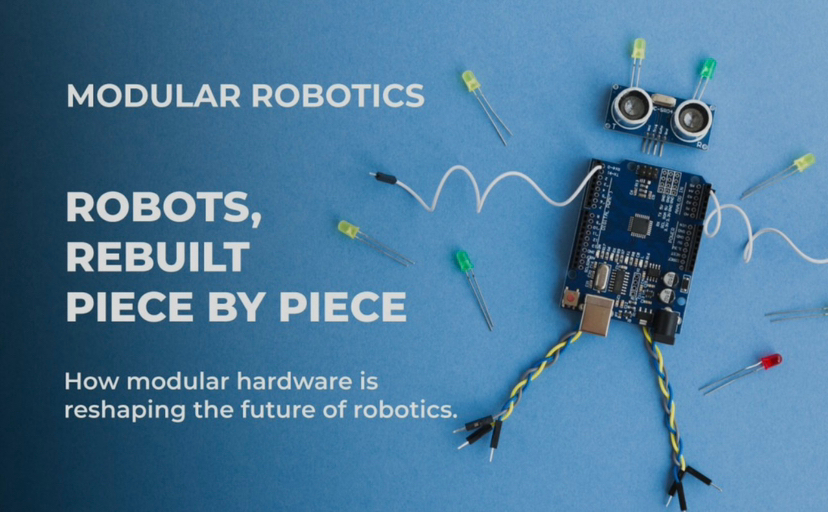
Instead of designing robots as rigid, single-purpose machines, engineers are increasingly building them like ecosystems of interchangeable components.
Each module performs a specific function.One module might handle vision, allowing the robot to recognize objects.Another might control movement, coordinating motors and balance.Another might process data and decision-making through AI models.
Individually, these pieces are powerful. But together, they create something far more flexible.
Sofia compared it to building with blocks.
“If every robot has to be designed from scratch,” she explained, “innovation moves slowly. But if developers can reuse and upgrade modules, progress accelerates.”
That’s the strength of modular design.
A company working on robotic navigation can improve just the navigation module. Another team can build better sensors. A third group can focus entirely on learning algorithms.
Each improvement strengthens the overall system.
Amir picked up the robot’s arm and attached it to the frame.
“Think about smartphones,” he said. “Different companies build processors, cameras, software, and displays. When those components improve, the entire device improves.”
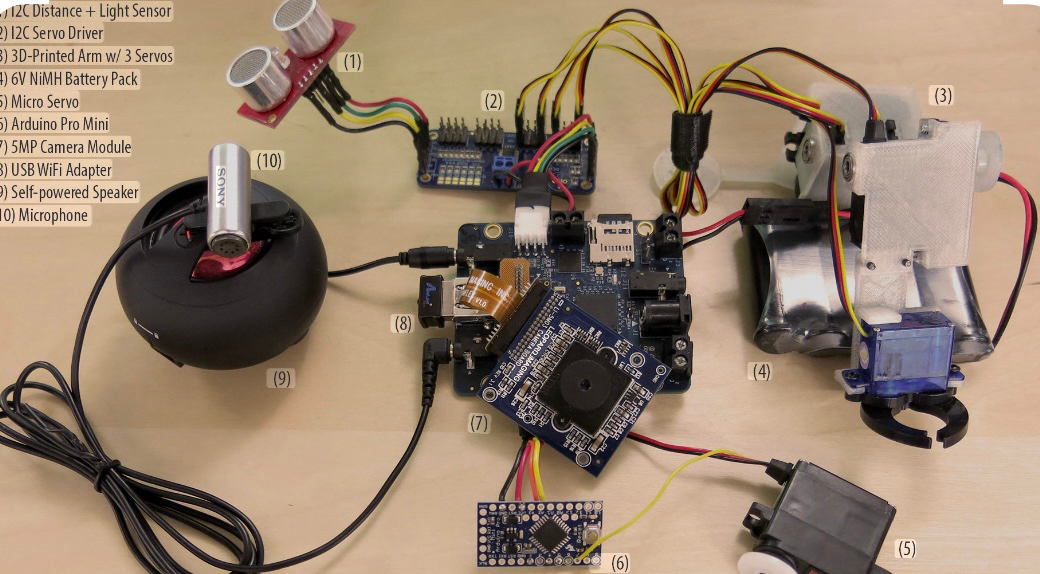
Robotics is beginning to follow a similar path.Instead of monolithic machines that are hard to upgrade, modular robots can evolve piece by piece. A better sensor can be added without rebuilding the whole system. New AI models can upgrade decision-making instantly.
This modular backbone makes robotics more adaptable, scalable, and collaborative.It also changes who can participate.
When robotics becomes modular, smaller teams, researchers, and independent developers can contribute specialized improvements. Innovation no longer belongs only to massive labs or corporations.
As we finished assembling the robot, Amir turned it on. The machine slowly moved its arm, responding to a sensor that detected our movement.It wasn’t perfect.
But it worked and standing there, watching that simple motion, I realized something important. The future of robotics might not be defined by one revolutionary robot.
It might be defined by thousands of small modules, built by thousands of contributors, connecting together to form the backbone of intelligent machines

#Robo #