

After reading more than 100 research reports and analyses about $MIRA , studying the whitepaper, understanding what the project is building, and checking the background of the founder and the backing investors, I started to get a clearer picture of what Mira Network is trying to achieve.
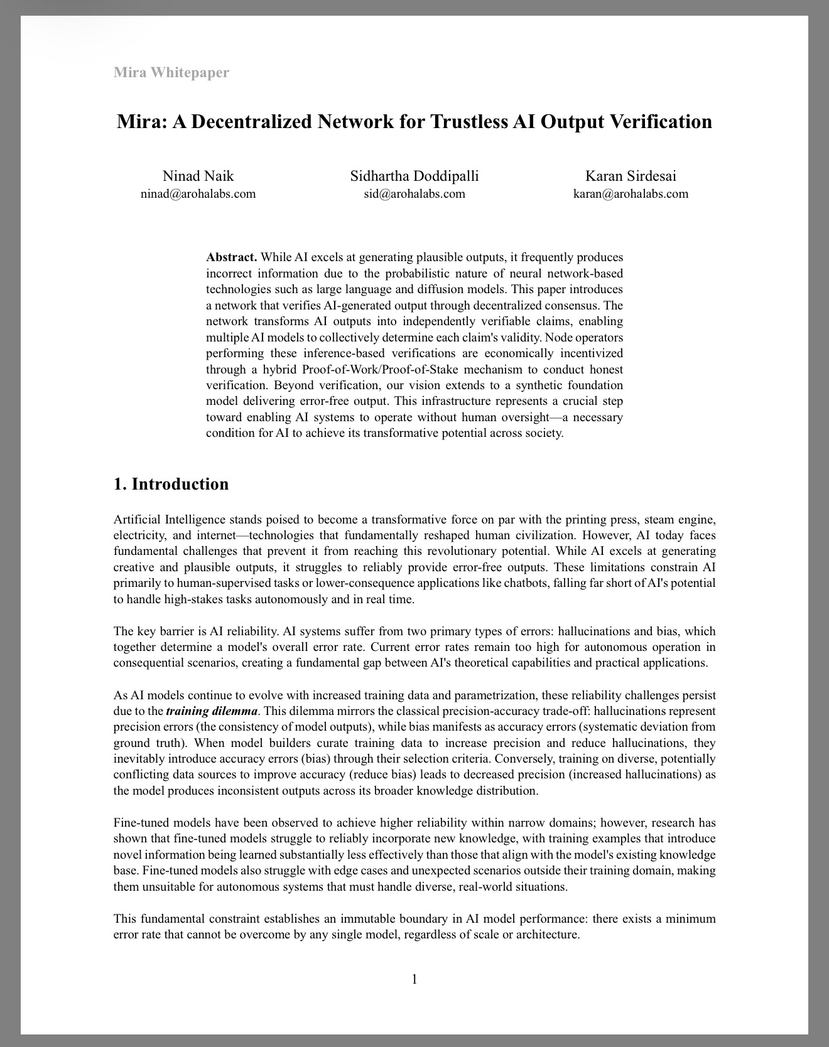
What caught my attention the most is the problem Mira Network is trying to solve.
Right now we are living in the era of mass AI adoption. Almost everyone is using AI — for writing, coding, research, and everyday tasks.
But there is a major problem:
There is no reliable system to verify the output of AI.
AI can generate incorrect information, hallucinations, or noisy data, and most users have no easy way to determine whether the information is trustworthy.
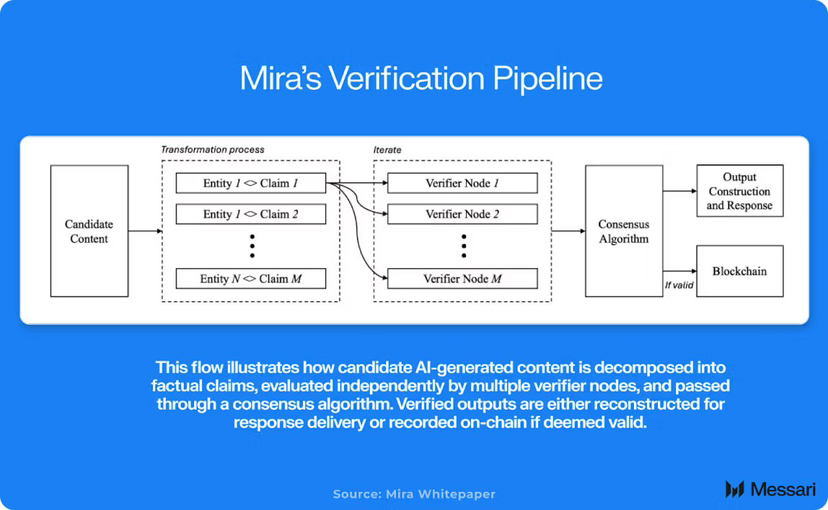
This is exactly the gap that Mira Network aims to solve.
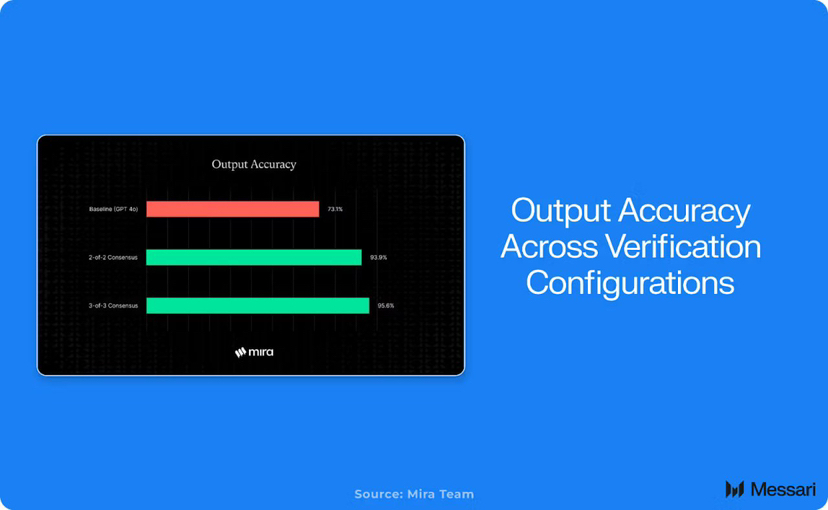
Mira Network is building a decentralized AI verification layer. In simple terms, the system allows multiple independent nodes to verify and validate AI outputs before the information is trusted or widely used.
This approach can help:
• increase trust in AI-generated data
• reduce AI hallucinations and misinformation
• create a trust layer for future AI applications
As AI adoption continues to accelerate globally, the need for AI verification and trust infrastructure will likely become increasingly important.
Looking at the ecosystem metrics, Mira Network already shows some interesting traction:
• around 16,000 holders across BNB Smart Chain and Base
• TVL between $20M–$25M
• more than 4.5 million users through the app Klok App
• current market cap around $21M
Considering the massive growth of the AI sector, this valuation is still relatively small if the project achieves broader adoption.
From a technical perspective, the MIRA chart is also showing some interesting signals.
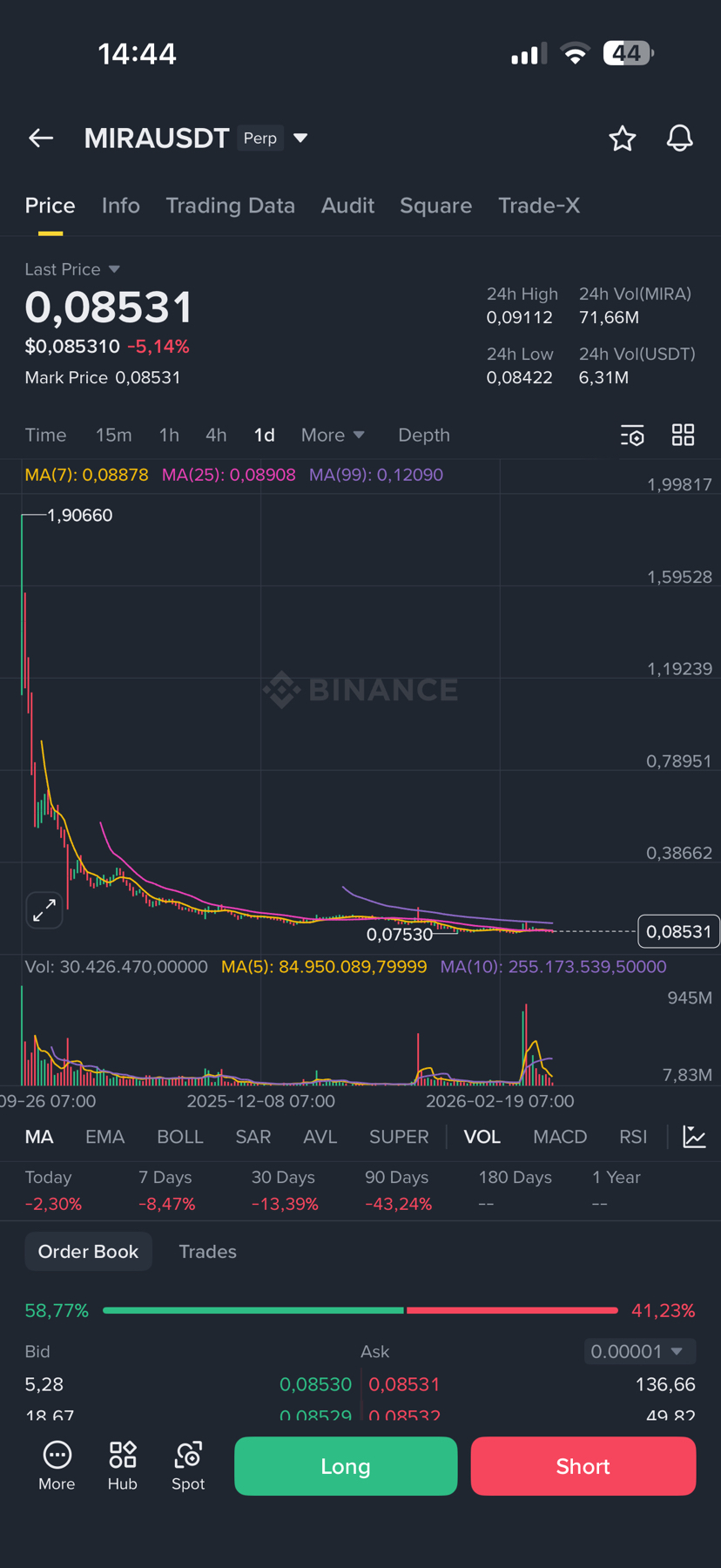
On the daily timeframe, price has been consolidating heavily around the $0.085 zone, with repeated long lower wicks, indicating strong buyer accumulation at these levels.
Selling volume has been decreasing while the price continues to coil tightly around a historical base. Structures like this often appear before major trend reversals, and if momentum builds, the $0.15 level could become the next target.
Another notable aspect of Mira Network is the strength of its founding team and backing investors.

The project is led by Karan Sirdesai (Co-Founder & CEO), who previously worked at Accel focusing on AI and crypto investments, and also gained experience at Boston Consulting Group. The CTO, Sidhartha Doddipalli, previously served as CTO at Stader Labs, a liquid staking protocol that once reached over $1B in TVL across multiple blockchains. The product team also includes Ninad Naik, who previously held product leadership roles at Uber and Amazon.
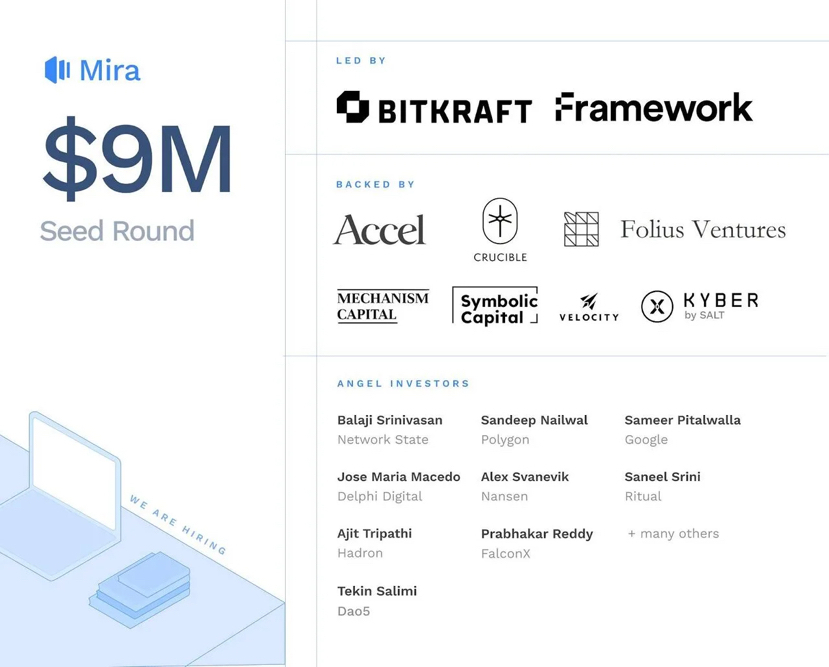
On the investor side, Mira Network raised around $9 million in seed funding, led by major funds such as BITKRAFT Ventures and Framework Ventures, with participation from Accel, Mechanism Capital, Folius Ventures, and SALT Fund.
Looking at both the team and the investor lineup, Mira Network appears to be backed by several well-known funds in the crypto, AI, and tech ecosystem, giving the project strong resources, industry connections, and potential for long-term ecosystem growth.
Of course, crypto markets are volatile and risks always remain. But with the AI verification narrative, growing ecosystem metrics, and a relatively small market cap, Mira Network is definitely a project worth putting on the watchlist for the coming period.