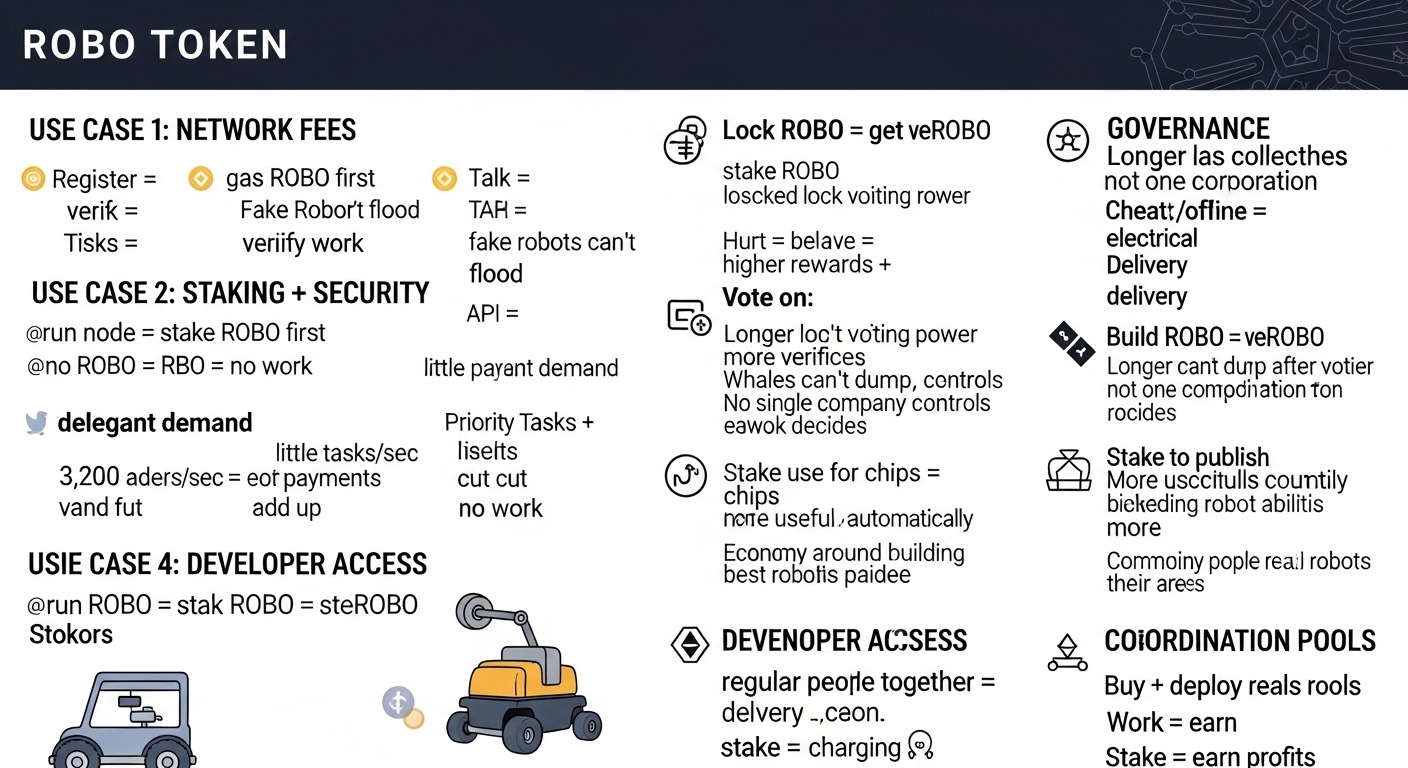
Use Case One - Network Fees
Like the first and most basic use for ROBO tokens is paying network fees bro. think of it like gas for robots fr. everytime a machine need to register its identity on the blockchain or verify that its real it gotta pay tiny fees in ROBO. when robots talk to each other or call APIs to get data they also pay fees. when they complete tasks and need the network to verify the work more fees get paid. this is important cause it create constant demand for the token honestly. robots cant do nothing without ROBO. no ROBO no work simple as that fr. the fees also prevent spam and fake robots from flooding the network cause every action cost something you know. the matching engine handle like 3200 tasks per second so theres alot of fees flowing through the system daily. all them little paymen add.
Use Case Two - Staking and Security
second big use is staking. if you wanna run a robot node or be part of the coordination network you gotta stake ROBO tokens first. its like a security deposit that keep everyone honest. your tokens get locked up as collateral while your node operate. if your robot cheat or go offline or fail tasks repeatedly part of your staked tokens get slashed or burned. this hurt financially so people make sure there robots behave. but if you do good you get priority access to better tasks and higher rewards. staking also let you delegate to other operators if you dont wanna run hardware yourself. you can lend your tokens to reliable node operators and earn a cut of there rewards without doing no work. pretty clever honestly.
Use Case Three - Governance Rights
third use is governance bro. token holders can lock there ROBO to get veROBO which is like voting power. the longer you lock your tokens the more voting weight you get. this prevent whales from dumping tokens right after voting on stuff. then you can vote on important things that shape the whole network. like fee structures how much robots pay for different tasks. protocol upgrades what new features get added. quality thresholds how reliable robots need to be. and even which new robot types can join the network. this stop any single company from controlling everything. the community decide together where the project go.
Use Case Four - Developer Access
fourth use is developer access. if you wanna build apps or skill chips for robots you gotta hold and stake ROBO tokens. skill chips are like apps for robots adding new capabilities like medical assistance or electrical work or delivery routing. developers stake ROBO to publish there chips and get them verified by the network. then when robots actually use them chips the developers earn rewards automatically through smart contracts. the more useful your chip the more robots use it the more ROBO you earn. this create whole economy around building robot abilities. developers compete to make the best skills and get paid in tokens for there work.
Use Case Five - Coordination Pools
fifth use is coordination pools which might be the coolest one bro. communities can stake ROBO together in something called Coordination Pools to deploy actual robot fleets in there area. instead of one big corporation owning all the robots regular people pool there tokens together to fund robots doing delivery or charging station stuff or warehouse work. the pool use the staked tokens as collateral to buy and deploy real robots. when them robots complete tasks and earn money from there labor the profits get distributed back to everyone who staked. so you dont need to own robots yourself. just stake ROBO and let network do the work. rewards come from actual robot labor not just speculation. if the fleet do good you earn. regular people funding robot armies from there phone.