
When I was scrolling Binance Square today, I honestly started getting irritated.
Not because there aren’t good projects.
But because the conversation feels stuck.
Every few posts I saw the same thing again:
AI robots paying each other.
Robot economy.
$ROBO will power machine payments.
Yes, that narrative exists mostly rare discussed part . But after seeing it repeated so many times, one thought kept coming to my mind:
Are we all ignoring the more interesting part of the story?
Because when I looked deeper into @Fabric Foundation , I realized something surprising.
Almost nobody is talking about the hardware direction behind the project.
And that might actually be the more important layer.
Crypto’s Quiet Limitation
If you look at how modern blockchains work, almost everything depends on cryptography.
Transactions, signatures, proofs, verification — the entire system runs on mathematical operations.
But here’s the strange reality.
Most of that computation still runs on general-purpose hardware like CPUs and GPUs.
These processors were not built specifically for cryptographic workloads.
They can run them, of course. But they are not optimized for them.
As systems become more advanced — especially with technologies like zero-knowledge proofs and verifiable computation — the amount of cryptographic work increases dramatically.
That creates a hidden bottleneck.
Not in the protocol.
But in the hardware doing the math.
A Pattern Technology Always Follows
History shows that when a technology matures, hardware specialization usually follows.
Artificial intelligence is the best example.
Machine learning through the research existed for decades.
But AI truly exploded only after GPUs allowed massive parallel computation.
Once hardware improved, the entire field accelerated.
The same thing happened with Bitcoin mining.
Early miners used CPUs.
Then GPUs.
Eventually specialized ASIC chips completely changed the efficiency of the network.
The lesson is simple:
When workloads become specialized enough, custom hardware eventually emerges.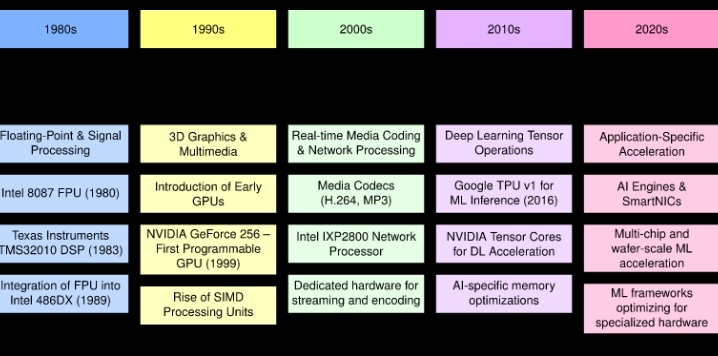
Fabric’s Less Discussed Direction
This is why Fabric’s exploration of Verifiable Processing Units (VPUs) is so interesting.
As not just treating the cryptography as just another software workload, VPUs aim to create processors specifically optimized for cryptographic computation and proof systems.
In simple words, We can say that they are designed to handle the kind of heavy mathematical operations that modern decentralized infrastructure increasingly depends on.
If successful, that could unlock several important improvements:
• Faster proof generation
• Lower energy consumption
• Cheaper verification across networks
• More scalable privacy systems
These improvements could make technologies like zero-knowledge infrastructure and verifiable computation much more practical at scale.
Why This Matters for Web3
The interesting part is that most crypto discussions rarely focus on this layer.
People talk about tokens.
They talk about narratives.
They talk about market cycles.
But the deeper layers of infrastructure — the hardware running the cryptographic math — receive far less attention.
And yet those layers often determine how far the ecosystem can actually scale.
If cryptographic computation becomes significantly faster and cheaper, many systems that feel expensive today could become standard infrastructure tomorrow.
A Different Way to Look at Fabric
So while many posts focus on robots and machine economies, the more interesting question might be something else entirely.
What happens if Web3 eventually gets hardware designed specifically for verifiable computation?
Because if that layer evolves the same way GPUs transformed AI, the impact could extend far beyond a single project.
It could influence the efficiency of the entire cryptographic ecosystem.
And that’s the part of the conversation I rarely see on Binance Square.
Not the narrative everyone is repeating.
But the infrastructure layer quietly developing underneath it.