
Most headlines are quiet about it, but the numbers are hard to ignore.
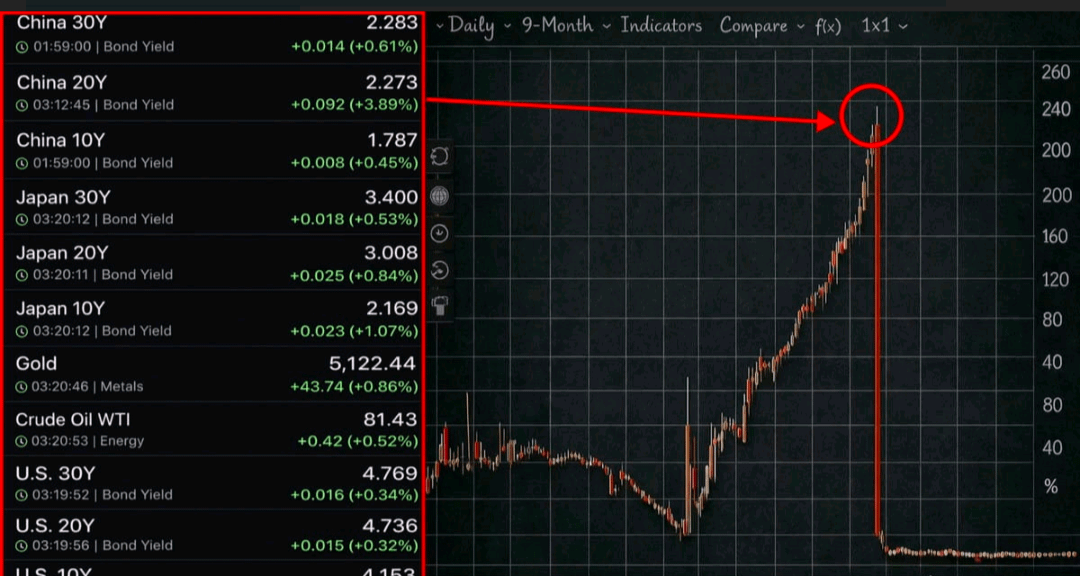
Key indicators are flashing unusual signals:
• U.S. 10-year yield: around 4.15% — levels not seen since 2007
• Japan 10-year yield: about 2.16% — also near multi-decade highs
• China 10-year yield: roughly 1.78%
• WTI oil: near $81
• Gold: trading at extremely elevated levels
This combination suggests the market environment is no longer “normal.”
When government bond yields stay high, the cost of money across the entire financial system rises. That changes how capital flows. Instead of chasing risk assets like tech stocks, crypto, or real estate, large investors can park funds in government bonds and still earn attractive returns with relatively lower risk.
And the scale of these markets is enormous:
• U.S. Treasury market: about $30 trillion
• Japan government debt: roughly $8.6 trillion
• China’s A-share market: about $15 trillion
Even small shifts matter.
Just 1% of the U.S. Treasury market represents more than $300 billion.
For Japan, 1% equals roughly $86 billion.

Amounts like that are big enough to rapidly move stocks, crypto, commodities, and interest rates.
When yields remain high, bonds don’t even need to rally in price to attract money. They simply need to stay stable and keep paying solid returns. That quietly pulls capital away from riskier markets.
At the same time, gold trading at very high levels sends another message: investors are not relying on paper assets alone. Some money flows toward yield, while another portion seeks protection in hard assets.
This creates a difficult environment for risk markets. If trillions of dollars find comfort in bonds and gold, the remaining markets are left competing for a much smaller share of global capital.

Market crashes rarely happen because of a single bad headline. They usually develop when the overall cost of money stays elevated for too long and investors begin shifting toward safer places to store wealth.