
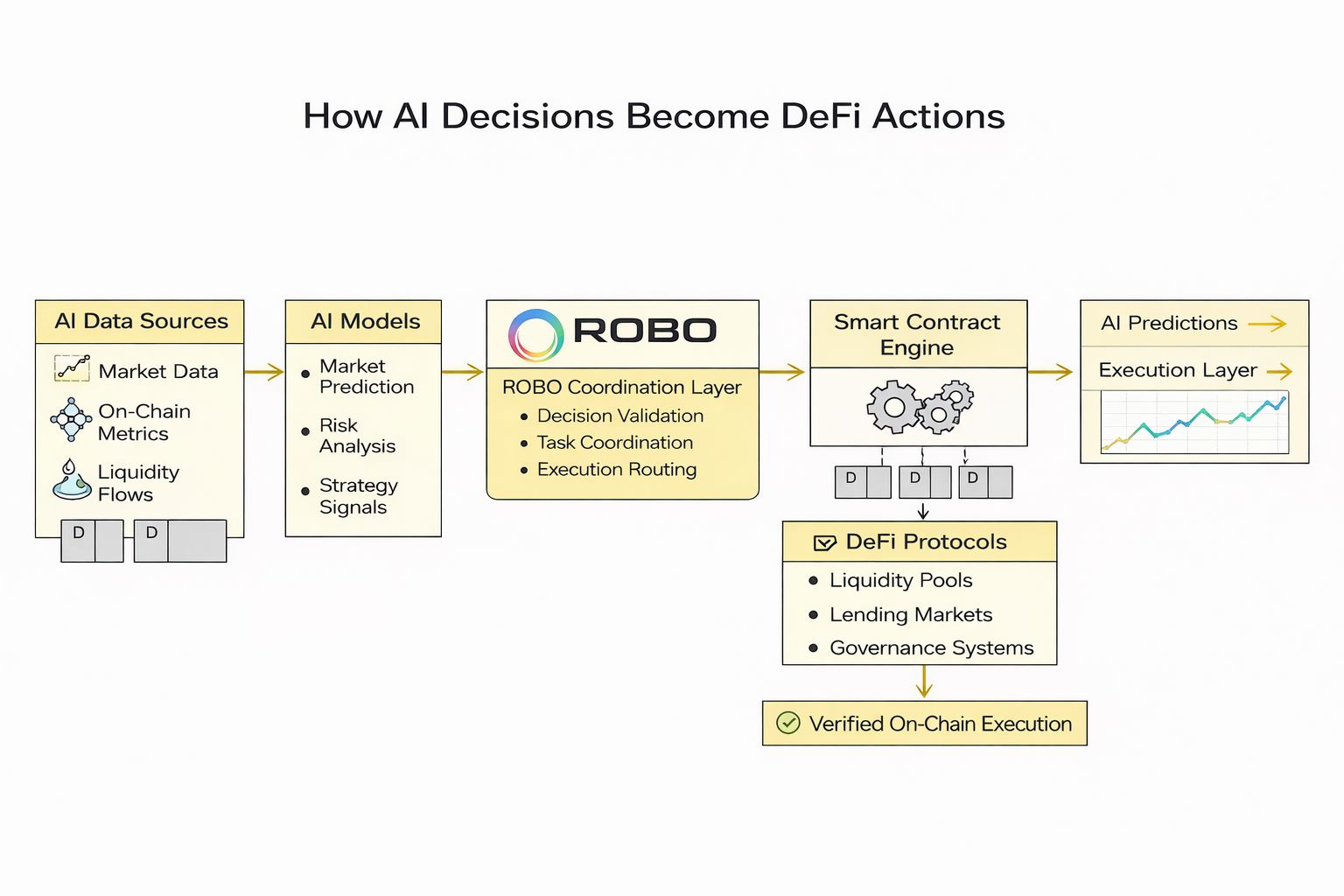
 Recently I’ve been spending a lot of time thinking about how AI will actually fit into crypto over the long term. Right now, whenever people talk about AI in this space, the focus is almost always on predictions. Everyone is excited about AI trading bots, smarter market analysis, or automated strategies that claim to beat human traders.
And sure, some of that might actually work.
But the more I think about it, the more I feel like prediction is only a small part of the real picture.
In decentralized systems, figuring out what should happen is one thing. Actually making that decision happen on-chain in a safe and organized way is a completely different challenge.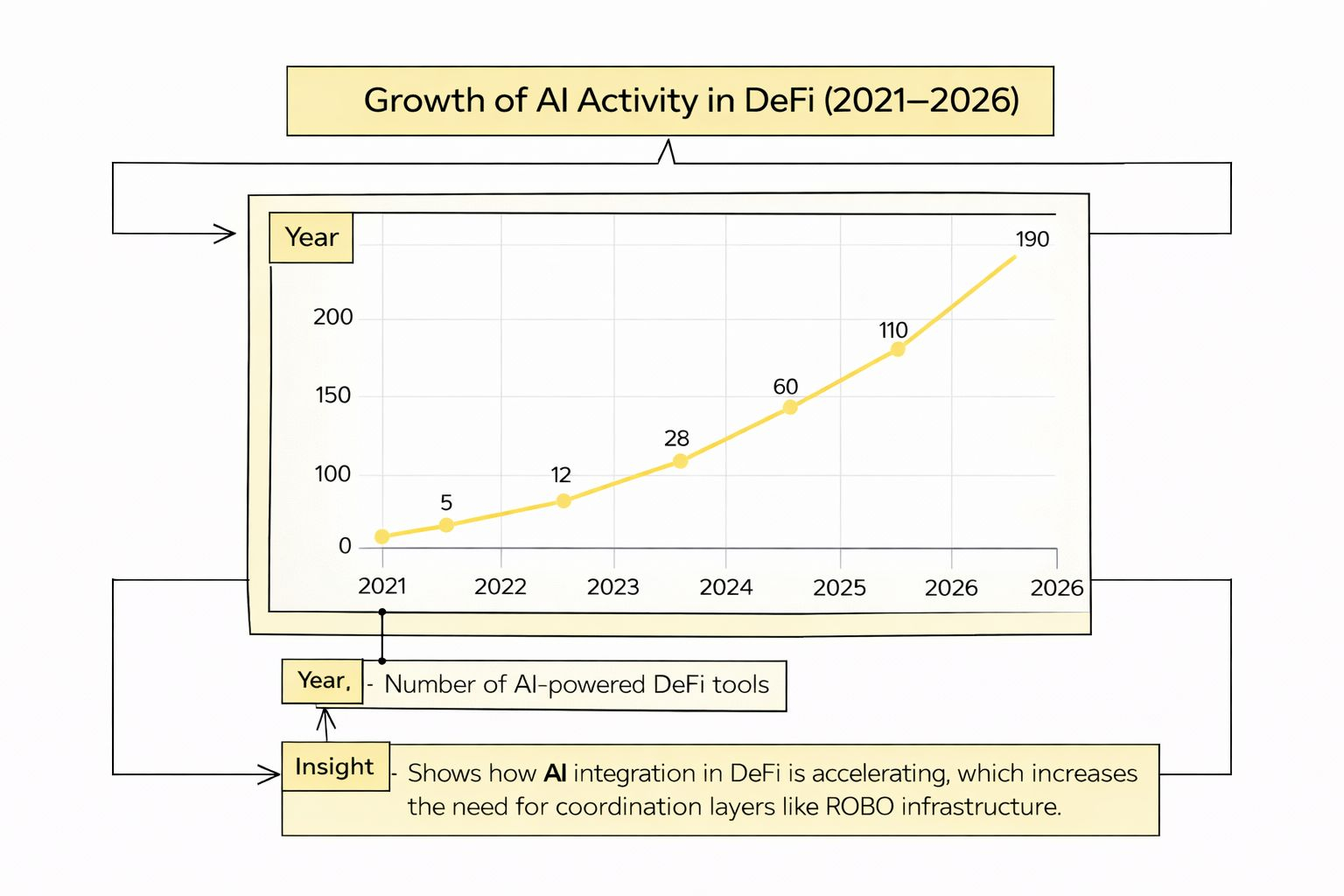
For example, imagine an AI system analyzing data across DeFi protocols and final that liquidity should move from one pool to another. Or maybe it recommends adjusting risk parameters during a charged market. That might be a smart suggestion, but someone still has to handle the execution of that decision.
And if that process isn’t structured properly, things could get messy very quickly.
That’s actually what made me start paying more attention to @Fabric Foundation and $ROBO .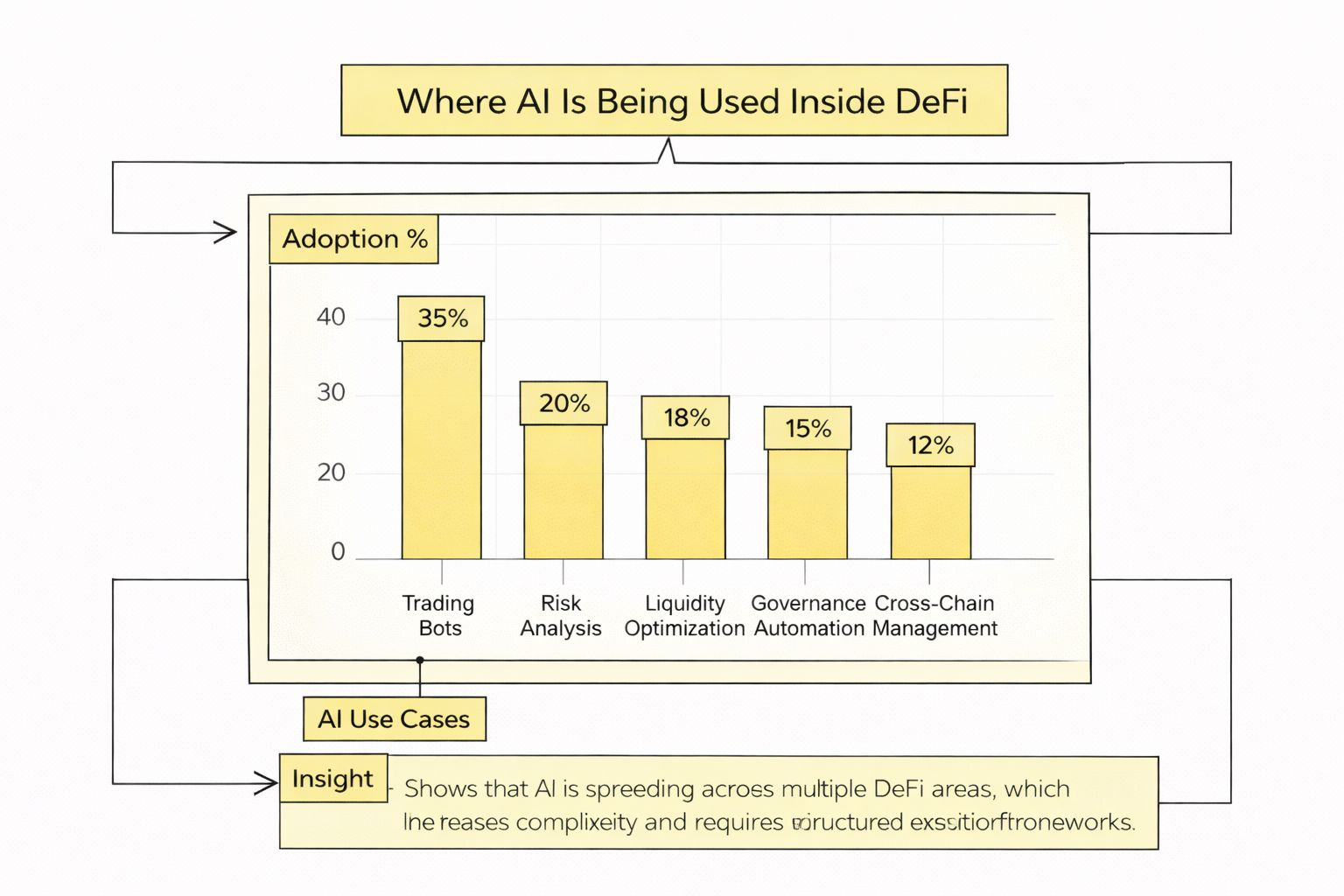
Most AI projects in crypto right now focus on structure tools. They create dashboards, analytics platforms, or automatic trading assistants. Those tools can be useful, but they mostly sit on the surface of the ecosystem.
What caught my interest about the idea behind ROBO is that it seems to focus on something deeper the infrastructure layer that helps AI-driven systems actually function inside decentralized domain.
In other words, it’s not just about making AI smarter. It’s about making sure AI decisions can be coordinated and executed properly within blockchain systems.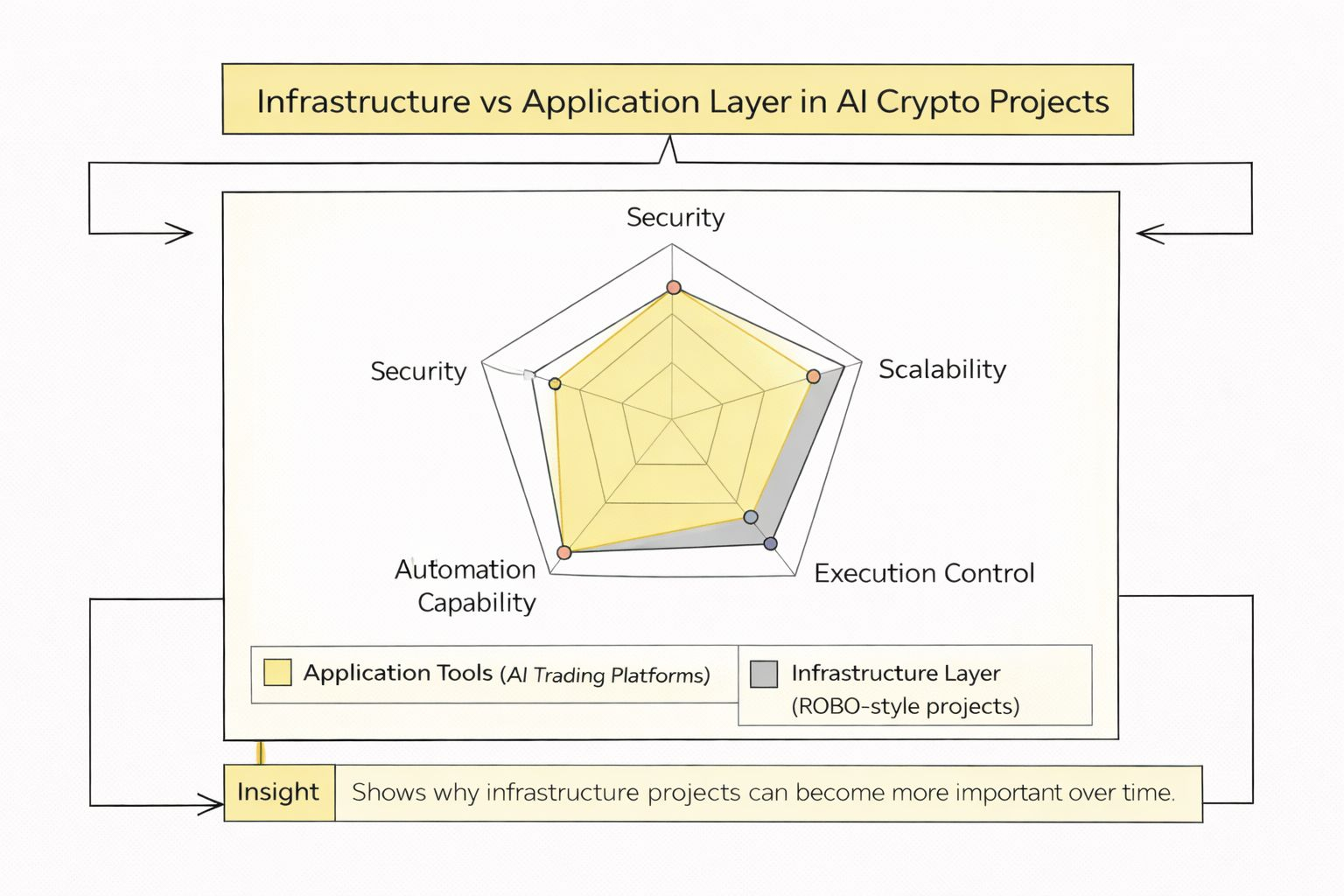
And when you think about how complicated DeFi already is, that starts to make a lot of sense.
We already have advance protocols, liquidity pools, derivatives platforms, and cross-chain bridges all interacting with each other. Now imagine adding AI agents that always analyze data and try to optimize things like liquidity issuing or risk management.
Without some kind of framework controlling how those actions happen, the whole system could easily become chaotic.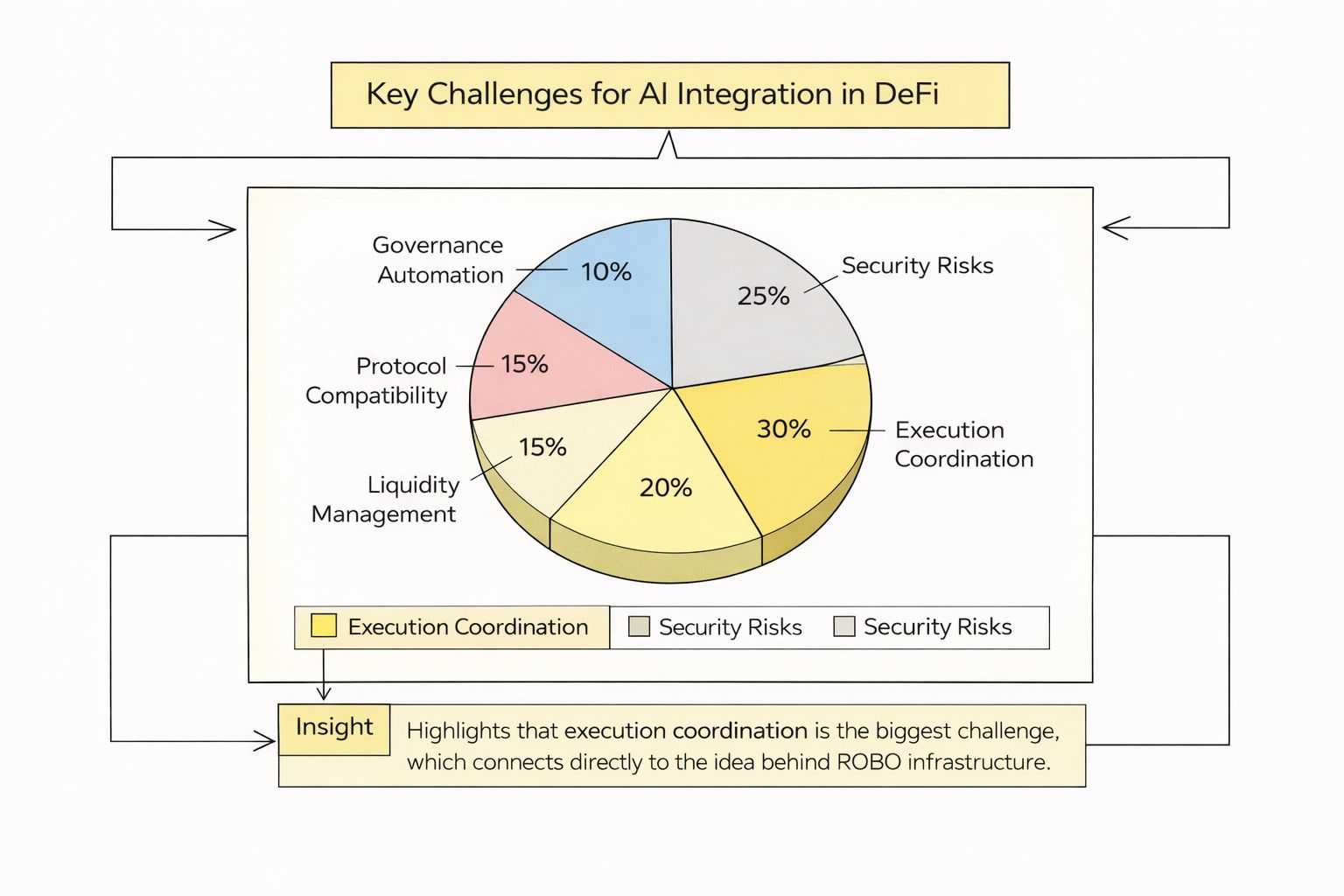
That’s why infrastructure keeps coming back into my mind.
If you look at crypto history, the projects that build foundational layers often become more important over time. In the beginning, people usually pay more attention to applications because they’re easier to understand and market. But eventually, the infrastructure supporting everything becomes the real backbone of the ecosystem.
We saw that happen with Layer 1 networks.
We saw it again during the DeFi boom with liquidity and scaling solutions.
And it wouldn’t surprise me if AI integration follows the same pattern.
Right now the AI sector in crypto is moving incredibly fast. New ideas appear almost every week, and a lot of teams are experimenting with different approaches. Some of those projects will succeed, others won’t, and many will probably evolve as the technology develops.
During this phase, narratives can push prices up quickly even if real adoption hasn’t happened yet.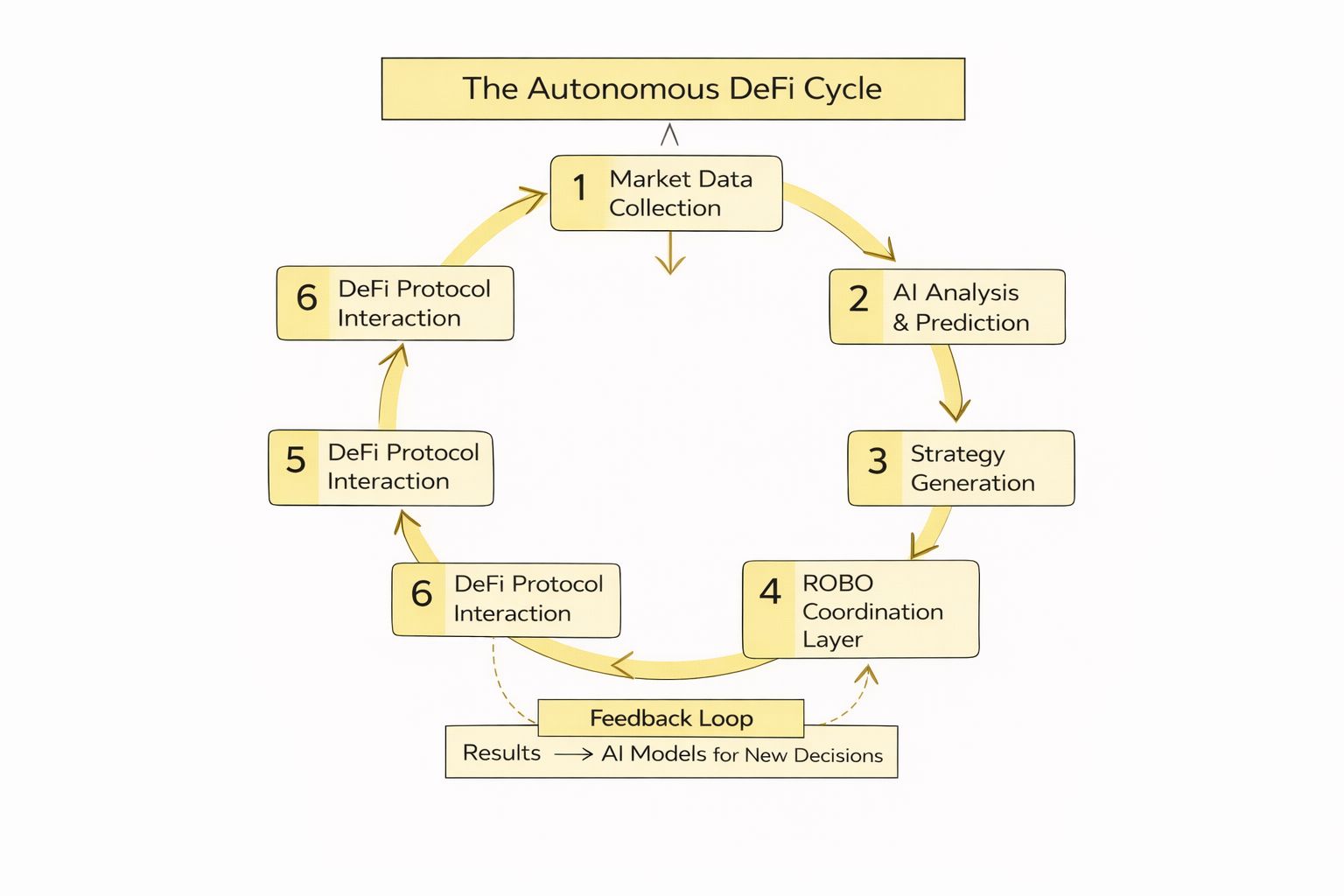
Infrastructure projects usually move more slowly because their value depends on long-term combination and real usage. That can make them seem less thrill in the short term, but it also means they’re working on something more fundamental.
Of course, none of this bond success.
Projects like ROBO still face real challenges. Infrastructure only matters if developers and protocols actually decide to use it. Without real adoption, even well-designed systems remain theoretical.
Competition is also inevitable. As AI becomes more important in crypto, other teams will likely try to build similar coordination frameworks. The projects that succeed will likely be the ones that prove their dependability, security, and usefulness over time.
There’s also the question of token value. For #ROBO to have long-term importance, its role in the ecosystem needs to create real order tied to usage, not just theory.
Still, despite those challenges, the direction feels valid to me.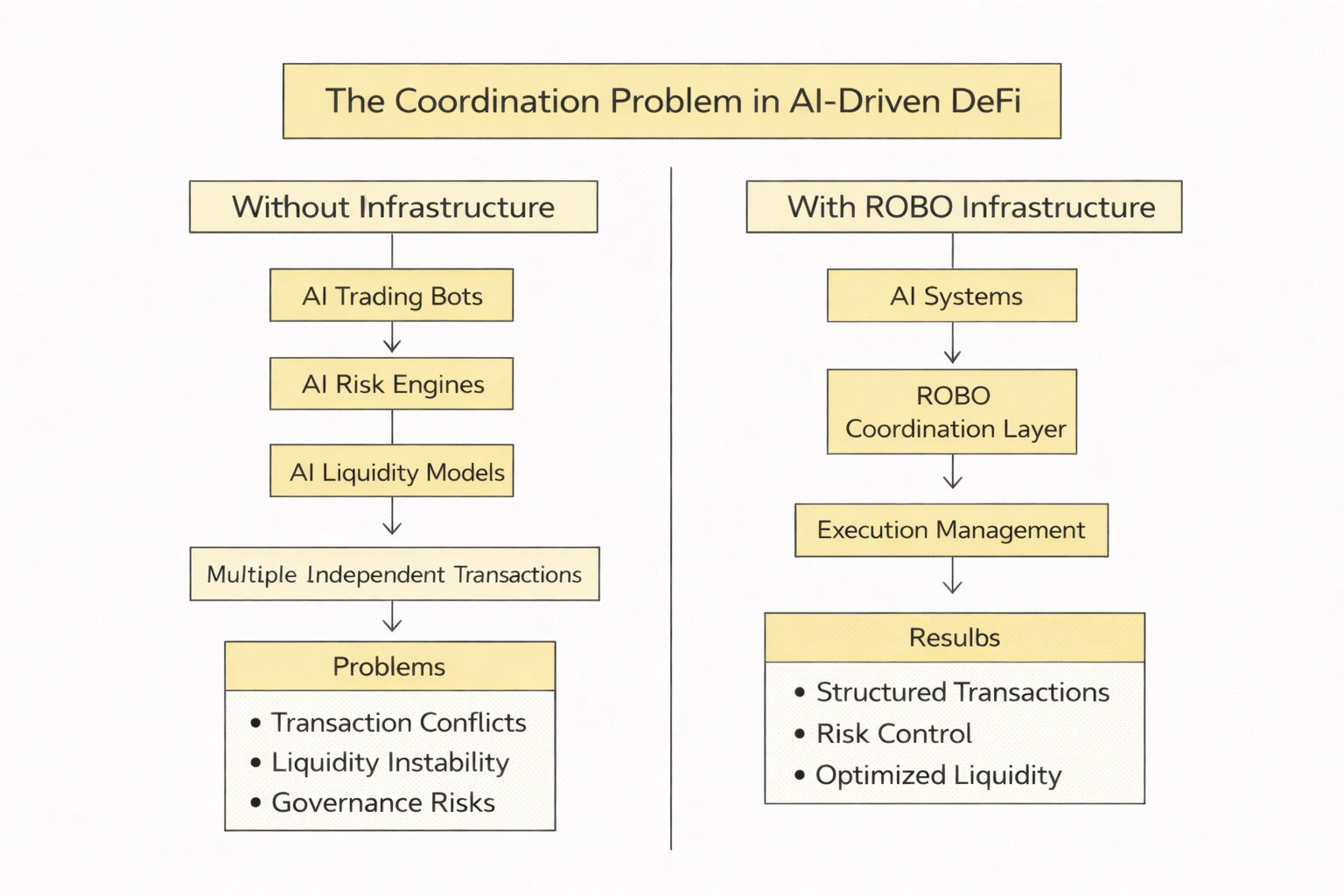
If AI eventually becomes deeply integrated into DeFi helping manage liquidity, assisting governance decisions, or optimizing protocol operations then the systems that coordinate those actions will become extremely important.
AI might provide the intelligence, but infrastructure is what makes that intelligence usable.
And that’s why I’ve been keeping an eye on Fabric Foundation and ROBO. The project seems focused on a part of the AI conversation that doesn’t get a lot of attention yet, but could become essential as decentralized systems grow more automated.
Right now the AI narrative in crypto is still developing, and a lot can change.
But if AI continues to expand inside DeFi, the frameworks that manage coordination and execution might end up playing a much bigger role than most people expect.
That’s exactly why ROBO remains one of the projects I’m watching as this next phase of crypto continues to unfold.