After years in this space, I've developed one filter for evaluating any crypto project: who loses money when the system fails?
If the answer is "only the users", walk away.
Most AI projects promise accuracy through reputation. The developer says their model is trustworthy. If it hallucinates and you lose money, they issue an apology and a patch. Zero financial consequence on their end. The asymmetry is brutal and completely normal.
Mira flips this with a design that genuinely surprised me.
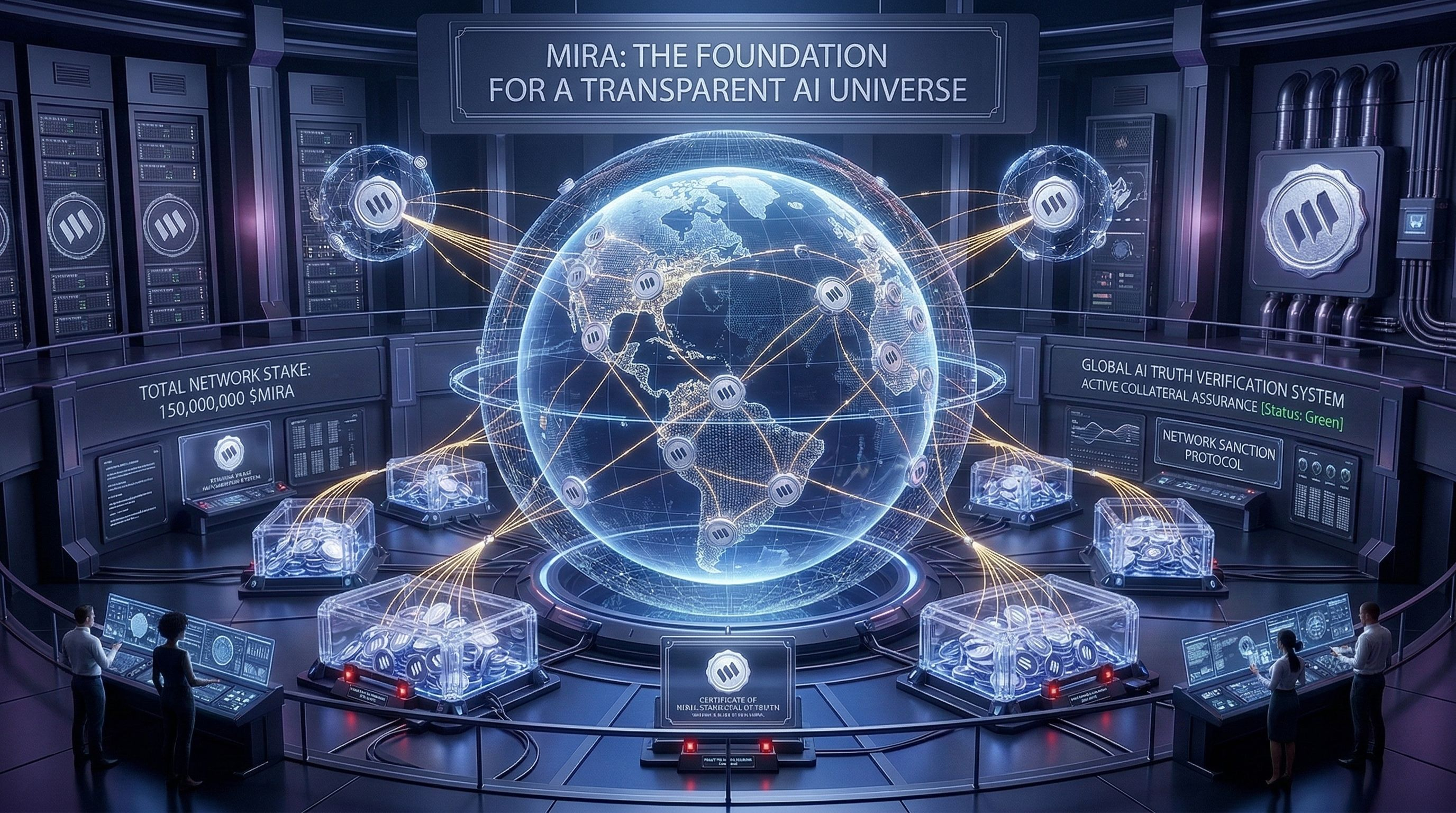
Every validator in Mira's network stakes $MIRA tokens before participating. That staked capital isn't ceremonial. It's active collateral backing every verification they approve. When a validator confirms an AI output as accurate, they're not just clicking approve. They're saying "I'm putting my own assets on the line that this is correct".
Get it wrong, stake gets slashed. Automatically. No appeals.
This creates something I haven't seen executed this cleanly before: truth with a price tag attached to it. The value of any verified claim equals exactly the capital standing behind it ready to be lost if it's wrong.
The flywheel logic is tight. More enterprises need verified AI for high-stakes decisions. Demand for $$MIRA ncreases. Token value rises. Cost of staking rises. Cost of cheating rises proportionally. Network security compounds automatically as adoption grows.
This isn't marketing. It's mechanism design.
The distinction Mira draws matters enormously. Best-effort AI versus high-assurance AI. One gives you plausible outputs. The other gives you cryptographic certificates backed by staked capital from validators who personally absorb the financial hit if they're wrong.
In 2026, that difference separates tools from infrastructure.
Truth isn't free. Mira just made sure someone credible is always paying for it.
@Mira - Trust Layer of AI #Mira $MIRA