
It’s hard to think about robots without talking about intelligence. Better artificial intelligence, better sensors, better robots. But as robots are increasingly being brought into logistics, manufacturing, and service industries, one of the biggest issues that’s starting to emerge is that of coordination. Even intelligent robots need a way of figuring out how they interact, how they get work done, and how they can provide economic value within a physical world.
So, why is the vision of Fabric Protocol so interesting? It’s not just about improving the intelligence of robots. It’s about how robots can actually participate within an economic system. With verifiable computing, Fabric aims to provide a way for agents to actually prove their work, receive payments, and even coordinate their activities.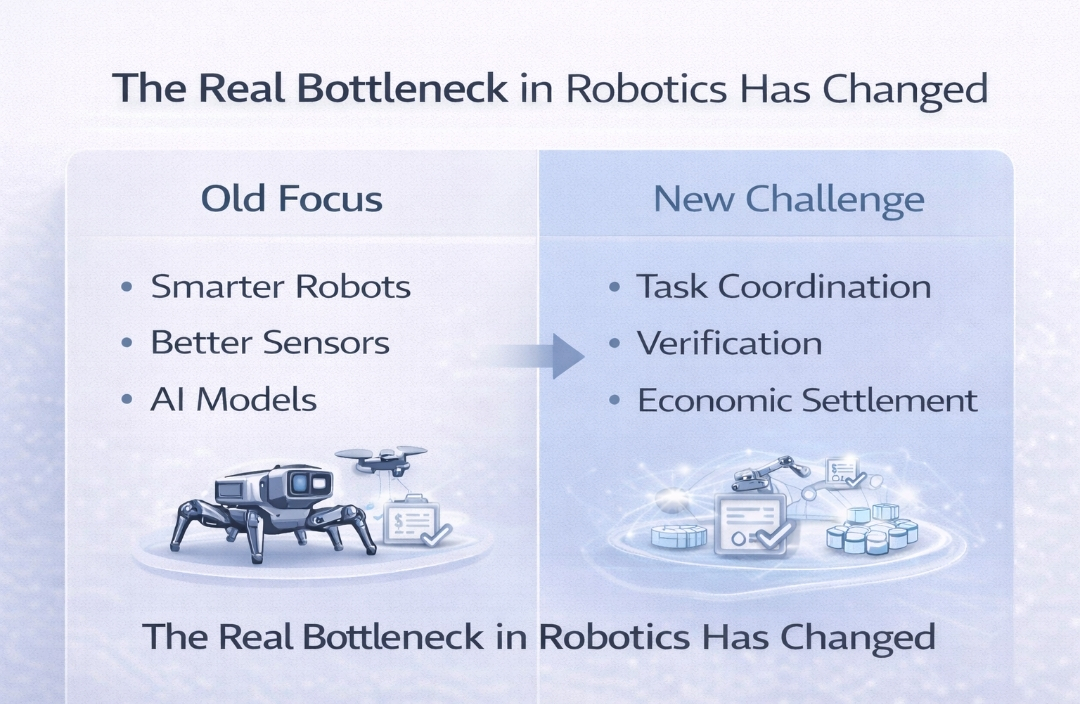
In this context, $ROBO plays the role of an economic layer that enables interactions between participants. This means that developers, operators, and machines can all interact with each other under an incentivization structure that enables governance, task settlement, and coordination between networks. In other words, it can be described as connecting physical machine activities with digital accountability.
If robotics continues to advance further into industries that play important roles in daily life, it is possible that systems that enable machines to coordinate in open networks will become more relevant. The issue will no longer be how intelligent robots get; it will be how they can effectively interact with each other in an economic system that is considered secure.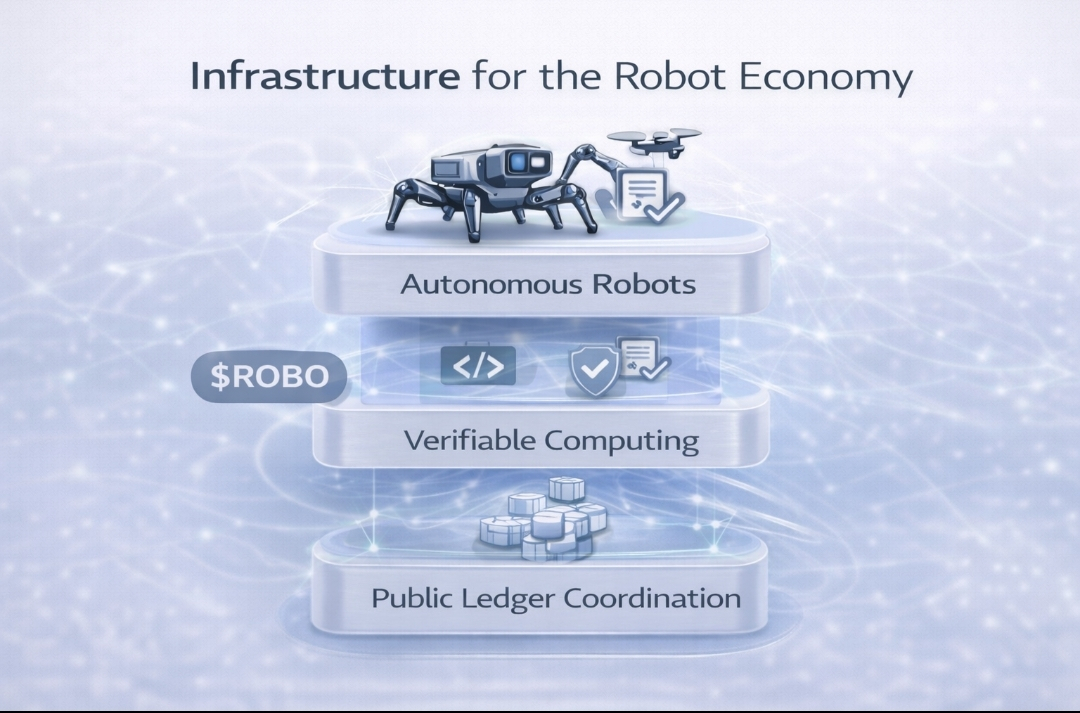
In other words, Fabric’s vision is that perhaps the robot economy is no longer about hardware innovations but about building an infrastructure that connects machines, data, and incentives together.
$ROBO #ROBO @Fabric Foundation
