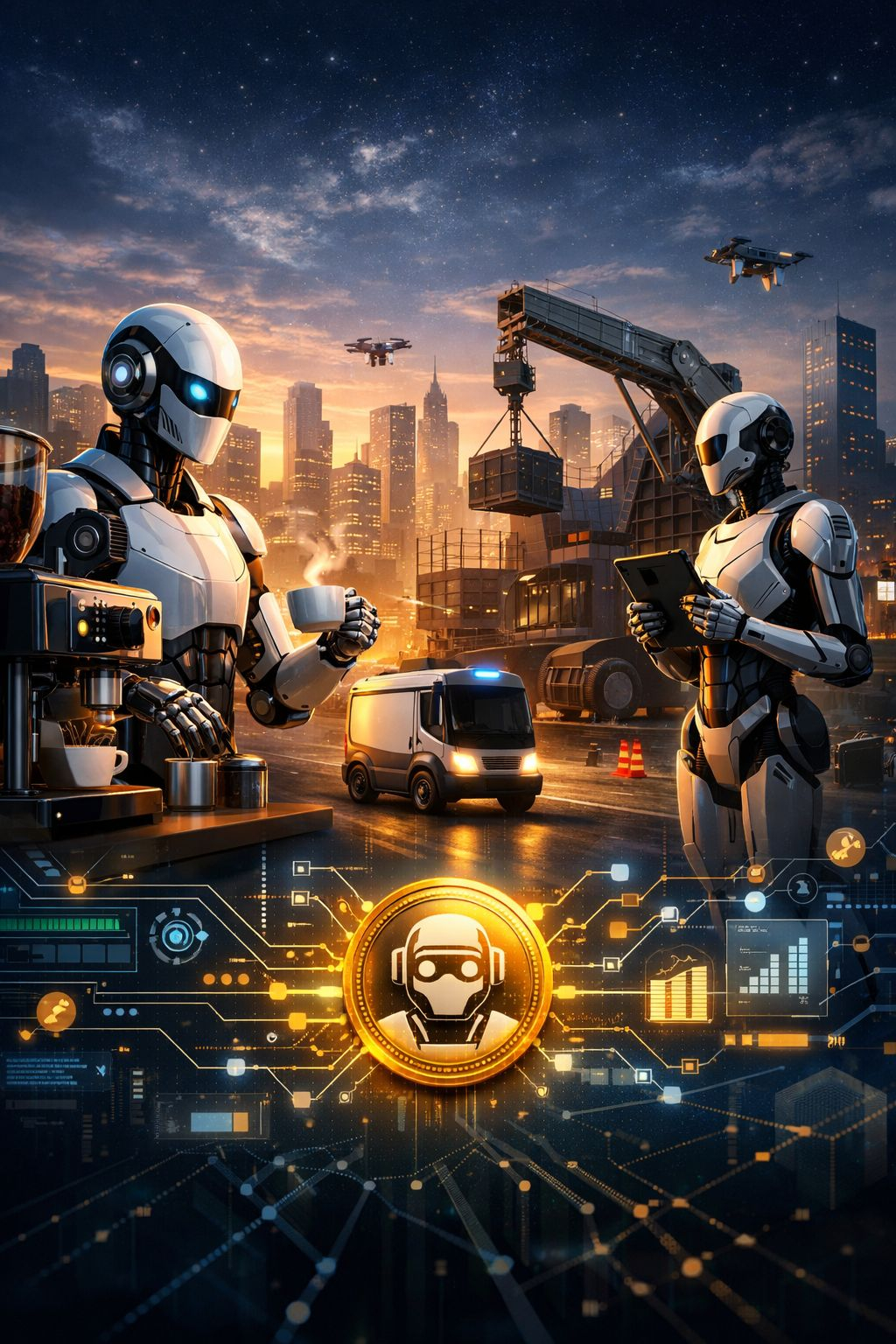
Imagine waking up in 2035.
Your coffee was prepared by a robot. Your package was delivered by a robot. A construction robot built the building you live in.
But here’s the real question nobody asked yet….
Who pays these robots? And how do they trust each other?
Right now robots cannot open bank accounts, hold money, or verify identity. Yet the future economy will depend on them. This is the exact problem Fabric Foundation is trying to solve.
Fabric is building a decentralized infrastructure where robots can have on-chain identities, wallets, and the ability to receive payments for real work. Instead of centralized companies controlling all robot fleets, the network allows global coordination where machines, developers, and humans interact in one open ecosystem.
At the center of this system is $ROBO .
ROBO acts as the economic layer of the robot economy. It powers payments between machines, staking for network participation, governance decisions, and verification of robotic work on-chain. In simple terms: if robots become part of the global workforce, they will need a digital economy — and ROBO is designed to power it.
Fabric Foundation
The most fascinating part? Fabric introduces the idea of “Proof of Robotic Work.”
Meaning tokens are tied to real robotic activity in the physical world — not just speculation.
We often hear about AI changing the internet.
But Fabric is asking a much bigger question:
What happens when AI leaves the screen… and enters the real world?
Maybe the robot economy isn’t science fiction anymore.
Maybe it’s just getting started.
@Fabric Foundation $ROBO #ROBO