
Fabric Protocol is slowly becoming one of the most interesting ideas in the world of robotics and intelligent machines. When we look around today, we can see artificial intelligence improving rapidly and robots becoming more capable every year. Machines can already assist in factories, help with deliveries, analyze complex data, and even interact with humans in simple ways. But there is still a big question that many people do not think about. If millions of intelligent machines start working around the world, how will they coordinate with humans and with each other safely and fairly.
Fabric Protocol was created to answer this question. It is designed as an open global network where robots, artificial intelligence agents, developers, and human operators can work together through transparent digital infrastructure. Instead of building robotics systems that are locked inside private companies, Fabric introduces the idea of a shared network where machines can communicate, verify actions, and cooperate in a structured environment.
The project is supported by the Fabric Foundation, a non profit organization that focuses on building the infrastructure needed for safe human machine collaboration. The foundation believes that robotics should not grow inside closed systems where only a few organizations control the technology. Instead, it promotes an open environment where developers, researchers, engineers, and communities can participate in shaping the future of robotics together.
What makes Fabric Protocol unique is the way it connects robotics with decentralized computing and economic coordination. Traditional robotics systems often rely on centralized platforms where data, decision making, and operations are controlled by a single authority. Fabric takes a different path by introducing a public coordination layer that allows machines and humans to interact through transparent rules.
In this system, robots are not just tools controlled by software. They can become participants in a network where tasks, data, and computation are organized through verifiable processes. This approach makes it possible to track actions, confirm results, and maintain trust between different participants in the ecosystem.
One of the most important technologies used by Fabric Protocol is verifiable computing. As machines become more intelligent and capable of making decisions on their own, it becomes essential to verify that their actions are correct and trustworthy. Verifiable computing allows systems to prove that a task was completed according to predefined rules.
For example, if a robot performs a job such as collecting data, moving objects, or assisting in logistics, the network can verify that the task was performed properly. This prevents manipulation and helps maintain trust across the system. When many machines are operating across different locations, this kind of verification becomes extremely important.
Fabric Protocol is also built around the concept of agent native infrastructure. This means the network is specifically designed for intelligent agents such as robots and artificial intelligence systems. Instead of forcing machines to operate inside traditional software environments that were built for humans, Fabric creates infrastructure that supports the natural behavior of intelligent machines.
Through this environment, robots can request data, access computing power, perform tasks, and coordinate with other machines. They can also interact economically with different participants in the network. This creates a flexible ecosystem where machines can operate more independently while still following transparent rules.
Another essential component of Fabric Protocol is its public ledger system. The ledger acts as a shared record that tracks activities across the network. Every task, interaction, and transaction can be recorded and verified through this transparent infrastructure.
This ledger provides accountability. When machines perform tasks or interact with other participants, their actions become visible within the network. This helps maintain trust because everyone can verify what is happening without relying on centralized control.
Identity is also a major part of the Fabric ecosystem. In order for robots to operate in a shared network, each machine must have a unique and verifiable identity. This identity helps the system understand which robot is performing tasks, who operates it, and how it has behaved over time.
A robot identity may include its capabilities, operational history, performance reputation, and ownership information. Over time, machines that consistently perform tasks successfully can build stronger reputations inside the network.
This system helps create trust between machines and humans. Participants can feel confident working with robots that have proven records of reliability and performance.
Fabric Protocol also introduces an economic layer that allows machines to participate in financial activity within the network. In traditional systems, robots cannot directly participate in economic transactions. Payments and financial coordination are handled by companies or centralized platforms.
Fabric changes this structure by allowing machines to interact economically through a digital token called ROBO. This token serves as the main utility asset inside the ecosystem.
Robots and participants can use ROBO to pay for services, receive rewards for completing tasks, and contribute to the network. Developers who create valuable software or skills for robots may also receive rewards through the token system.
The token is also used for staking and governance. Participants can stake tokens to help secure the network and maintain honest behavior. If someone tries to manipulate the system or provide incorrect data, penalties can occur.
This mechanism encourages responsible participation and strengthens the trust structure of the ecosystem.
Fabric Protocol works closely with a robotics software system known as OM1. This system acts as an operating system designed specifically for intelligent machines. OM1 provides the cognitive capabilities that allow robots to understand instructions, process information, and perform tasks in the real world.
While OM1 focuses on intelligence and control inside the robot, Fabric Protocol provides the coordination layer that connects machines to the broader network.
Together, these systems create a powerful foundation where robots can learn, communicate, and cooperate in a decentralized environment.
Another interesting concept introduced by Fabric Protocol is the idea of modular robot skills. Instead of programming every robot from the beginning, developers can create skill modules that provide specific capabilities.
These modules may include navigation systems, object recognition, communication tools, or task automation programs. Once created, these skills can be shared across the network.
Robots can install the skills they need to perform certain jobs. This greatly speeds up innovation because developers can build new applications using existing components.
Over time, this model could lead to the creation of a marketplace where developers publish robot skills that can be used by machines across the ecosystem.
Such a system would create new opportunities for software creators while improving the abilities of robots everywhere in the network.
The broader goal of Fabric Protocol is to create a global robot economy. In this economy, humans and machines collaborate through open infrastructure.
Developers contribute software and intelligence. Operators deploy robots in real world environments. Data providers supply valuable information that improves machine learning. Validators help maintain the reliability of the system.
All these participants interact through shared incentives and transparent coordination mechanisms.
Instead of robotics being controlled by isolated organizations, Fabric envisions a collaborative environment where innovation spreads across the network.
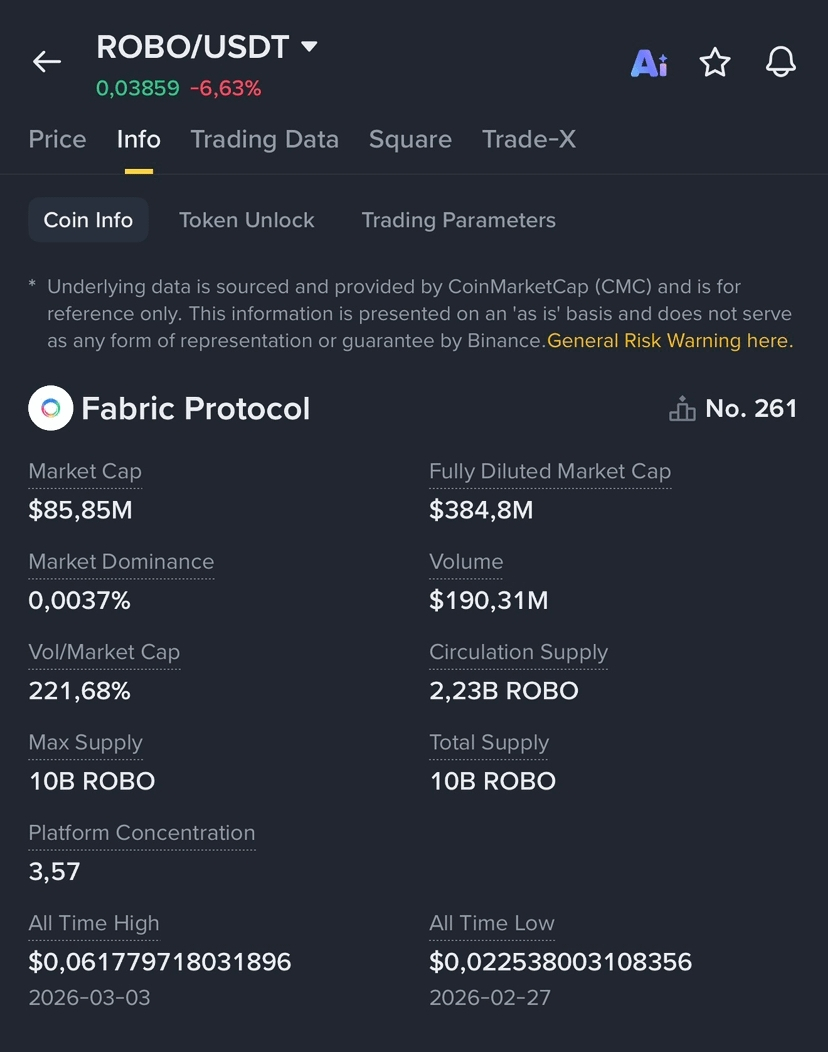
Recently, the project has gained attention in the digital asset and technology space. The ROBO token became available on Binance, which helped introduce the ecosystem to a wider global audience. This listing brought new interest to the idea of decentralized robotics infrastructure.
Even with this growing attention, Fabric Protocol is still in the early stages of development. The vision behind the project is ambitious and will require continuous technical progress, developer participation, and real world adoption.
The coming years will likely determine how successful this approach can become. If the technology develops as planned, Fabric could become an important foundation for future robotics networks.
The world is gradually entering a new era where intelligent machines will become part of everyday life. Robots may help in hospitals, warehouses, transportation systems, research labs, and even in homes.
Managing this growing machine workforce will require systems that are transparent, secure, and cooperative.
Fabric Protocol represents one possible path toward that future. By combining robotics, decentralized infrastructure, and economic incentives, it attempts to create a network where humans and intelligent machines can collaborate in a safe and organized way.
It is still early in the journey, but the idea behind Fabric Protocol reflects a powerful shift in how we think about robotics.
Instead of machines being isolated tools controlled by a few organizations, they may become participants in an open global network where trust, transparency, and collaboration shape the next generation of intelligent technology.@Fabric Foundation
