
When I first exploring smart contracts I noticed that many legacy blockchains struggled with complex logic. Transactions were often slow and heavy computations could cause delays. That is why I became interested in the ideas behind Fabric Protocol and what many people now call Smart Contracts 2.0. While working on my laptop one evening around 9 PM I was reading about how Fabric handles more advanced automated agreements and it genuinely caught my attention.
What impressed me is how Fabric is designed to support logic heavy contracts without slowing down the network. When I write or test contract ideas on my laptop I want a system that can process multiple conditions decisions and validations smoothly. Fabric makes this possible by structuring how transactions are executed validated and confirmed across the network.
In my experience this approach allows developers like me to imagine more detailed agreements. For example contracts that react to real time data manage multiple participants or trigger layered actions automatically. Instead of simple if this then that rules I can think about deeper automation.
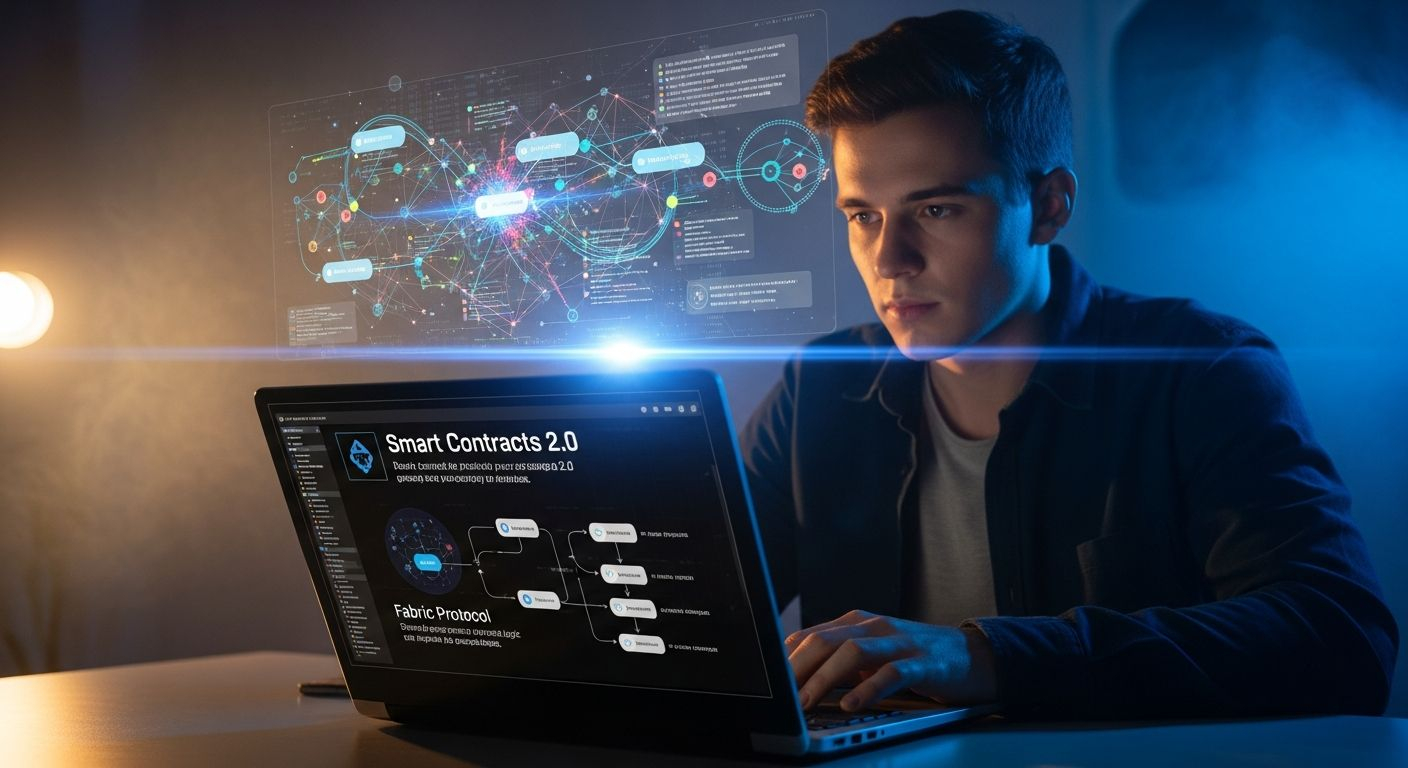
From my perspective Smart Contracts 2.0 feel more practical. When I look at Fabric Protocol I feel that my laptop is not just a coding tool but a gateway to building smarter and more powerful decentralized agreements.
