
While Tehran warns it will ‘burn everything’, its proxies in Lebanon, Yemen and Iraq face a choice between suicidal revenge and local survival.
Listen to this article | 6 mins

By Mohammad Mansour
Published On 2 Mar 20262 Mar 2026
Click here to share on social media
Share
Save
Add Al Jazeera on Google
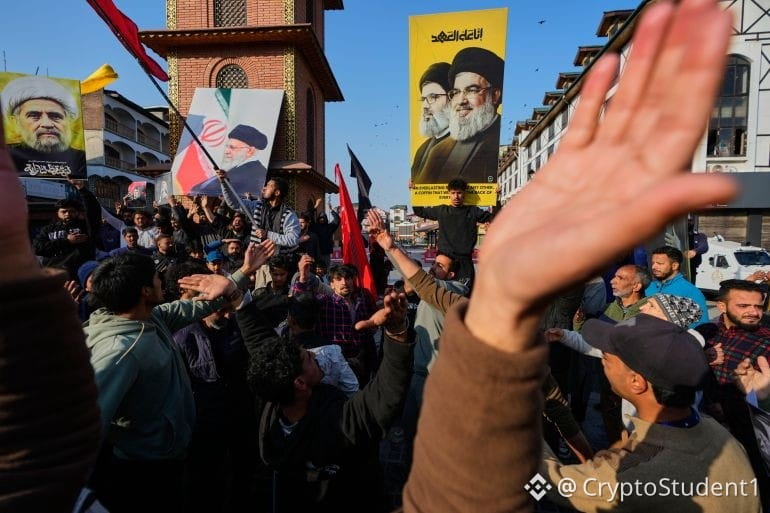
The killing of Iranian Supreme Leader Ali Khamenei in a United States-Israeli air campaign has sent shockwaves through the Middle East, decapitating the leadership of the “axis of resistance” at its most critical moment.
For decades, this network of groups allied with Iran was Tehran’s forward line of defence. But today, with its commander-in-chief dead and its logistical arteries cut, the alliance looks less like a unified war machine and more like a series of isolated islands fighting desperate survival wars.
Recommended Stories
list of 4 items
list 1 of 4Trump says likely more US casualties, attacks on Iran will continue
list 2 of 4Poll suggests only a quarter of Americans support attacks on Iran
list 3 of 4Israel bombs Beirut after Hezbollah fires rockets in Iran war retaliation
list 4 of 4After Iran’s salvo hit their skylines, will Gulf states enter the war?
end of list
In an exclusive interview with Al Jazeera Arabic, Iranian Foreign Minister Abbas Araghchi insisted that the Islamic Republic does not need its proxies to fight its battles.
“We do not expect anything from anyone,” Araghchi said when asked about the role of allied militia groups. “We can defend ourselves by ourselves. … We do not want any party to help us in our self-defence.”
This statement creates a striking paradox: Just as Tehran claims it stands alone, its most powerful proxy, Hezbollah, has officially entered the fray—not necessarily to help Iran, but to save itself.
Hezbollah: Preempting the inevitable
In Beirut, the caution of the first 48 hours has collapsed.
On Monday, Hezbollah launched a rocket barrage targeting northern Israel, explicitly linking the attack to Khamenei’s assassination. The Israeli military responded with wide-scale air raids on Beirut’s southern suburbs and the Bekaa Valley.
Ali Rizk, a Beirut-based security analyst, told Al Jazeera that Hezbollah’s shift was likely driven by an existential fear rather than just solidarity.
Advertisement
“Hezbollah believes that it’s going to be next on the list,” Rizk said, noting that the group still possesses a “formidable arsenal” despite recent losses. “Some officials have been expecting Israel to target leaders of the armed group after the attacks on Iran.”