

Let’s be honest for a second. AI is everywhere right now. Trading bots, research tools, automation systems, even decision engines that companies quietly plug into real financial operations. Sounds impressive. And yeah, some of it actually is.
But there’s a problem people don’t talk about enough.
AI gets things wrong. A lot.
Not just small mistakes either. Hallucinations, random facts, confident nonsense. You ask a model something complex and it’ll sometimes answer like it knows the truth… when it’s basically guessing. I’ve seen this before with early automation systems. When the machine is assisting a human, it’s fine. Humans catch the mistakes.
When the machine starts making decisions on its own?
That’s where things get messy.
And this is exactly the headache Mira Network is trying to deal with.
Look, the idea is pretty simple when you strip away the technical jargon. Instead of trusting one AI model to give the correct answer, Mira breaks the output into smaller claims. Then multiple validators check those claims using independent models and verification logic. Think of it like peer review… but for AI.
If enough validators agree the claim is correct, the network records that verification on-chain. Permanent record. No backtracking. No quiet edits.
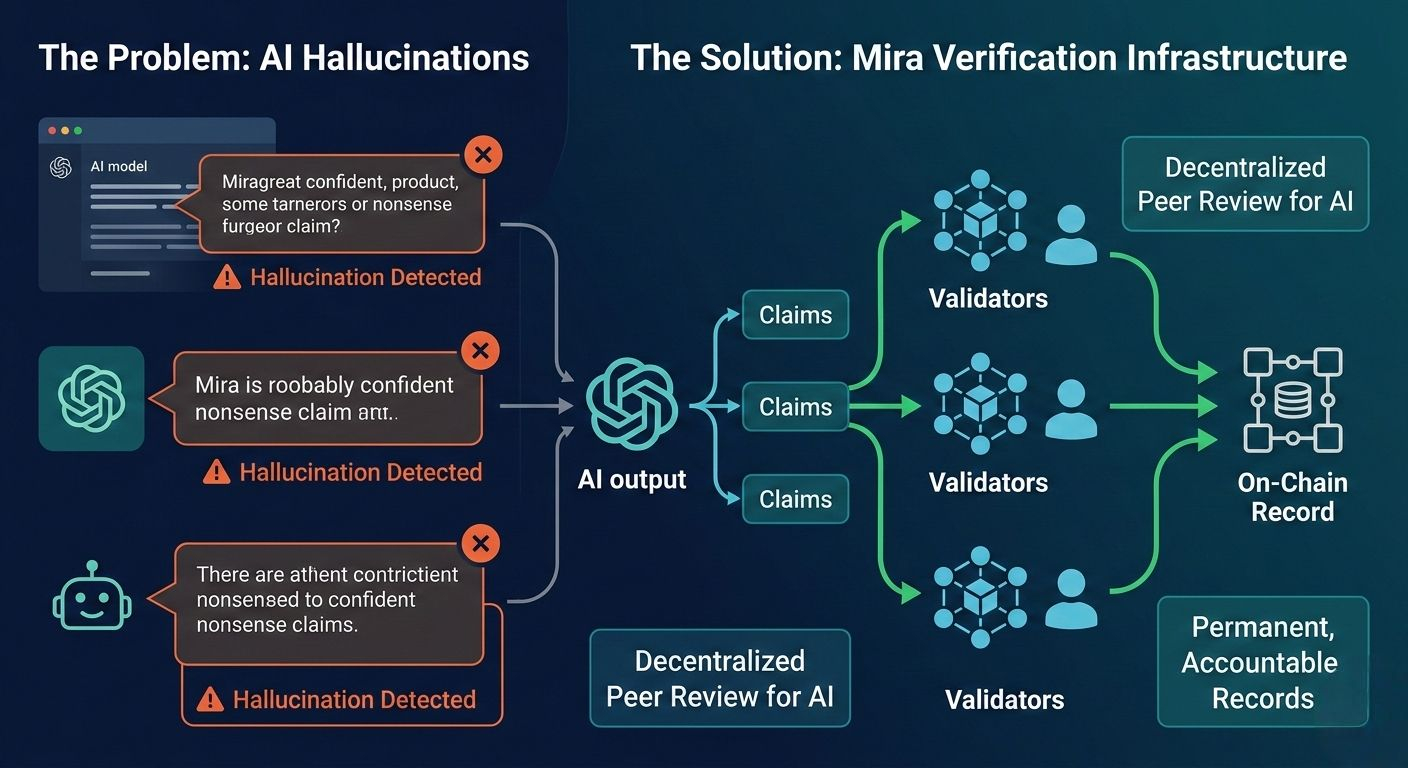
And honestly, that’s the missing piece most AI systems don’t have right now. Accountability.
But here’s the thing people in crypto often ignore. Cool technology alone doesn’t keep a network alive. Token design matters just as much. Sometimes more.
And this is where $MIRA actually gets interesting.
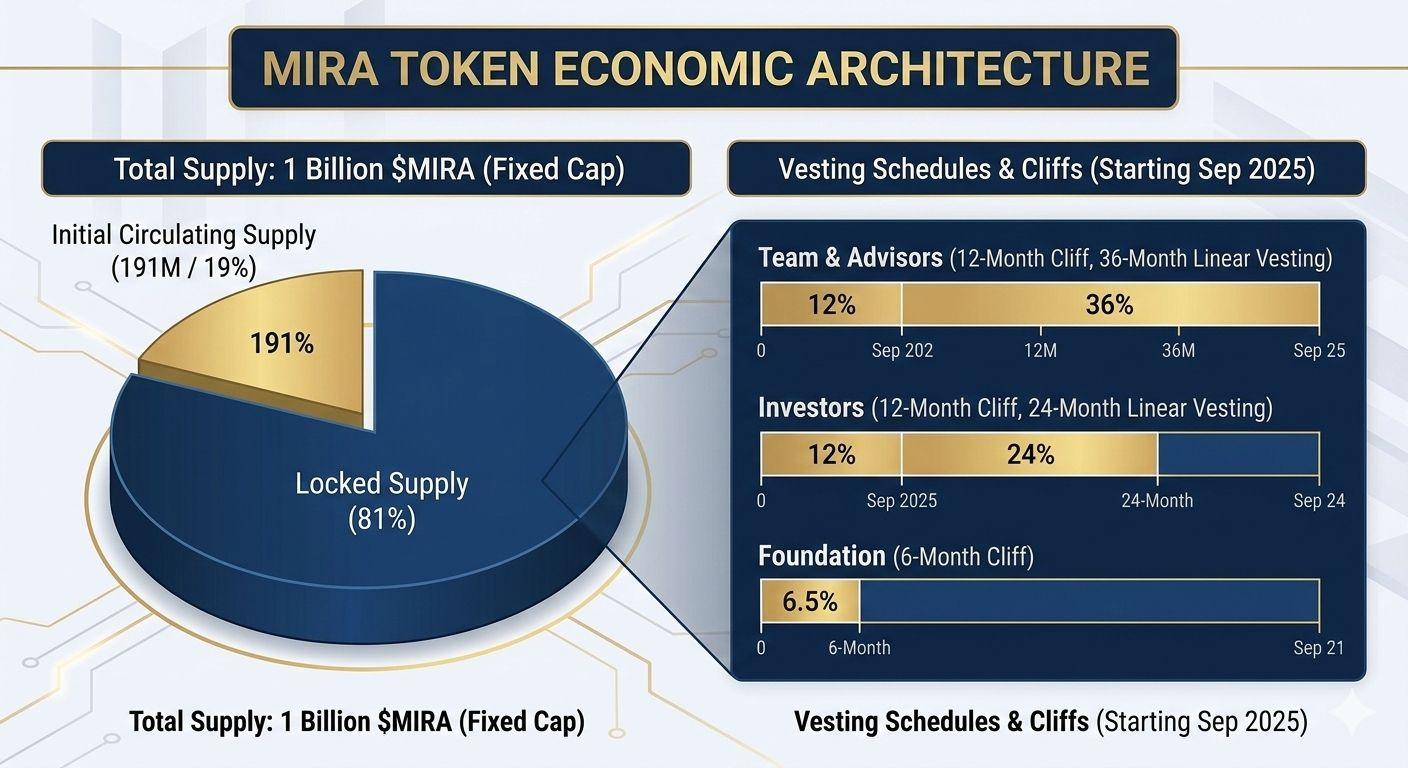
Let’s start with supply. Mira runs on a fixed supply of 1 billion tokens. No inflation tricks. No surprise emissions later. That cap matters because infrastructure tokens tend to live or die by their monetary design.
At the Token Generation Event in September 2025, the network only released 191 million tokens into circulation. That’s about 19% of total supply.
Which is actually pretty conservative by crypto standards.
I’ve watched plenty of launches where half the supply floods the market on day one. You know what happens next. Early investors dump, liquidity collapses, and the token spends two years trying to recover.
Mira clearly tried to avoid that mess.
Most of the tokens stay locked behind vesting schedules, and the lockups are pretty strict.
Team and advisors face a 12-month cliff, then their tokens unlock slowly over 36 months. Investors follow a similar structure — 12-month cliff, then 24-month linear vesting. Even the foundation isn’t fully liquid. It has a 6-month cliff before distribution starts.
Why does this matter?
Because cliffs force patience. For the first year, insiders can’t touch their tokens. No quick exits. No early dumping.
Honestly, I like seeing that. It doesn’t guarantee anything, but it usually means the team expects to stick around for a while.
Now let’s talk about the part that really drives the system: demand.
A lot of crypto tokens pretend to have utility. Governance votes nobody participates in. DAO proposals that barely affect the product. You’ve seen it.
But Mira built its token directly into the operational layer of the network.
Everything revolves around the Dynamic Validator Network.
Validators handle the verification process. They review AI outputs, check claims, run models, and help the network decide whether something is true or not. Sounds simple, but there’s a catch.
You can’t just join for free.
Validators have to stake $MIRA tokens.
And that stake isn’t just symbolic collateral sitting around doing nothing. It’s real economic exposure.
Because the network runs a slashing system.
If a validator acts honestly and does solid verification work, they earn fees. Straightforward incentive.
But if a validator starts submitting incorrect validations, manipulating claims, or trying to game consensus?
The network can slash their stake.
Meaning it takes their tokens. Gone.
That’s what people mean when they say “skin in the game.” Validators don’t just earn rewards. They carry risk. Real risk.
And honestly, systems like this tend to work better than reputation models. When money sits on the line, people suddenly care a lot more about accuracy.
There’s another demand layer too, and it’s probably the most important one.
Enterprises that want to verify AI outputs through Mira have to pay verification fees.
In $MIRA.
No shortcuts. No alternative payment tokens.
If a company wants the network to verify an AI decision — maybe a financial model output, maybe a robotic instruction set, maybe an automated risk analysis — they need the token to pay for that service.
That creates a direct link between network usage and token demand.
Validators need tokens to stake.
Enterprises need tokens to pay fees.
Validators earn tokens but keep staking them to stay active.
You start to see the flywheel forming.
Now, let’s talk about funding for a second, because this part matters more than people admit.
Mira raised $9 million in seed funding, led by Framework Ventures and BITKRAFT Ventures.
Those names aren’t random venture funds chasing hype cycles.
Framework Ventures backed Chainlink early. And if you’ve been around crypto long enough, you know how important that project became for decentralized finance.
BITKRAFT also backed infrastructure plays like Synthetix, which built one of the earliest synthetic asset protocols.
So when firms like these invest in something, they’re usually thinking about infrastructure layers, not short-term narratives.
Does venture backing guarantee success? Of course not.
But it does tell you serious analysts spent time tearing apart the architecture before writing a check.
And when you step back and look at the structure of Mira, the design actually holds together pretty well.
Fixed supply.
Low initial circulation.
Long vesting schedules.
Mandatory staking.
Slashing penalties.
Protocol fees paid in the native token.
That combination turns the token into something more than a governance chip. It becomes a productive asset inside the network’s economy.
Will Mira dominate the AI infrastructure layer?
Honestly… nobody knows yet. Execution always matters more than architecture.
But I’ll say this.
Most AI tokens floating around today feel like narratives searching for a product.
Mira feels different.
Not perfect. Nothing in crypto is. But the structure behind it actually makes sense. And in infrastructure markets, structure usually decides who survives.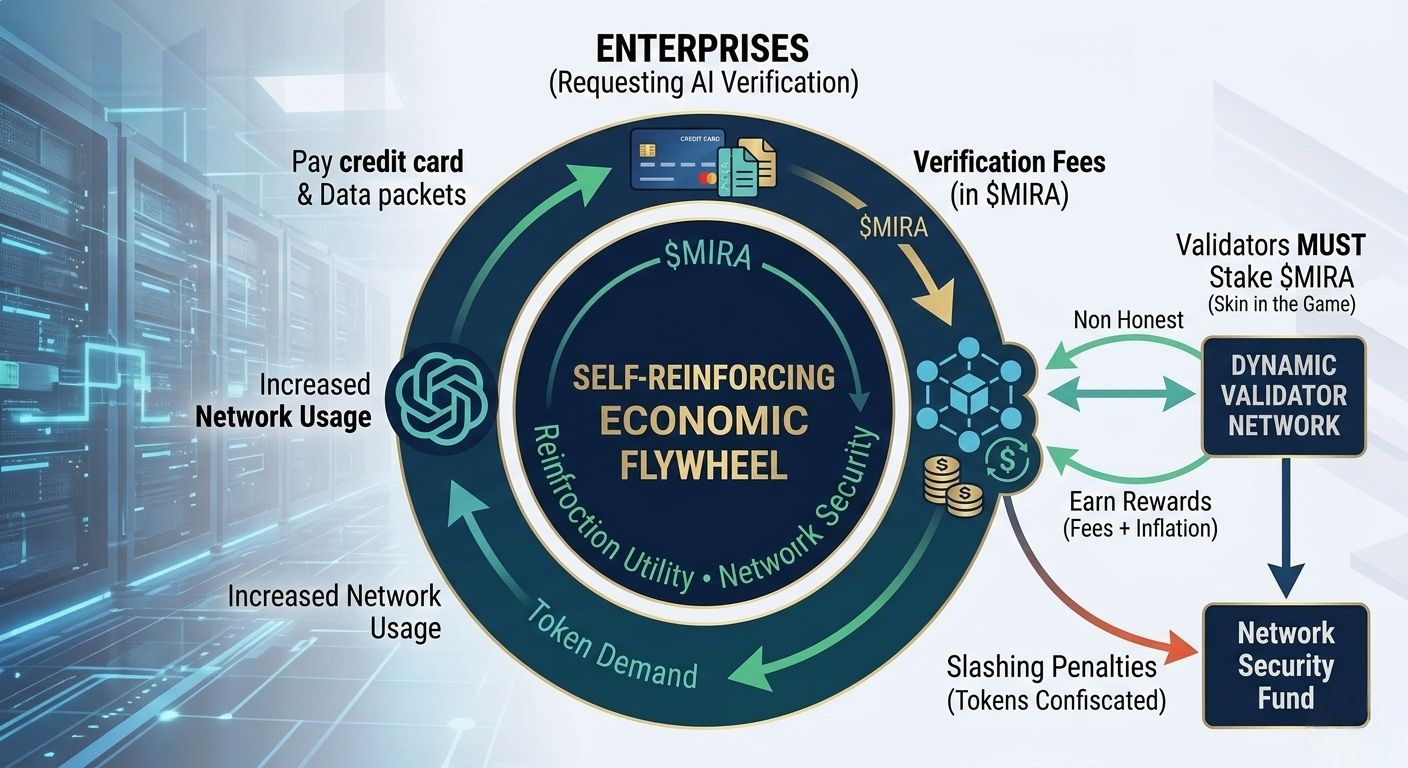
#Mira @Mira - Trust Layer of AI $MIRA
