
There is a pattern in crypto that repeats so often it almost feels like a rule. Infrastructure projects raise large amounts of capital, build excitement around token utility, and then at the Token Generation Event quietly reveal that the token mainly exists for governance. In practice that means the token does very little until the platform becomes extremely successful.
MIRA does not follow that familiar script, and that difference deserves a closer look.
When Mira Network launched its Token Generation Event in September 2025, roughly 191 million tokens entered circulation. That represents about nineteen percent of the total fixed supply of one billion tokens.
From the beginning the team behind MIRA treated large token unlocks as a structural risk. Instead of hoping marketing would absorb that pressure, they built long waiting periods directly into the distribution plan.
The contributors working on the project cannot sell immediately. Their allocation remains locked for twelve months and then releases gradually over the following thirty six months.
Early investors control fourteen percent of the supply, but their tokens follow a similar structure. They also face a twelve month waiting period before a twenty four month release schedule begins.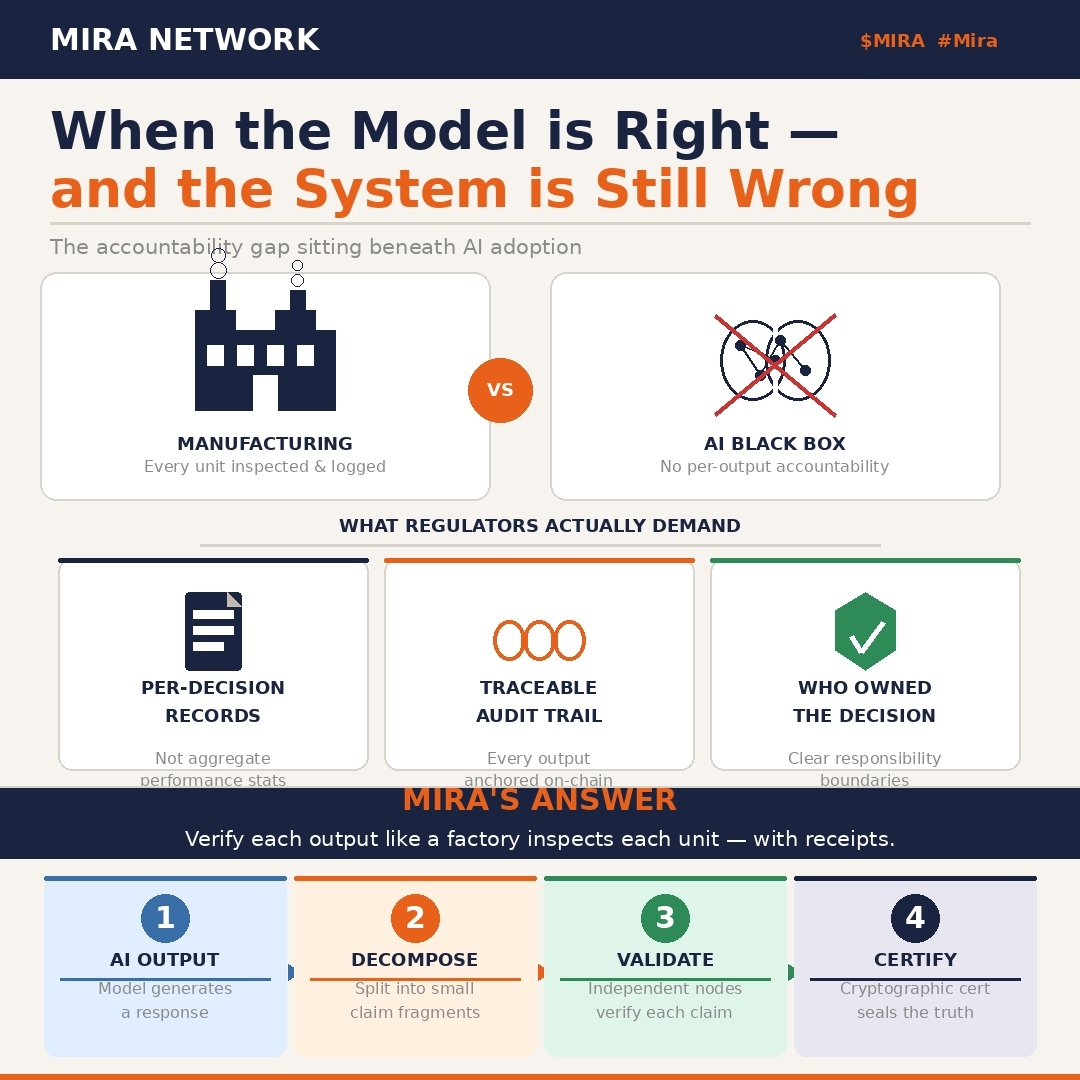
The foundation received fifteen percent of the supply. Even that portion is restricted, remaining locked for six months before a thirty six month distribution period starts.
Even allocations reserved for developers and ecosystem partners are not simply handed out. Those tokens unlock only when specific development and growth milestones are reached.
What this structure does is align the people closest to Mira Network with the same time horizon as the broader market. The individuals who understand the system most deeply cannot simply exit early.
Of course supply discipline alone does not justify a token.
The demand side is where MIRA becomes more interesting.
Operators who run nodes inside the Dynamic Validator Network must stake MIRA tokens in order to participate. When I look at this system it becomes clear that staking is not just symbolic participation. Validators actually place their tokens at risk when they join the network.
If they perform verification tasks correctly they earn rewards. If they behave carelessly or dishonestly the network can penalize them and reduce their stake.
The more tokens an operator commits, the more verification work they are able to handle and the more rewards they can potentially earn.
This staking requirement is not optional.
Anyone who wants to operate a node and earn revenue must hold and stake a meaningful amount of MIRA.
As the network expands and more verification activity flows through it, the amount of tokens required for staking naturally increases.
Another source of demand comes from the payment layer.
Developers and organizations that use Mira Network to verify AI generated outputs pay for that service using MIRA. When applications request verification they must spend the token that powers the network.
This is not a fee that can easily be replaced with something else. It is the native currency used to access the verification infrastructure.
As more companies begin relying on the system, demand for MIRA rises along with the usage of the network itself.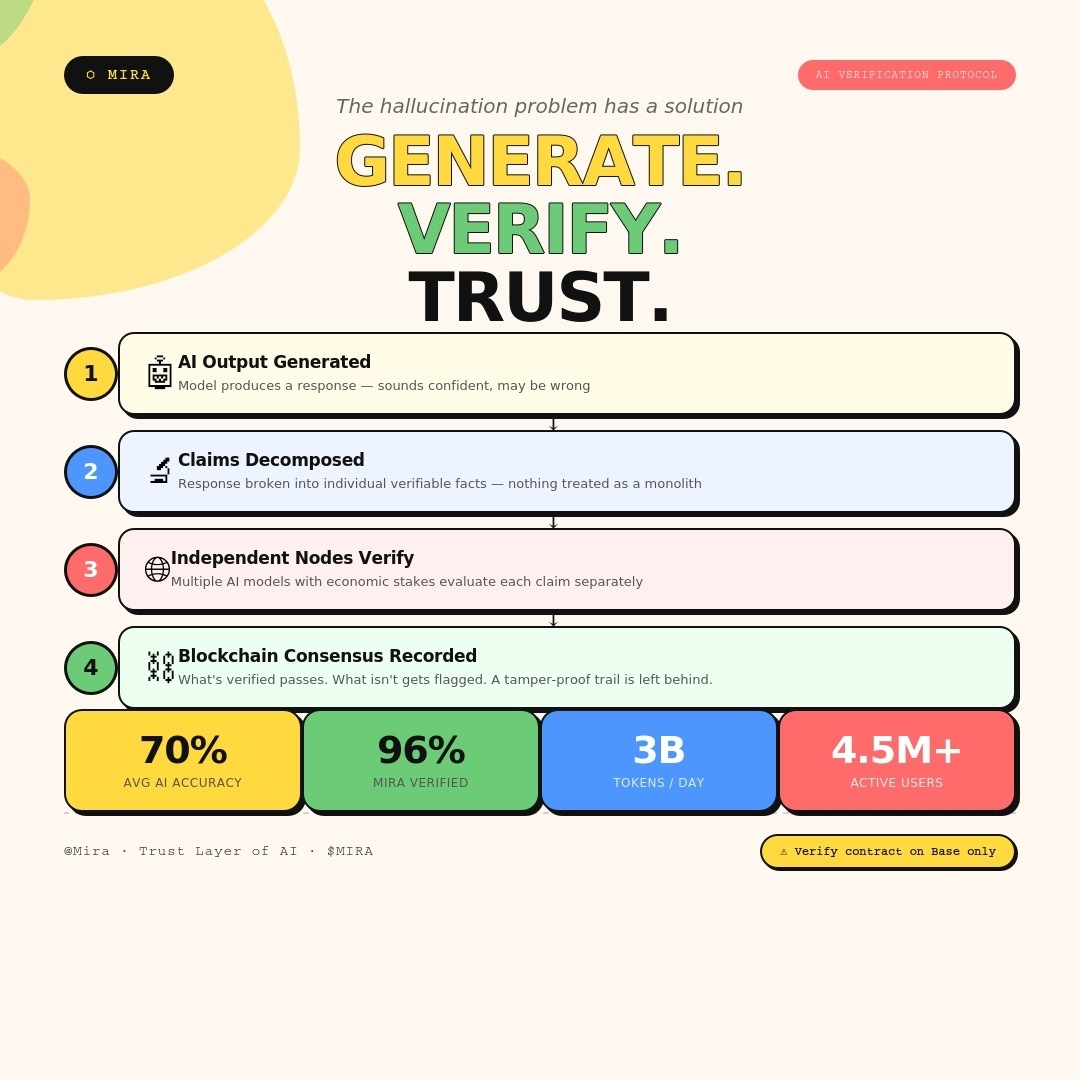
The investor group supporting Mira Network also reflects a focus on infrastructure. The nine million dollar seed round was led by Framework Ventures and BITKRAFT Ventures.
Both firms have backed projects such as Chainlink and Synthetix which eventually became core pieces of blockchain infrastructure. Their investment thesis suggests they see Mira Network playing a similar foundational role within the AI ecosystem.
The way the project distributed validator access also shows careful ecosystem planning.
Before the mainnet launch, Mira organized two separate node sales that allowed early supporters to secure operator positions. This step helped create a decentralized validator community ahead of time rather than concentrating control within a small group.
Governance adds another layer to the token’s function.
Participants who stake MIRA gain the ability to vote on protocol upgrades and decisions regarding the ecosystem treasury. The influence of each participant grows with the amount of tokens they have committed, meaning those with the largest long term exposure have the strongest voice in shaping the network.
When I step back and look at the full structure, what emerges is an economic system built on several reinforcing forces.
Validators generate staking demand. Developers and companies create payment demand. Long term participants drive governance demand.
Each component strengthens the others. More validators improve verification quality. Higher quality attracts more developers and enterprises. Increased usage generates more payments and rewards, which then draws additional validators into the system.
Many AI infrastructure tokens rely on the hope that adoption will eventually justify their existence.
MIRA approaches the problem differently.
Its structure is designed so that each step of adoption directly strengthens the reason people hold the token in the first place.
