
I’m going to be honest about something that’s been sitting in the back of my mind.
Every time I look deeper into $ROBO, I keep asking the same uncomfortable question:
Is this infrastructure… or anticipation?
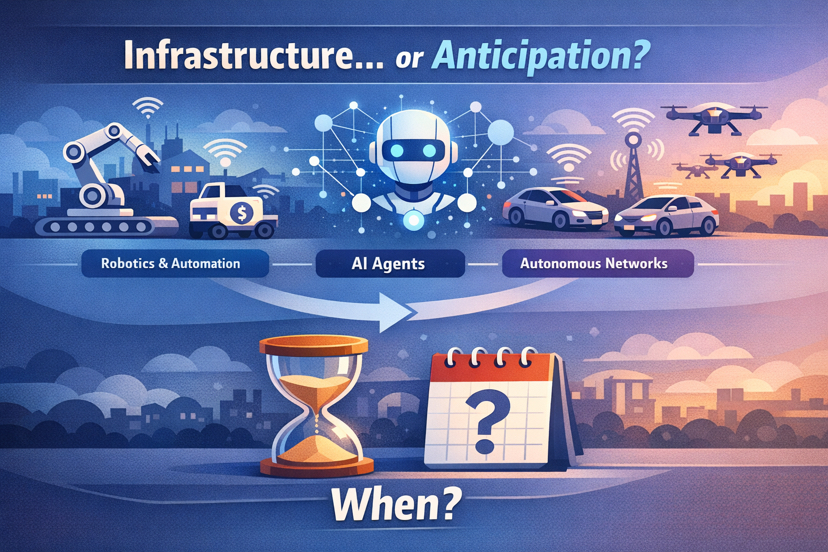
Because the Fabric Foundation is clearly building around a future where machines act economically — robots executing tasks, AI agents coordinating work, autonomous systems interacting across networks.
And that future probably arrives.
The part I’m less certain about is when.
Most people in crypto evaluate tokens based on visible demand.
Users.
Transactions.
Liquidity cycles.
But infrastructure tied to machine economies operates on a completely different timeline. The systems that might eventually need these rails don’t exist at scale yet.
Which creates a strange dynamic.
Fabric could be exactly right about the direction… and still feel irrelevant for a long time.
That gap between correctness and timing is where a lot of projects quietly disappear.
I’ve seen this pattern before.
A protocol identifies a real structural problem years in advance. The architecture makes sense. The logic checks out. But adoption doesn’t arrive fast enough to sustain attention.
Crypto markets are brutal like that.
They don’t just punish bad ideas. They punish early ideas too.
And sometimes the two look identical until much later.
This is where $ROBO becomes hard to categorize.
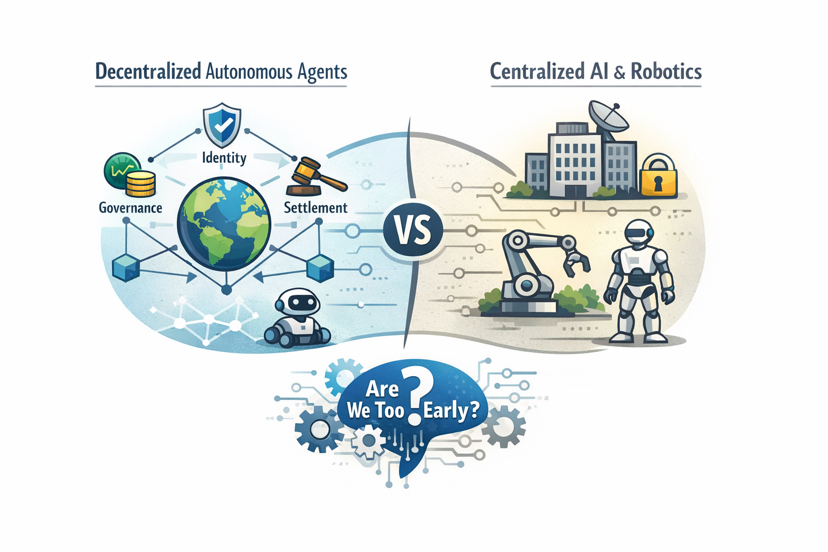
On one hand, the logic is difficult to dismiss. If autonomous agents operate across networks, they need coordination rules that aren’t controlled by a single entity. Identity, settlement, governance — these things become necessary once systems start interacting independently.
On the other hand, necessity only matters when the behavior exists.
Right now, most AI agents still operate inside centralized environments. Most robotics systems are owned and controlled by corporations that have no reason to outsource coordination.
So the infrastructure question feels… slightly ahead of the curve.
That doesn’t make it wrong.
But it does make it uncertain.
And uncertainty is uncomfortable when you’re trying to distinguish between long-term architecture and speculative design.
Another thing that keeps me cautious: machine systems don’t adopt technology the way humans do.
There’s no community hype cycle.
No narrative momentum.
If the rails aren’t the most efficient option available, they simply won’t be used.
Which means the real validation for Fabric won’t appear through marketing or social metrics. It will appear quietly through integration decisions.
And those signals tend to surface slowly.
So I’m left with a thesis that feels structurally logical but temporally unclear.
That’s a difficult place to form conviction.
Maybe Fabric is preparing for a coordination problem that will become obvious in a few years.
Or maybe the ecosystem evolves in a way that never requires this layer at all.
Both outcomes are still on the table.
And until the behavior of autonomous systems starts shifting in a measurable way…
I’m not sure we’ll know which path we’re actually on.
#ROBO @Fabric Foundation $ROBO
