

A Question That Stopped Me Cold
I was deep into researching decentralized AI infrastructure when someone asked me something I didn't have a clean answer to: Why would anyone actually need the token?
It's the single most important question in crypto. Projects live or die by how honestly they answer it. Governance tokens that don't govern anything. Utility tokens with no actual utility. We've seen that story enough times to be skeptical by default.
So when I sat down and mapped out exactly what $MIRA does inside the Mira Network not what the marketing says, but what the protocol actually requires it for I came away genuinely impressed. Because this isn't a token that was bolted onto a product. It's the engine the whole machine runs on.
What Mira Is Actually Building
Before the token makes sense, the mission has to make sense. Mira addresses the core problem of AI hallucinations and bias by providing a decentralized verification system making AI outputs trustworthy for critical use cases in finance, healthcare, and legal services where accuracy is non-negotiable.
Every time an AI answers a question, Mira breaks that answer into individual factual claims and sends them to independent verifier nodes running different AI models. Those nodes cross-check each claim. The network reaches consensus. A cryptographic proof is issued. That's the truth engine. And $MIRA is the only key that opens it.
The Three Pillars of $MIRA Utility
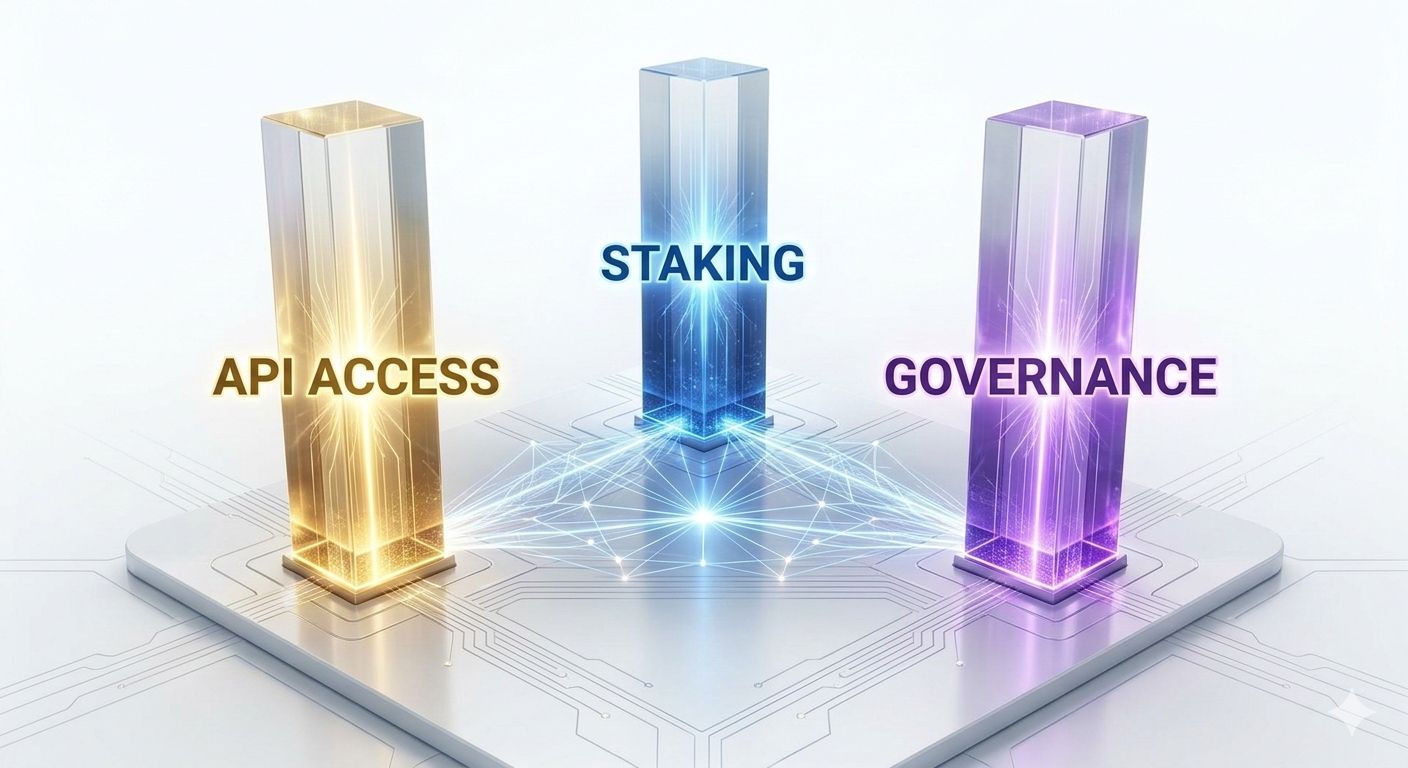
MIRA powers access to the Verified Generate API and Mira Flows marketplace, where developers can access ready-made AI packages for tasks like summarization and data extraction. All platform usage requires $MIRA payments, with priority access and preferential pricing for token holders.
This isn't optional. There's no credit card alternative, no fiat gateway. Every query that flows through Mira's verification layer is denominated in $MIRA. That means every developer who builds on Mira every enterprise pulling verified outputs is a consistent source of token demand. Demand tied to real usage, not speculation.
At mainnet launch, Mira was already processing over 3 billion tokens daily and had generated more than 7 million queries, demonstrating significant activity before most people even knew the network existed.
Staking The Security Bond of the Network
Node operators are required to stake MIRA tokens to participate in the verification process. This staking mechanism introduces economic penalties for malicious or negligent behavior through slashing protocols ensuring that attempts to exploit the system via arbitrary responses become economically unfeasible while rewarding honest validators with network fees.
This is where the token becomes structurally critical. Without MIRA staked, there are no verifier nodes. Without verifier nodes, there's no network. The token isn't decorative it's the collateral that makes the entire trust model function.
Node operators earn verification fees every time they correctly validate a claim. Stakers lock MIRA in a staking contract, are selected to run verification nodes, and earn a share of the fees collected from API users. The more the network is used, the more fees flow to honest operators. A genuine flywheel usage drives rewards, rewards attract operators, operators improve security, security drives more usage.
Governance Community Controlled Truth Standards
MIRA holders can vote on emissions, upgrades, and protocol design shaping the future of the network. This isn't checkbox governance. The parameters being voted on which AI models qualify as verifiers, how slashing thresholds are set, how emission rates adjust directly determine the quality and integrity of every verification the network produces.
MIRA also serves as the base pair for tokens launched on the Mira platform, meaning projects launching independent tokens require MIRA for liquidity pairing and conversion. That's an additional layer of structural demand most token analyses miss entirely.
Built for Longevity
The MIRA token has a fixed maximum supply of 1 billion, with a philosophy that the network belongs to those who use it, build on it, and secure it. The initial circulating supply at launch was 19.12% a controlled release designed to reward early contributors without flooding the market.
Distribution reflects genuine intention: 16% reserved for node rewards sustaining validator incentives long-term, 26% allocated to ecosystem growth for developer grants and partnerships, and core contributor tokens vesting over 36 months with a 12-month cliff. No quick exits built into the structure.
The Honest Risks
No token analysis is complete without this section. MIRA faces real challenges. Developer adoption has to scale significantly for API driven demand to become meaningful at the network level. Competing AI verification approaches whether centralized or otherwise could capture enterprise clients before Mira's decentralized model matures.
There's also a naming risk worth flagging: a separate MIRA token exists on Solana, marketed as a meme charity coin with a completely different contract address and use case. Mistaking one for the other could lead to costly errors always verify the contract address on Base before purchasing.
And like any infrastructure play, timing matters. Mira could be early in a way that works against it building the right thing before the market is ready to pay for it.
The Strategic View Most Are Missing
Here's what I keep coming back to. Most utility tokens are designed around what users might want to do with the token. MIRA is designed around what the protocol cannot function without.
Every single interaction with the world's first decentralized truth engine whether you're a developer querying the API, a node operator running verifications, or a governance participant shaping the network's future requires $MIRA. That's not a marketing claim. It's embedded in the protocol architecture.
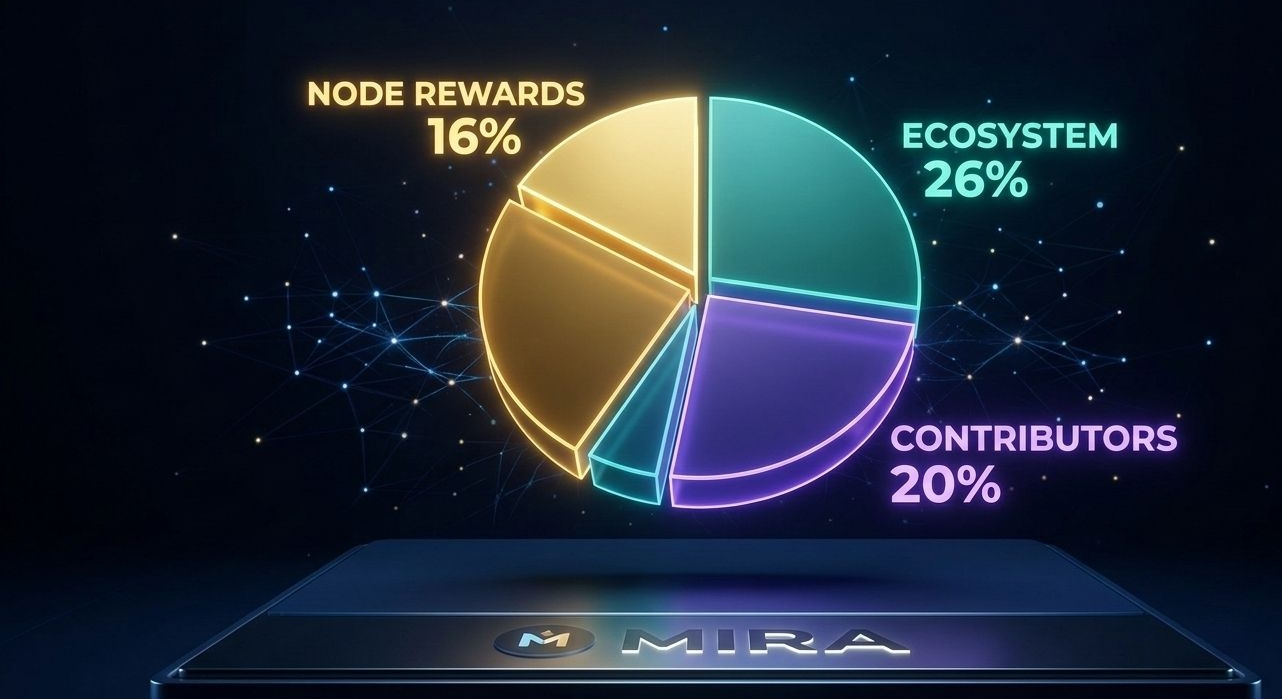
The tokenomics tie token value directly to real network activity, creating a framework for sustainable development rather than speculative momentum. As AI adoption grows and the demand for verified outputs scales across healthcare, legal, finance, and autonomous AI systems the network that sits at the verification layer becomes increasingly difficult to route around.
Let's Talk About This
Here's the question I keep sitting with: as AI generated content floods every industry, who decides what's true? Governments? AI companies themselves? Or decentralized infrastructure with transparent, verifiable consensus?
If you think the latter matters, then understanding what MIRA actually does inside that infrastructure isn't optional it's the starting point.
What's your take on utility tokens tied to AI verification? Do you think demand for verified AI outputs will scale fast enough to make $MIRA's economic model work? Share your perspective below I'd genuinely like to hear where you land on this.
@Mira - Trust Layer of AI #Mira
