
A few days ago a friend of mine bought a small home robot. It could perform simple tasks. When he tried connecting it with another smart device in the house, something slightly odd happened; both systems were functioning, yet they didn't really cooperate.
Nothing broke. Nothing crashed.
They simply behaved like two strangers placed in the same room, each following their own logic.
 When I first saw it, a lot of thoughts started running through my head.
If machines are supposed to become smarter every year, why would something this basic feel so awkward?
At first I assumed it was just a small technical limitation. But the more I thought about it, the more curious I became. I started reading a few robotics articles, watching discussions about how autonomous systems interact, trying to understand how different machines actually coordinate their actions.
Strangely, the deeper I went, the more confusing everything felt.
Every system looked powerful on its own. But the moment multiple machines had to work together, things started becoming messy.
So I kept digging.
Eventually that search led me toward the ideas behind Fabric Foundation and the role of its ROBO token.
At first it didn’t immediately solve my confusion. The concepts made sense individually, but the bigger picture was still forming.
Then after going further into the research, something finally clicked.
The issue I had been thinking about wasn’t really about intelligence. It was about coordination.
And more specifically, whether machines can understand — and trust — what other machines are doing around them.
First: Undrestanding Machine Actions Coordination starts with something simple: knowing what another machine just did.
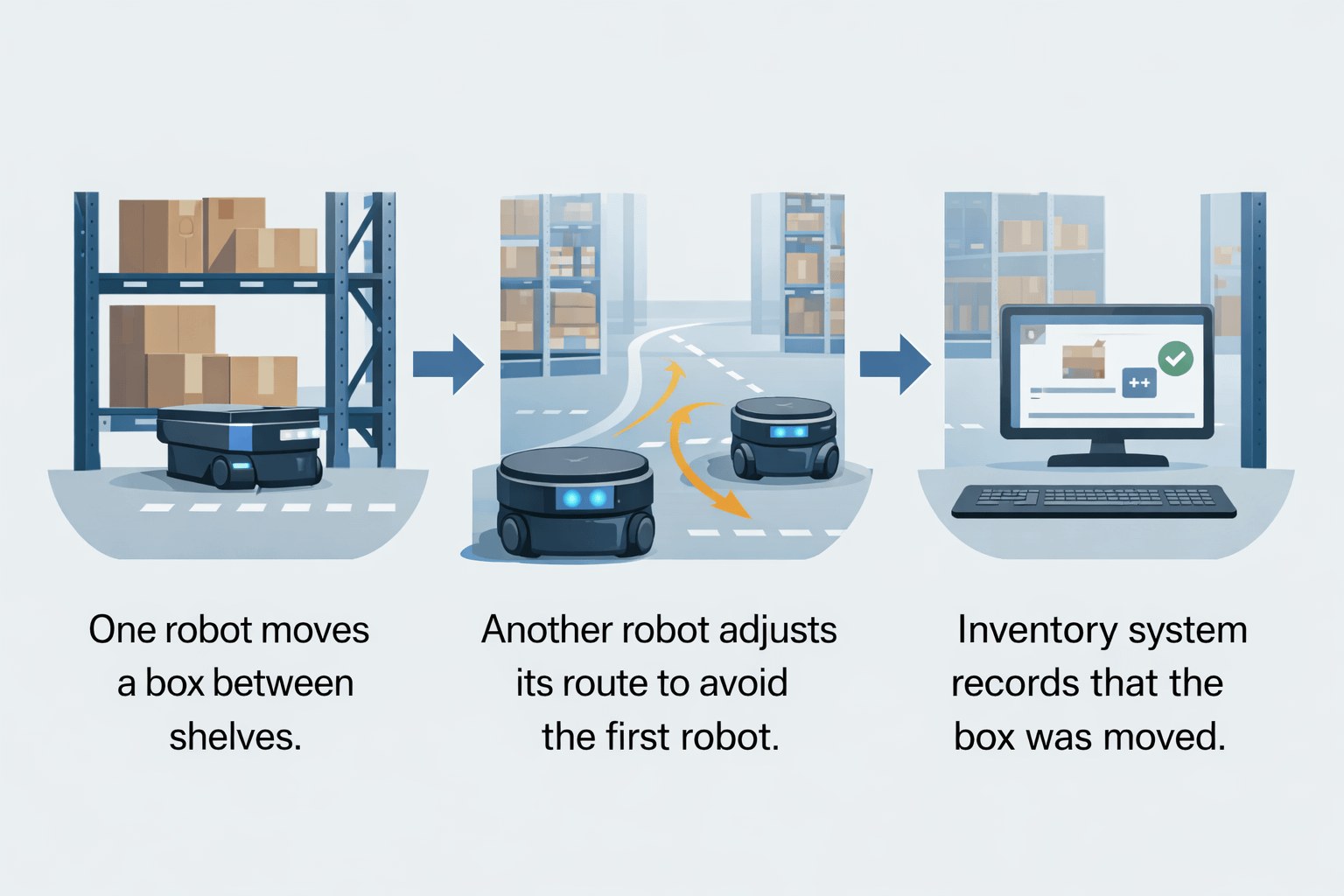 Imagine a simple situation inside a warehouse: 1) One robot moves a box from one shelf to another. 2) Another robot passing through the same area adjusts its route to avoid hitting it. 3) At the same time, the inventory system records that the box has been moved.
Individually these actions are simple.
But once several machines begin working in the same space, every small movement can influence what the other systems do next.
If those actions are not interpreted correctly, even simple operations can slowly turn into confusion.
Second: Trust Between Systems
But understanding an action is only the first step.
The harder question is how other systems would know that the action actually happened as reported.
Robots often come from different manufacturers and run different software systems. They don’t always share the same internal rules or logic.
Because of that, one system cannot automatically assume another system is reporting everything correctly.
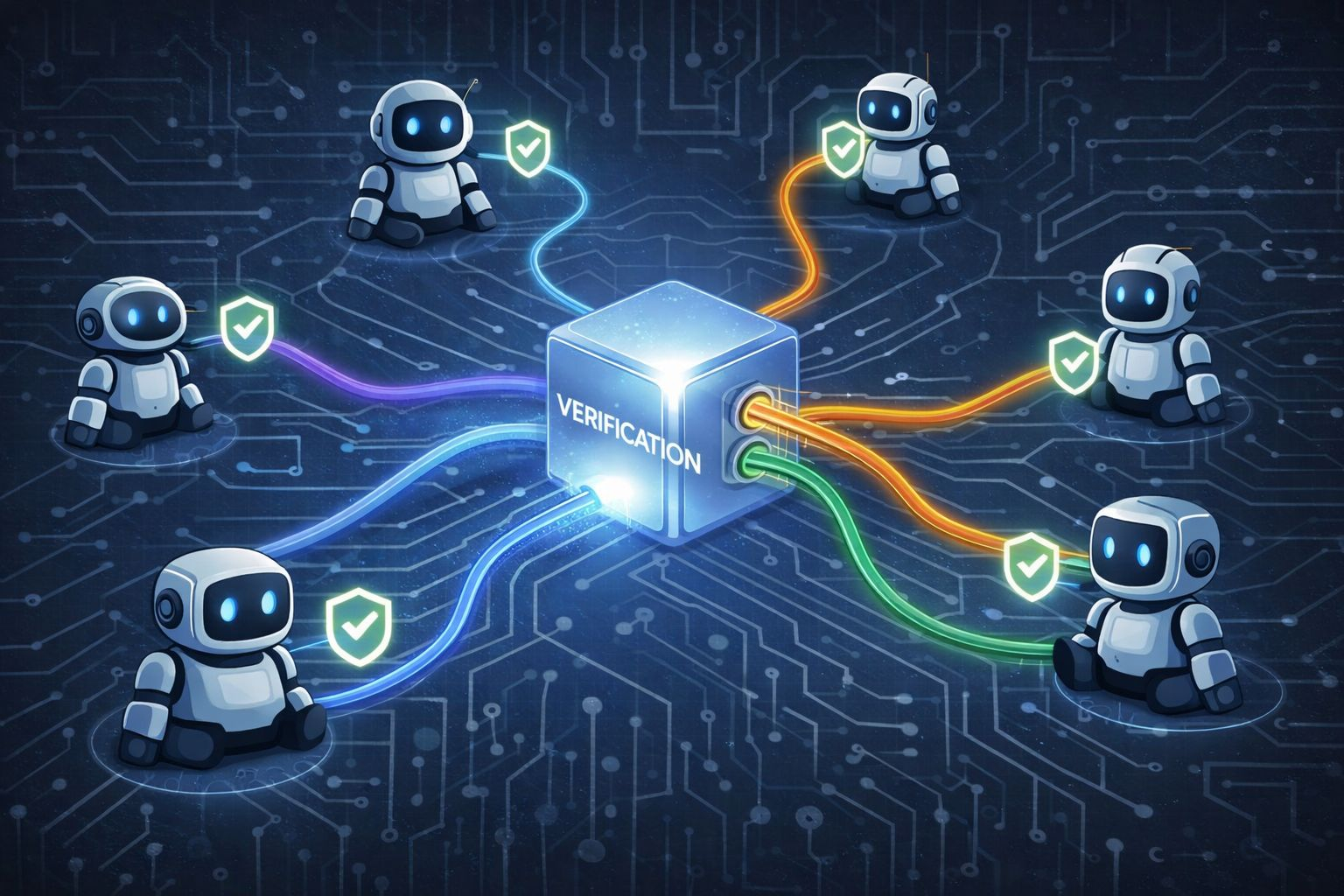
Some form of verification becomes necessary. Without it, robots may still perform their tasks well individually, but coordinating with other systems becomes much harder.
 Third: Where Verification Becomes Infrastructure
While researching this topic, I also looked through parts of Fabric’s whitepaper. One idea that stood out was the concept of verifiable machine activity.
The more I looked into it, the direction behind Fabric started to feel a bit different from the usual robotics discussions.
Rather than focusing only on making individual robots smarter, the framework examines how machine activities themselves could be coordinated and verified across networks where many different systems interact.
Looking at it this way, the robot itself almost feels secondary. What really matters is whether different machines can make sense of each other's actions.
That was the moment when the idea behind ROBO finally connected with the question that had been in my head from the beginning.
It represents a mechanism that helps record and verify interactions so that different systems can understand what actually happened.
 — Connecting the Role of ROBO
From there, ROBO starts to feel like part of the infrastructure that allows machines to coordinate their actions.
That’s why projects working on this layer caught my attention during the research. They focus on something robotics discussions often overlook: how machines cooperate, not just how intelligent they become.
— My Realization
Maybe the future of robotics won’t be defined only by how intelligent machines become.
It might depend on something quieter. Whether machines built by different people, in different places, can actually understand and trust... what other machines are doing.
And thinking back to that small moment in my friend’s living room, the situation suddenly feels less confusing.
Two machines struggling to cooperate wasn’t just a minor technical inconvenience.
It was a small glimpse of a much larger challenge.
A challenge that systems like Fabric and ROBO are trying to address long before thousands of machines start sharing the same world.
@Fabric Foundation #ROBO $ROBO
