
There is a pattern in crypto that repeats enough to qualify as a law. Infrastructure projects raise amounts of money create hype around token use and then quietly reveal at Token Generation Event that the tokens actual function is governance. This basically means it does little until the project becomes very successful.
$MIRA breaks this pattern at its core. This break is worth examining carefully.
At the Token Generation Event in September 2025 Mira Network started with about 191 million tokens in circulation. This is 19% of the one billion fixed supply.
The people who created MIRA treated the risk of many tokens being unlocked as a major risk. They did not want to manage it with marketing.
Every major group that received tokens has to wait a time before they can sell them.
The people who work on the project have to wait 12 months and then get 36 months to sell their tokens.
Early investors have 14% of the tokens. Have to wait 12 months and then 24 months to sell them.
The Foundation has 15% of the tokens. Has to wait 6 months and then 36 months to sell them.
Even the tokens set aside for giving to developers and partners are only released when certain growth goals are met.
The result is that the people who know MIRA best are locked into the long-term view as the market.
Having a good supply design does not justify a token on its own.
The demand side is where MIRA makes its case.
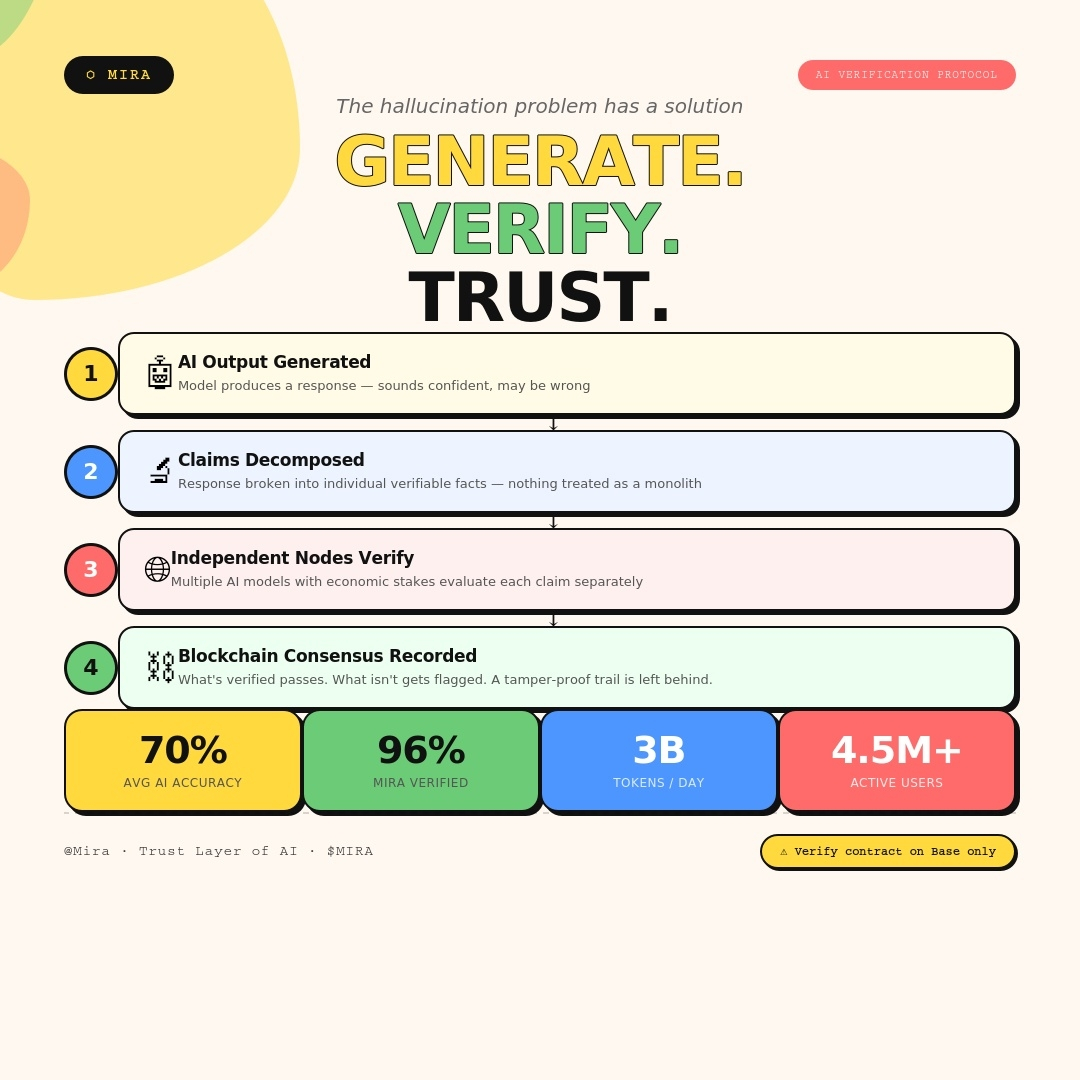
People who run nodes and stake $MIRA to participate in the Dynamic Validator Network are not just betting on the price going up.
They are putting their tokens at risk if they do not do their job correctly.
The tokens they stake the more work they can do and the more they can earn.
If they do not do their job correctly they lose their tokens.
This staking demand is not optional.
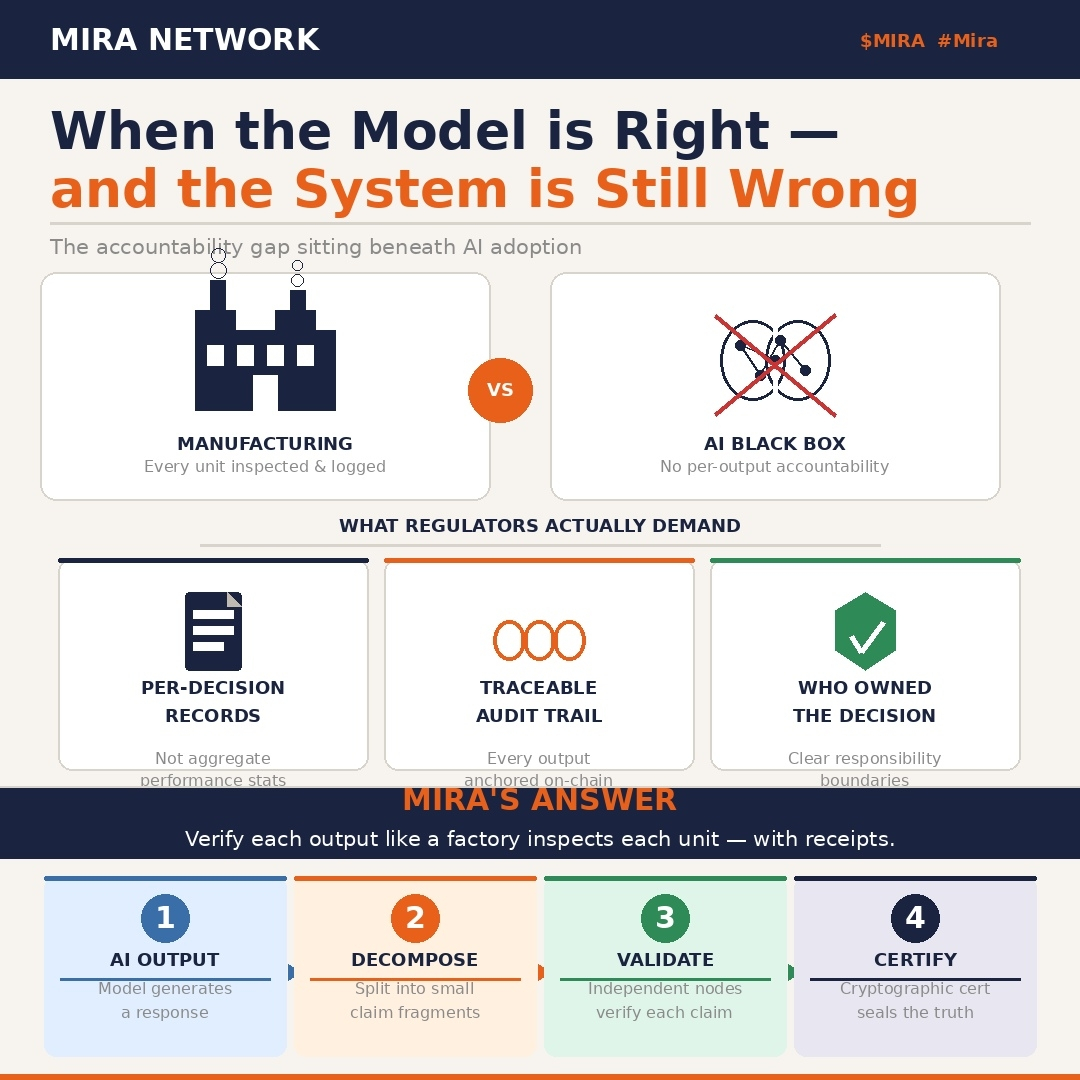
If a node operator wants to make money they must stake an amount of tokens.
As the network grows the demand for staking also grows.
The payment layer adds another demand driver.
Developers and enterprises pay for using $MIRA to verify things.
This is not a fee that can be avoided. It is the currency used to pay for the service.
As more enterprises start using $MIRA, the demand for it grows.
The investors behind MIRA are very strong.
Framework Ventures and BITKRAFT Ventures led the $9 million seed funding.
Their portfolio includes Chainlink and Synthetix which became infrastructure.
Their thesis on MIRA is that it will become infrastructure for AI.
The node sale strategy shows deliberate ecosystem design.
Mira ran two node sales that distributed operator rights to early supporters.
This created a decentralized validator base before the mainnet launch.
The governance layer completes the utility stack.
Staked MIRA holders vote on protocol upgrades and ecosystem fund allocations.
Governance weight scales with position meaning participants most committed to the networks long-term health have the most influence.
What emerges is an economy with multi-dimensional demand.
Staking demand from validators, payment demand from developers and enterprises and governance demand, from long-term participants.
Each layer reinforces the others. More validators increase verification quality attracting clients generating more payment flow funding more rewards attracting more validators.
Most AI infrastructure tokens bet that adoption will justify their existence.
MIRA is designed so that every unit of adoption directly increases the logic for holding it.
That is not the bet.
#Mira #mira @Mira - Trust Layer of AI
