

Fabric Protocol caught my attention for reasons that are different from the ones that usually pull people toward new projects.
It wasn’t loud marketing.
It wasn’t a simple story that fits neatly into a single narrative.
And it definitely wasn’t something you can summarize in one trendy category.
What kept drawing me back was the tension in the idea itself.
At first glance, Fabric can easily be mistaken for another project sitting somewhere in the overlap of robotics, autonomous systems, and crypto infrastructure. That surface interpretation is understandable, because the market is filled with projects that lean on exactly that mix.
But once you spend a little more time examining it, that interpretation starts to feel incomplete.
Fabric doesn’t seem to be centered on the excitement around smarter machines. Instead, it appears to be wrestling with a deeper issue: what happens when machines stop being simple tools and begin functioning as participants in work and economic systems?
That shift changes the conversation entirely.
The Conversation That Comes After Technology Improves
Most discussions about robotics and artificial intelligence still revolve around capability.
Better algorithms.
Stronger hardware.
More autonomous behavior.
Faster processing.
Those improvements are important. But they only describe the first phase of the transformation.
The real complexity begins after machines are capable enough to do meaningful tasks in the world.
When robots start delivering packages, inspecting infrastructure, monitoring environments, assisting logistics networks, or gathering critical data, the conversation naturally moves beyond “what they can do.”
Instead, it becomes about how they operate inside coordinated systems.
Who confirms that the task was completed correctly?
Who records the machine’s actions?
Who pays for the work?
Who is accountable when something goes wrong?
These questions are not secondary details.
They are the foundation of any system where work and value are exchanged.
And surprisingly, they are the questions that often receive the least attention.
When Capability Outpaces Structure
If machines grow more capable but operate entirely inside private platforms, the result is a strange imbalance.
The systems become more powerful, but less transparent.
Robots operate behind corporate software layers, proprietary data environments, and internal decision frameworks that outside participants cannot inspect. Operators rely on systems they do not fully control. Customers depend on outcomes they cannot easily verify.
In this situation, capability expands faster than accountability.
That gap eventually becomes a problem.
Because a system that cannot be inspected eventually becomes a system that struggles to earn trust.
As machines become more involved in real-world tasks, the lack of shared standards and transparent coordination becomes more noticeable.
That’s the structural tension Fabric appears to be addressing.
A Different Starting Point
What stands out about Fabric is that it does not begin with the typical question most robotics discussions focus on.
Most conversations ask:
“How advanced can machines become?”
Fabric seems more interested in asking:
“What framework allows machines to operate responsibly once they are capable?”
That may sound subtle, but it represents a major shift in thinking.
Because responsibility requires structure.
Machines need ways to be identified.
Their actions need records.
Permissions need to be assigned.
Contributions need to be measured.
Failures need to be traceable.
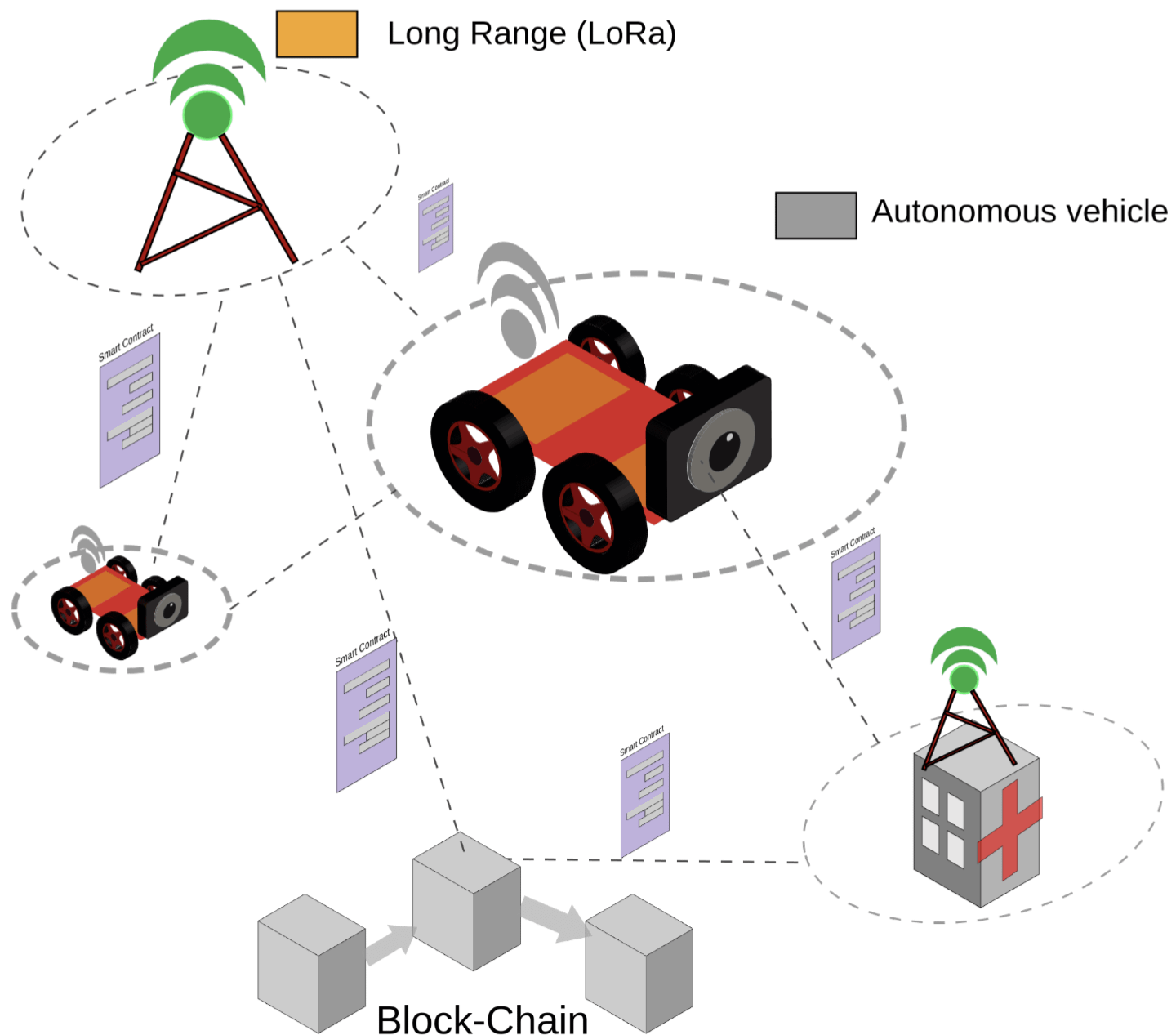
None of these requirements appear automatically when machines become autonomous. They must be designed into the environment those machines operate in.
And designing those systems is rarely easy.
Machines as Participants, Not Just Tools
The moment machines start performing real work, they inevitably interact with economic systems.
Work creates value.
Value creates transactions.
Transactions require coordination.
But machines do not naturally fit into the frameworks built for human workers.
They do not have traditional identities.
They do not open bank accounts.
They do not sign legal agreements in the same way people do.
Yet they can perform tasks that carry economic significance.
That contradiction creates an unusual challenge: machines must somehow participate in systems that were never originally designed for them.
Fabric seems to approach this challenge by focusing on the architecture surrounding machine participation rather than the intelligence of the machines themselves.
Building the Rails Beneath Automation
If you look at Fabric through that lens, the project begins to resemble infrastructure more than a typical robotics platform.
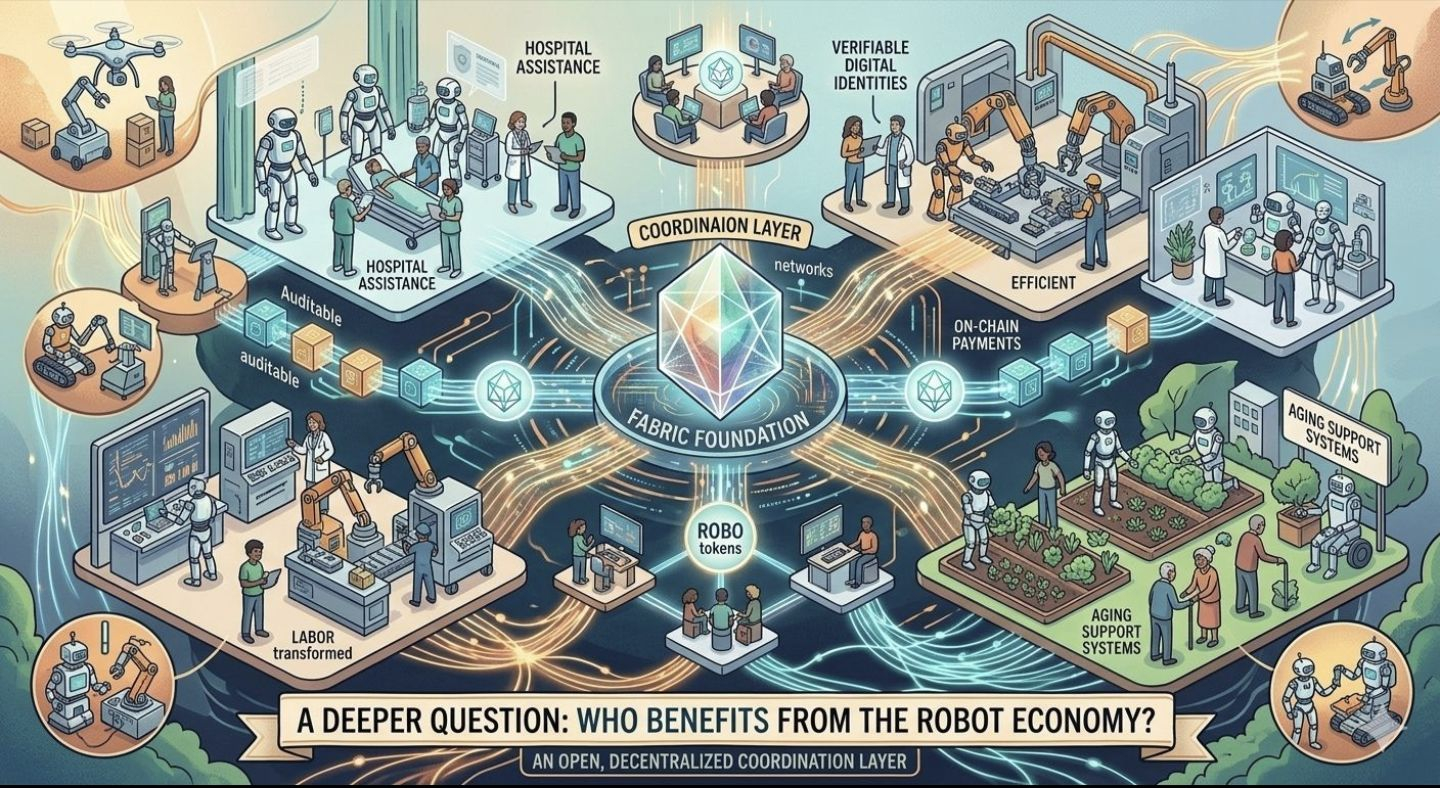
The goal appears to be creating a coordination layer that allows machines, operators, and users to interact within a shared framework.
A system where machines can have verifiable identities.
A system where actions can be logged and verified.
A system where tasks can be assigned, completed, and validated with a clear record.
And a system where economic transactions can occur with some degree of transparency and accountability.
These elements may not sound glamorous, but they are essential if machines are going to function inside open economic environments.
Without them, automation remains trapped inside isolated platforms controlled by a small number of companies.
The Coordination Problem Few People Talk About
Imagining a world filled with autonomous machines is relatively easy.
Delivery drones crossing cities.
Inspection robots monitoring infrastructure.
Warehouse robots moving inventory around the clock.
The futuristic imagery is compelling.
But the systems coordinating those machines are far more complicated than the machines themselves.
Every autonomous system must interact with operators, customers, and broader networks of participants.
Someone has to request work.
Someone has to verify the outcome.
Someone has to resolve disputes when expectations are not met.
Without shared coordination frameworks, those interactions become fragmented.
Different platforms develop incompatible systems.
Data remains locked in private environments.
Trust depends entirely on centralized operators.
Over time, that fragmentation leads to consolidation, where a few dominant platforms control most of the activity.
Fabric seems to be trying to prevent that outcome by introducing a more open coordination layer.
Infrastructure Instead of Hype
This is where Fabric starts to look less like a typical robotics project and more like a piece of infrastructure for a future machine economy.
Infrastructure rarely attracts the same excitement as visible products.
It tends to be slower, quieter, and less glamorous.
But infrastructure determines how systems grow.
If machines eventually participate in open networks of work and value exchange, they will require shared standards and coordination mechanisms.
Identity systems.
Verification frameworks.
Economic settlement layers.
These components are not flashy, but they shape whether ecosystems remain open or become controlled by a handful of gatekeepers.
Why the Timing Matters
Many people assume these structural problems belong to a distant future.
But autonomous systems are already performing tasks in logistics, industrial monitoring, inspection, and data collection.
Each new deployment increases the number of machines operating in environments where coordination and accountability matter.
As that number grows, the absence of shared frameworks becomes harder to ignore.
Eventually, systems must answer basic questions about verification, responsibility, and trust.
Fabric appears to be working under the assumption that these questions should be addressed sooner rather than later.
The Slow Work of Building Systems
Projects focused on structure face a unique challenge.
Structure develops slowly.
It requires careful design, transparency, and consistent rules. Those qualities rarely produce immediate excitement in markets that prefer rapid narratives and visible momentum.
Speculative environments reward speed and spectacle.
Infrastructure rewards patience and durability.
Because of that, evaluating projects like Fabric in the short term can be difficult. The real value of coordination layers often becomes visible only after other systems begin relying on them.
But if machines are truly moving toward deeper participation in economic activity, the systems coordinating them may ultimately become as important as the machines themselves.
Why Fabric Is Worth Watching
In the end, what keeps Fabric interesting is not the promise of smarter robots.
It is the recognition that intelligence alone does not create functional systems.
Systems require identity.
They require records.
They require coordination and accountability.
These elements may seem mundane compared to the excitement surrounding artificial intelligence and robotics.
But they determine whether technological progress leads to open ecosystems or tightly controlled platforms.
If machines are going to take on larger roles in economic activity, they will need environments where their actions can be understood, verified, and trusted.
Fabric appears to be exploring exactly that problem.
And that is why it continues to hold my attention.