

#ROBO $ROBO @Fabric Foundation
Today let's we see briefly about Fabric Foundation new framework for helping robots work safely, on their own, and out in the open, all inside decentralized networks.
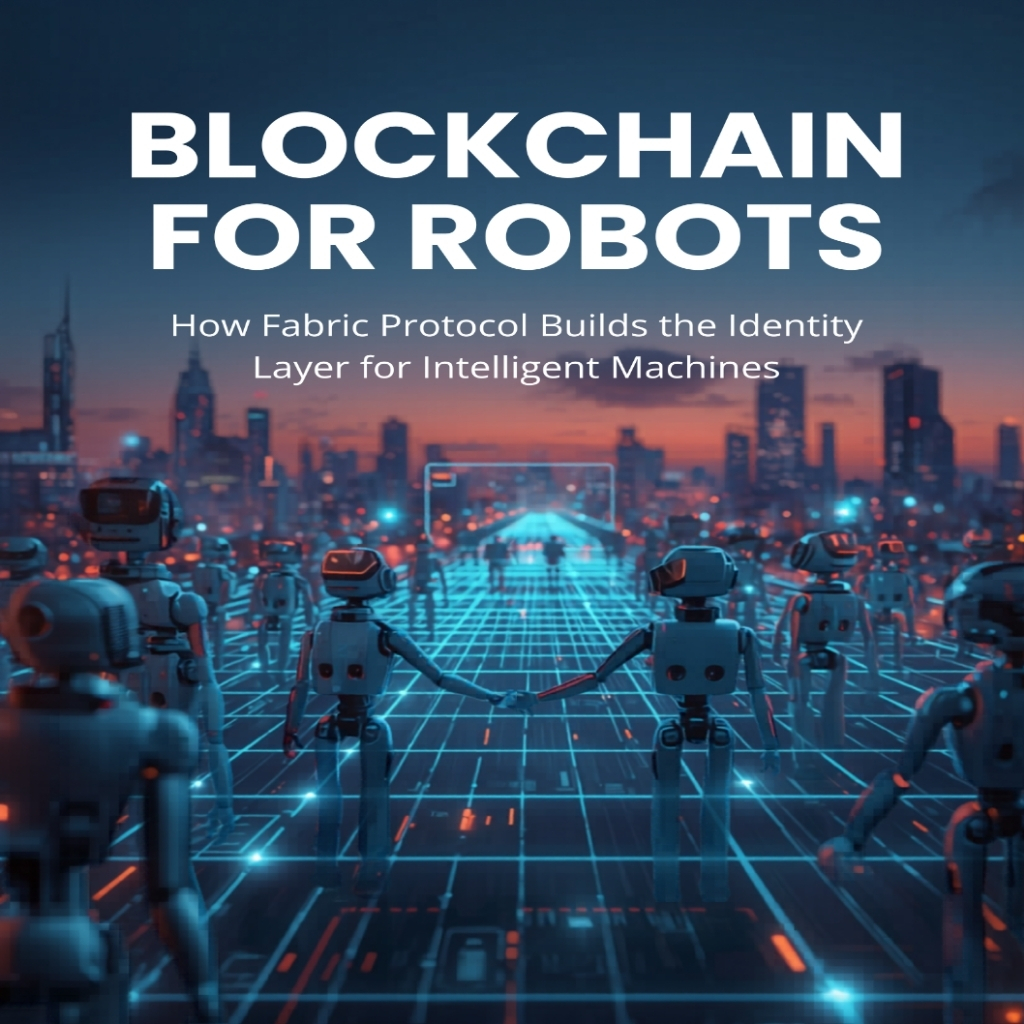
What’s Holding Back Autonomous Machines
Robots aren’t just stuck in factories anymore. These days, you see them in warehouses, making deliveries, showing up in smart cities, even popping into decentralized networks.
But there’s still a big roadblock.
Most robots run inside little bubbles. They’re missing a real identity, a way to coordinate with others, and any reliable way to prove what they’ve done. Without that, you just can’t get machines to collaborate safely on a large scale.
That’s where blockchain comes in for robotics.
Projects like ROBO are stepping in to build this missing piece—the coordination and identity layer that machines actually need.
Why Machine Identity Matters
Here’s the thing about ROBO’s Fabric Protocol. Its real value is actually pretty simple: it lets you verify a robot’s identity and coordinate with it, all in a decentralized way.
Robots don’t have to act like isolated gadgets anymore. With this setup, they become recognized members of a network that doesn’t depend on trust.
This changes everything. Now robots can:
Prove who they are, cryptographically
Share verified info with other machines
Work together on tasks without anyone needing to be the boss
Basically, the protocol upgrades robots from mindless tools to active network agents.
There are some big flaws in how robots work together right now.
1. Identity is a mess
Most robots use some central server to check who’s who. If that server goes down or gets hacked, the whole network is in trouble.
2. Coordination is limited
Robots talk to each other mostly inside their own brand’s bubble. Getting different networks to work together? That’s rare and clunky.
3. Trusting data is tough
Whenever robots share data, it’s hard to tell if it’s real or tampered with.
All of this blocks automation from going big. Without a secure way to coordinate, decentralized robotics just sits on the drawing board.
1. Machine Identity Layer
Every robot gets a cryptographic identity tied to the blockchain.
What this means: Robots can prove who they are before they do anything with other machines or networks.
2. Coordination Protocol
Robots can send out tasks, check instructions, and work together using decentralized tools.
What this means: They don’t need a central boss to organize things. Machines can just team up, even across different platforms.
3. Verification Framework
You can check every robot’s action and data output using blockchain proofs and records.
What this means: Operators get a clear, tamper-proof log of what machines actually did.
4. Data Exchange Layer
A set protocol lets robots swap data packets, with built-in checks for integrity.
What this means: Sensor data, task updates, signals—they can all be shared securely.
Security always comes up when you put autonomous machines into sensitive networks.
Fabric Protocol tackles this with decentralized checks, locked-in identity records, and open audit trails.
If a robot acts up, the network can trace exactly which machine did it. That kind of accountability just isn’t there in most robotics systems today.
To actually make a difference, robotics infrastructure has to work in the real world.
So the protocol is going after three areas:
Autonomous logistics
Smart city infrastructure
Industrial robotics networks
These are places where robots already need to coordinate. The idea isn’t to force blockchain on everyone all at once, but to roll it out where it fits naturally.
Where the Idea Started
The roots of Fabric Protocol are pretty clear.
Robot tech has moved fast, but the networks connecting them? Not so much.
Machines keep getting smarter, but the way they work together is still stuck in old, centralized systems.
Fabric’s design tries to fix that—giving robots blockchain-based identity and ways to verify what they do, right in the network.
Robots don’t just need better brains. They need a network they can really trust.
If you’re curious where this is going in the next few months, here’s what to keep an eye on:
Testnet activity picking up
New developer tools for robotics
Pilot programs with automation platforms
More validators joining the network
Machine identity adoption growing