

The AI and crypto space in 2026 is filled with new projects launching almost every week. Many of them promise revolutionary ideas and massive technological breakthroughs. But after looking closer, a lot of these projects rely heavily on hype rather than solving real problems.
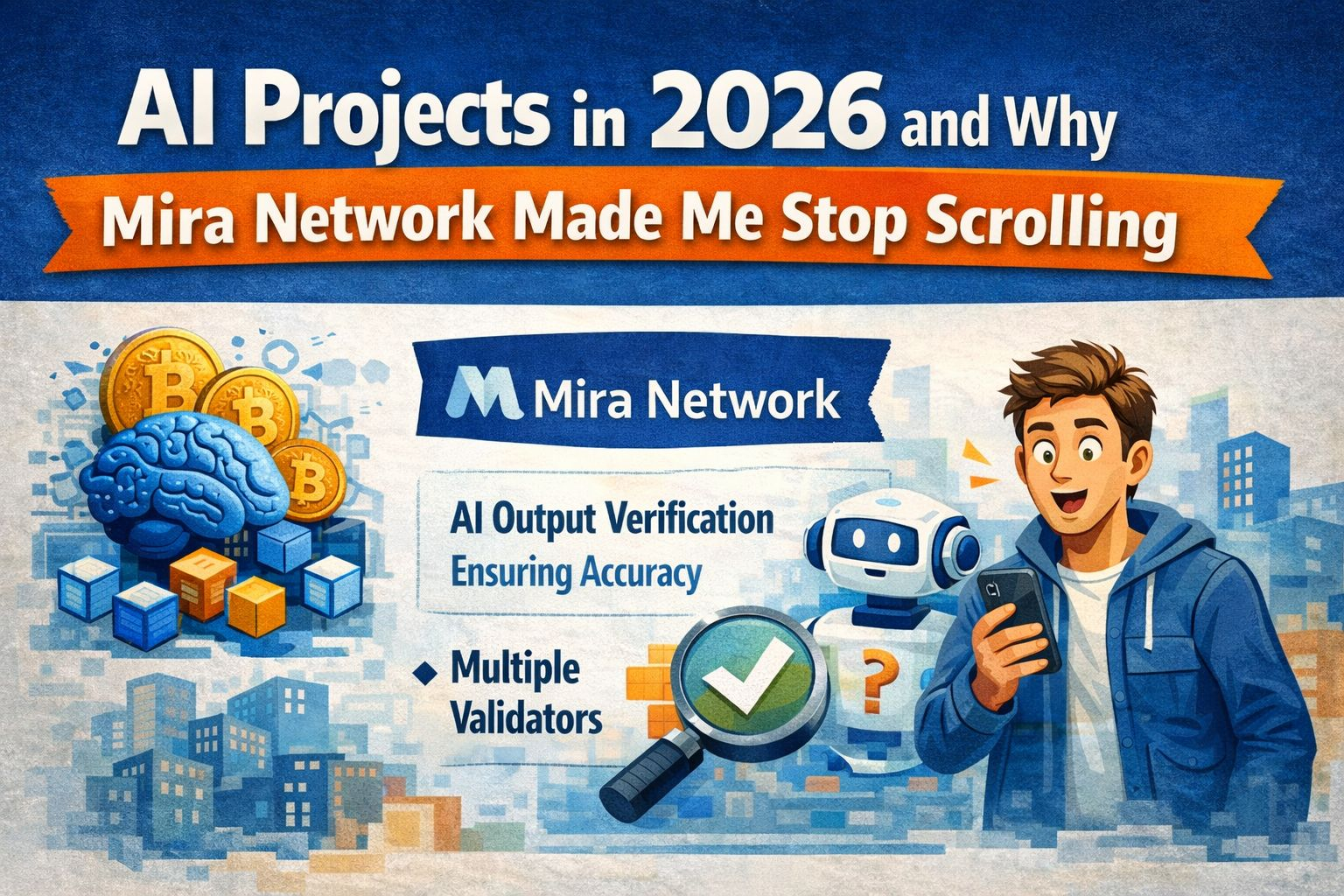
Every few days there’s a new announcement. A new “breakthrough” AI protocol appears, complete with a shiny website, bold claims, and a token ready for the market. The language is always ambitious. Words like decentralized intelligence, autonomous agents, next-generation AI, and revolutionary infrastructure appear everywhere.
At first glance, it all sounds exciting.
But after seeing the same story repeat itself dozens of times, it becomes harder to stay impressed.
A lot of these projects follow a very familiar formula. Combine two of the most talked-about technologies—artificial intelligence and blockchain—add a token economy, and present the idea as the next big shift in the internet. The marketing looks strong, the roadmap looks ambitious, and social media fills up with hype threads explaining why this project will “change everything.”
The problem is that many of them struggle to explain what real problem they’re solving.
Some promise decentralized AI marketplaces. Others talk about training data networks or AI agents that will supposedly run entire digital ecosystems. But when you try to understand how these systems actually create value, the answers often feel vague.
This is one reason many people in the crypto space have become more skeptical about AI projects.
The hype cycle has been intense. But hype alone doesn’t build lasting technology. Over the past few years, plenty of well-funded ideas have appeared and disappeared just as quickly. A token launches, excitement builds for a short time, and then interest slowly fades once people realize the product isn’t ready—or isn’t necessary.
Because of that, I’ve developed a simple habit while scrolling through new projects.
If I see another “AI protocol,” I usually move on pretty quickly.
.
But recently I came across something that actually made me pause for a moment: Mira Network, also known by its token MNE.
What caught my attention wasn’t flashy marketing or exaggerated claims. Instead, it was the problem the project is trying to address.
And surprisingly, that problem isn’t about making AI smarter.
It’s about making AI more trustworthy.
Artificial intelligence has advanced rapidly in recent years. Modern models can write articles, generate code, answer technical questions, summarize research, and help automate complex workflows. In many situations, they perform impressively well.
But there’s a strange weakness that still exists.
Sometimes AI systems produce answers that sound perfectly reasonable—even when the information is completely wrong.
Anyone who has used AI tools regularly has probably experienced this. The explanation appears detailed, the tone sounds confident, and the structure of the response feels professional.
Yet the facts inside the answer may be inaccurate or even invented.
This phenomenon is commonly described as AI hallucination. The model isn’t intentionally spreading misinformation. Instead, it’s predicting text based on patterns in data. When the system lacks reliable information, it may still produce a response that looks convincing.
For casual questions, this might not cause serious problems.
But as companies begin integrating AI into research, software development, customer service, and decision-making systems, reliability becomes far more important.
Businesses can’t rely on technology that occasionally invents information while sounding certain about it.
This is the issue Mira Network is attempting to tackle.
Rather than trusting the output of a single AI system, Mira introduces the concept of a verification layer for artificial intelligence.
The idea is fairly straightforward but powerful.
When an AI model produces an answer, the system can break that answer into smaller statements or claims. Each claim can then be evaluated independently by multiple validators or verification models.
These validators analyze the statements and check whether the information appears consistent or accurate. If the validators reach agreement, the claim can be considered verified. If they disagree, the response may be flagged as uncertain or potentially incorrect.
In other words, Mira treats AI responses less like final answers and more like claims that need confirmation.
This approach creates an additional layer between AI output and user trust.
Instead of assuming that one model’s response is correct, the network encourages multiple systems to review and validate the information before it’s considered reliable.
Another interesting element of Mira’s design is how it records these verification results.
The network uses blockchain technology to maintain a transparent record of validation activity. Each verification step can be stored on a decentralized ledger, creating a traceable history of how specific outputs were evaluated.
While the word “blockchain” often triggers skepticism today, its role here is relatively practical. A decentralized ledger allows verification data to remain public and tamper-resistant. This helps prevent a single entity from quietly altering validation records or controlling the verification process.
Of course, even a well-designed concept doesn’t guarantee success.
Mira Network faces several challenges that many infrastructure projects encounter.
One major obstacle is adoption. For the network to become useful, developers need to integrate it into real AI applications. Without active usage, the verification system would remain an interesting theory rather than functioning technology.
Another important factor is speed. AI tools today are expected to deliver answers almost instantly. If verification introduces noticeable delays, developers might hesitate to add it to their workflows. Finding the right balance between accuracy and performance will be critical.
The network also depends on participation from validators. A strong verification system requires multiple independent actors reviewing claims and maintaining honest consensus. Building that ecosystem will take time.
Still, the idea behind Mira Network highlights an important shift in how people think about AI.
For years, the focus has been on increasing intelligence—building bigger models, training them on more data, and expanding their capabilities.
But as AI becomes more powerful and more widely used, another question becomes increasingly important:
How do we know when AI is right?
The internet is already filling with AI-generated content. Articles, reports, social media posts, coding solutions, and automated responses are being produced faster than ever before. As this trend accelerates, distinguishing reliable information from confident guesswork will become more challenging.
That’s why the concept of an AI verification layer feels relevant.
Whether Mira Network ultimately becomes the solution is impossible to predict. The crypto industry has seen many promising ideas fail due to poor timing, limited adoption, or technical challenges.
But in a landscape crowded with hype-driven projects, Mira stands out for addressing a genuine problem.
And sometimes, in the fast-moving world of crypto and AI, simply focusing on the right problem is enough to make people stop scrolling and take a closer look.
#Mira @Mira - Trust Layer of AI $MIRA
