
The alert didn’t arrive as a warning.
It arrived as a subtraction.
Someone inside the verification competition market had just learned the cost of being wrong, and the panel didn’t bother explaining why. The trace folded the penalty into the mira trust economics layer so quietly it almost looked routine, like truth had been priced before anyone finished reading the claim.
I scrolled back up the lane where the stake-secured verification rounds had started a few seconds earlier. Three validators entered the cycle with identical confidence. Same fragment. Same expected verdict.
The difference appeared after the first pass.
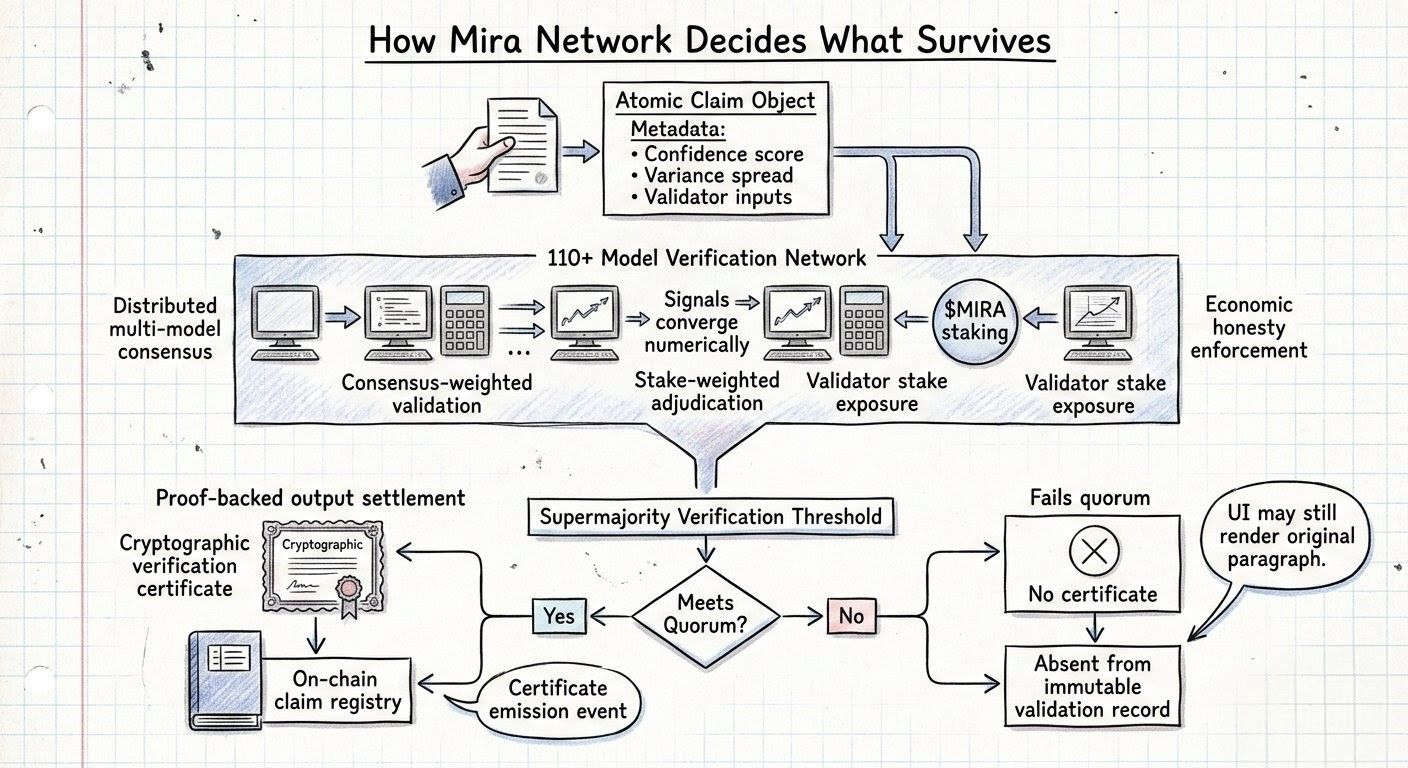
One node slowed just enough for the mira system to catch the pattern under misalignment penalty design. Its lane didn’t disappear. It narrowed. The confidence bar stayed visible, but the weight beside it thinned and the reward projection on the right lost color while the other two kept theirs.
That was enough.
Slashing for dishonest validation had triggered.
Not loud. Not theatrical. The penalty moved through economic slashing conditions the way a blade moves through soft material, clean, immediate, and impossible to mistake once you’ve seen the cut.
I leaned closer to the console.
The round didn’t stop.
Inside the mira arbitration window the remaining validators kept moving through game-theoretic truth enforcement, each judgment recalibrating its influence through truth-weighted staking while the network adjusted exposure for anyone drifting too far from the emerging signal.
The slashed validator stayed in the round.
That part felt worse.
Its verdict still sat in the graph, but with less reach now, pushed lower in the stack while the aligned validators inherited more room. Wrong didn’t get erased. It got made expensive and then left on-screen.
A secondary panel widened and the incentives beneath the verdict shifted almost immediately. mira Verifier yield mechanics responded first, shaving projected return off the slashed validator before the round had even finished closing.
The lost yield didn’t disappear.
It moved.
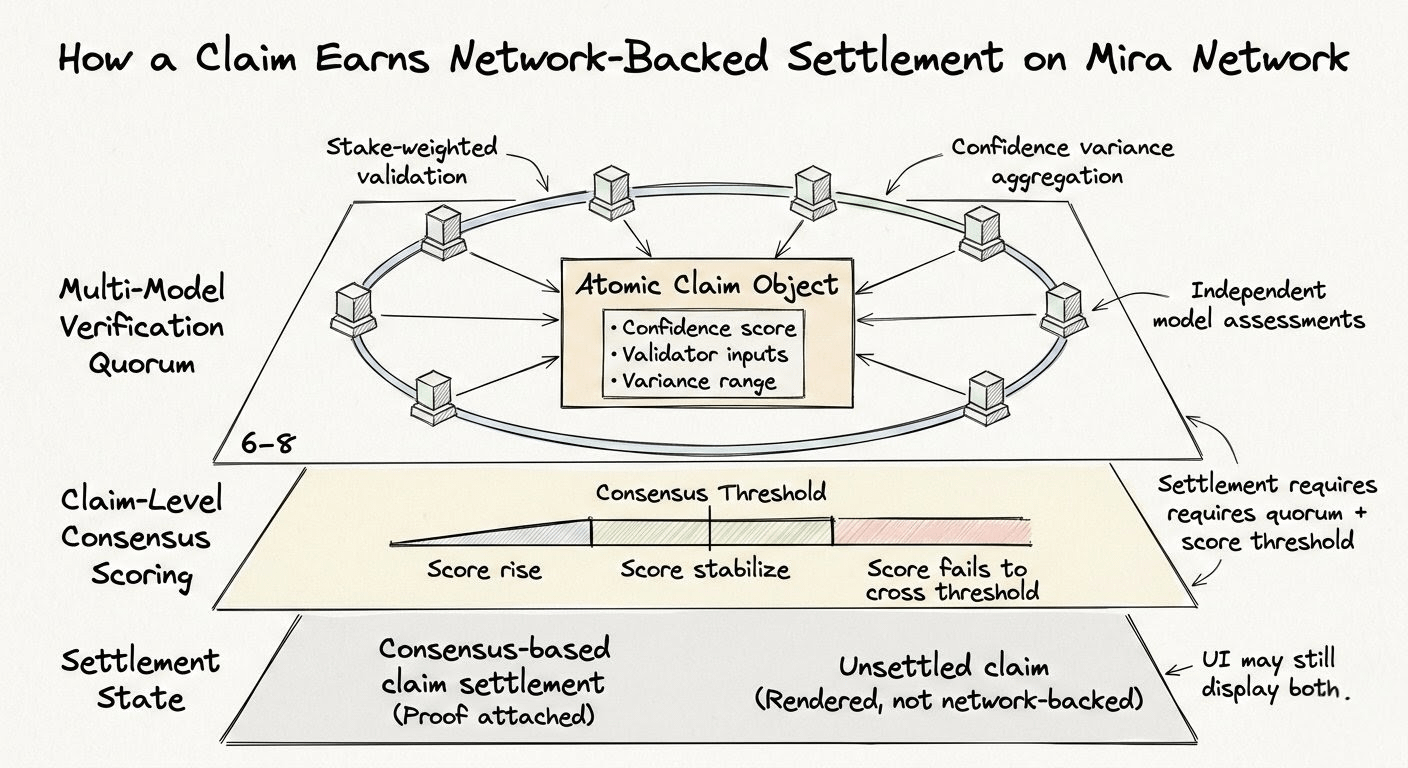
Across the same window, performance-weighted rewards tilted toward the validators whose reasoning stayed aligned with the confirmed fragment. The change was visible in motion, not theory: one bar shrinking, two bars thickening, the slashed lane fading while the others brightened.
Someone in chat wrote a single line.
“penalty?”
The answer was already spreading through reputation-linked incentives, where the validator’s credibility narrowed just enough to follow it into the next round. Not enough to exile it. Enough to make the next fragment arrive under suspicion.
The mira redistribution continued through distributed reward allocation, small fractions peeling away from the slashed side and settling onto the validators still carrying the verified claim.
No generosity in it.
Just routing.
Then the arbitration window widened again, entering incentive-compatible arbitration, where the surviving validators re-ran the fragment through independent models before the verdict was allowed to harden.
The claim itself barely changed.
The economy around it did.
That’s the trade the console kept making visible without ever spelling it out: move too quickly, drift too loosely, and you stay in the round with less weight, less yield, less future trust. Slow down enough to finish the work and the mira network pays you for being right.
I noticed my hand hovering over refresh again.
Bad habit.
The screen updated anyway. The slashed lane dimmed once more as the verdict passed into a blockchain-secured AI verdict, freezing the penalty that had started the cascade and sealing the round onto the ledger.
No speech.
No appeal.
Just arithmetic locking into place while the rest of the market adjusted around it.
I stayed on the screen a moment longer than I meant to, watching the mira settle into its new distribution of credibility.
The claim hadn’t persuaded the system by itself.
The incentives had.
And somewhere inside the next verification queue, another validator was already deciding whether getting through the round quickly was worth getting through the next one smaller.