
The longer I spend in crypto, the easier it becomes to notice when a new narrative begins to form. Sometimes it arrives loudly with hype and bold promises. Other times it grows quietly in the background until people slowly start paying attention. The intersection between artificial intelligence and blockchain feels like one of those areas right now. Over the past year, I’ve watched more projects trying to connect these two worlds. Some are building decentralized computing networks, others focus on data marketplaces or AI agents. When I first came across Mira Network, though, the conversation around it felt a little different.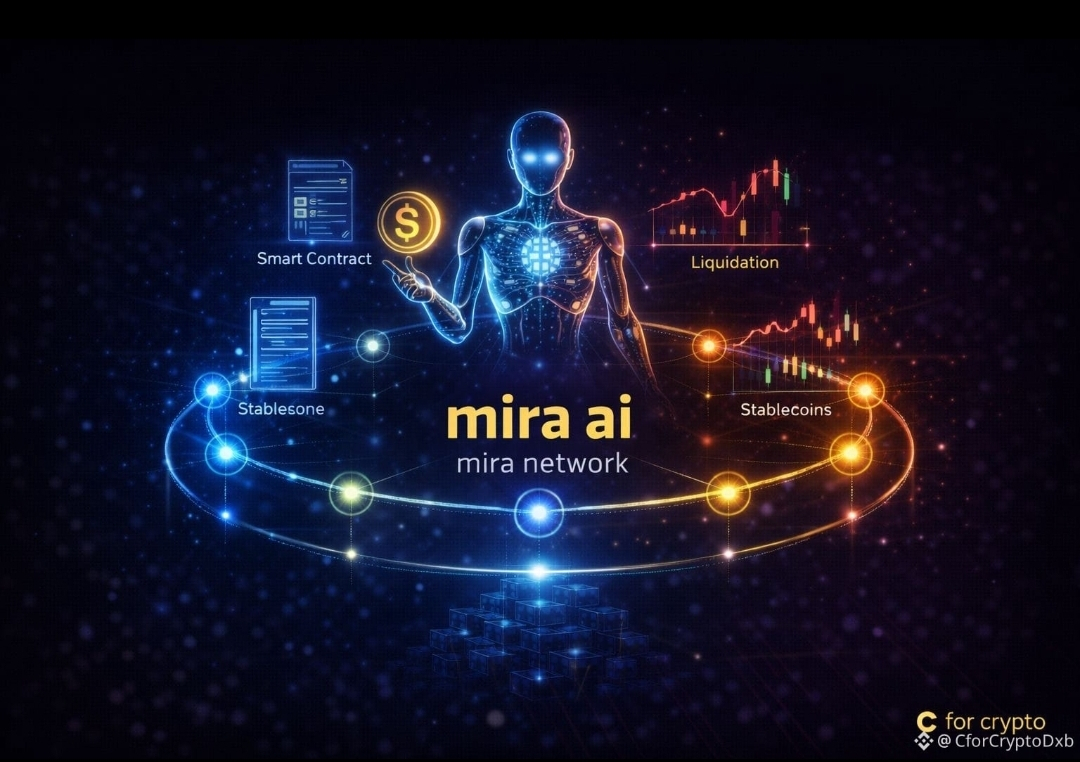
Instead of competing to build the most powerful AI model or the largest GPU infrastructure, Mira seems to focus on a problem that often gets overlooked when people talk about AI: reliability. Anyone who uses AI tools regularly has probably experienced the same thing. You ask a question and receive an answer that looks perfect. The explanation is structured well, the tone is confident, and everything appears convincing. But when you check the details, parts of it turn out to be wrong. Sometimes it is a small factual mistake, and sometimes the information simply doesn’t exist at all.
These types of errors, often called AI hallucinations, have become a normal part of working with modern AI models. In many situations they are harmless. If you are brainstorming ideas or writing casual content, a small mistake is not a big deal. But the situation changes when AI begins to assist with research, financial analysis, automation, or decision making. As these systems become more integrated into real workflows, the question of reliability becomes much harder to ignore.
This is the challenge Mira Network appears to be thinking about. From what I’ve seen, the project is trying to create a decentralized verification layer for AI outputs. Instead of simply trusting one model’s response, the system treats each answer like a set of claims that need confirmation. A complex AI response can be broken down into smaller pieces of information, and those claims are then distributed across a network of independent AI models that check whether the information holds up.
When I first read about this approach, it reminded me of a principle that has always been central to blockchain technology: consensus. In most crypto networks, we do not rely on a single authority to decide whether a transaction is valid. Multiple participants independently verify the same information until agreement is reached. Mira seems to apply a similar idea to AI. Rather than trusting a single model’s output, several systems analyze the same claim and collectively determine whether it is accurate.
If enough of them agree, the information can be treated as verified. If they disagree, the result remains uncertain instead of being presented as fact. The concept is simple on the surface, but the implications are interesting. AI systems today are powerful, yet they are also probabilistic. They generate responses based on patterns and likelihood rather than guaranteed truth. Mira’s approach attempts to place a verification layer on top of that uncertainty.
The network itself follows patterns that are familiar in crypto infrastructure. Node operators contribute computing resources and help verify AI outputs. These participants are rewarded for accurate verification and may face penalties if they behave dishonestly or provide incorrect validations. The goal is to align incentives so that participants are encouraged to act honestly, much like other decentralized networks that rely on economic incentives to maintain integrity.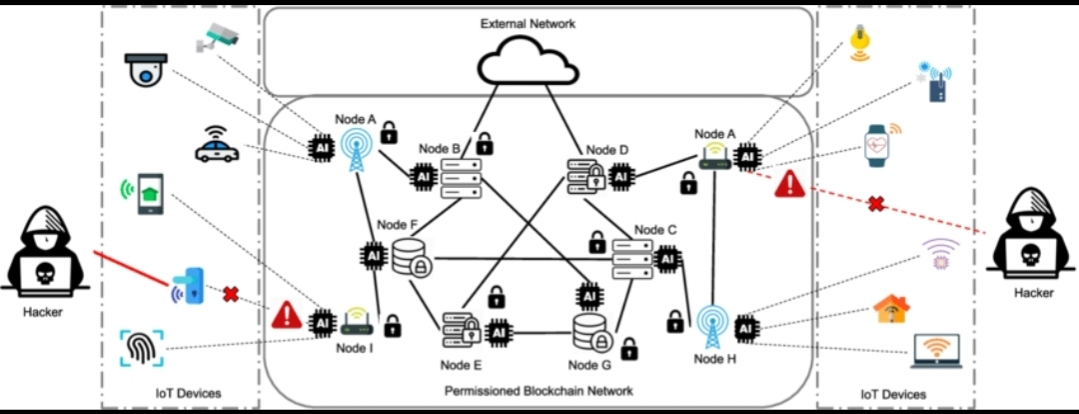
In the broader AI and crypto space, several projects are exploring similar coordination models. The difference with Mira is that it does not appear to be trying to replace existing AI systems. Instead, it positions itself as a layer that sits above them. Different AI models could generate responses, and the Mira network would act as a mechanism that verifies those outputs before they are trusted.
This positioning is interesting because it allows the network to potentially work alongside existing AI tools rather than competing with them directly. In theory, developers could integrate Mira’s verification process into applications where accuracy matters more than speed. That could include research platforms, automated assistants, financial analysis tools, or educational systems.
Another aspect that has drawn attention is the early ecosystem activity around the project. Reports suggest that Mira’s tools and applications have already attracted several million users interacting with different parts of the system. Much of this participation appears to come from community campaigns and incentive programs. The project has hosted global leaderboard events where users interact with AI tools, verify information, and contribute to the ecosystem while earning points or recognition.
If you have spent time in crypto, this kind of early engagement strategy will probably look familiar. Many networks use reward programs to attract users and build early communities. It creates curiosity and encourages people to explore the technology. At the same time, early participation numbers do not always translate into long term adoption.
That is something the crypto industry has seen many times before. A project might show strong engagement during an incentive phase, but activity often declines once rewards slow down. The networks that survive are usually the ones where developers continue building and users return because the infrastructure is genuinely useful.
Because of that, one of the most important factors for Mira will likely be developer adoption. Infrastructure only becomes meaningful when builders begin integrating it into real applications. If AI tools start using Mira’s verification layer to improve reliability, that could create natural demand for the network.
Another important element in crypto infrastructure is ecosystem gravity. Over time, certain platforms become hubs because they attract developers, liquidity, and users. Ethereum achieved this through smart contracts, while other networks have focused on speed or specialized functionality. For Mira, the question is whether verified AI outputs can become a strong enough use case to create that same gravitational pull.
There are several areas where reliable AI could become extremely valuable. Educational platforms, research environments, automated assistants, and financial analysis tools could all benefit from stronger verification mechanisms. If AI responses could come with cryptographic proof showing that multiple models confirmed the underlying claims, it might change the way people interact with automated systems.
Of course, there are still open questions. Verifying outputs across multiple models could require significant computational resources. Coordinating those systems within a decentralized network might introduce delays or additional costs. These types of practical challenges often determine whether an idea works beyond the conceptual stage.
The broader AI and crypto landscape is evolving quickly as well. Over the past year, I have seen a growing number of projects focused on decentralized computing markets, AI agent frameworks, and data networks. Each of them is trying to occupy a different part of the ecosystem. Some provide raw computing power, others support model training, and some focus on enabling autonomous digital agents.
Mira appears to sit in a different layer, closer to verification and trust. In some ways it resembles an oracle system designed for AI truth. That is an interesting place to position a network, although the long term structure of the ecosystem is still unclear.
One thing experience in crypto teaches is that the projects that eventually matter are not always the ones dominating headlines in the beginning. Infrastructure sometimes grows slowly and quietly before becoming essential. At the same time, there are many ambitious ideas that fade away once early excitement disappears.
Right now, Mira feels like it is still in that early observation stage. The idea of verifying AI outputs through decentralized consensus addresses a real weakness in current AI systems. The project has also attracted an early community and growing ecosystem activity, which suggests people are at least curious about the approach.
But curiosity and long term adoption are very different things. The real test will come when the network has to support real applications, real developers, and real demand beyond participation campaigns.
For now, it remains a project worth watching. The problem it is trying to solve is genuine, and combining AI verification with blockchain consensus is a thoughtful direction. Whether it eventually becomes a foundational part of the AI ecosystem or remains an experimental concept is something only time will reveal.
#Mira #AI #Crypto #MIRA @Mira - Trust Layer of AI