
The penalty didn’t arrive with a warning.
It arrived as a smaller task.
I noticed it when the dispatch console refreshed inside the fabric robot economy coordination layer. The crate assignment queue shifted down by one row and the job that should have landed in my unit’s lane slid sideways to another robot.
No alert. Just absence. “mine?”
I opened the routing pane expecting congestion or priority overrides, but the system was calmer than that. The public robotics settlement layer had already sealed the previous task, the movement trace sitting neatly inside the ledger with all the usual confirmations.
Lift completed. Route validated. Seal confirmed.
Nothing looked wrong.
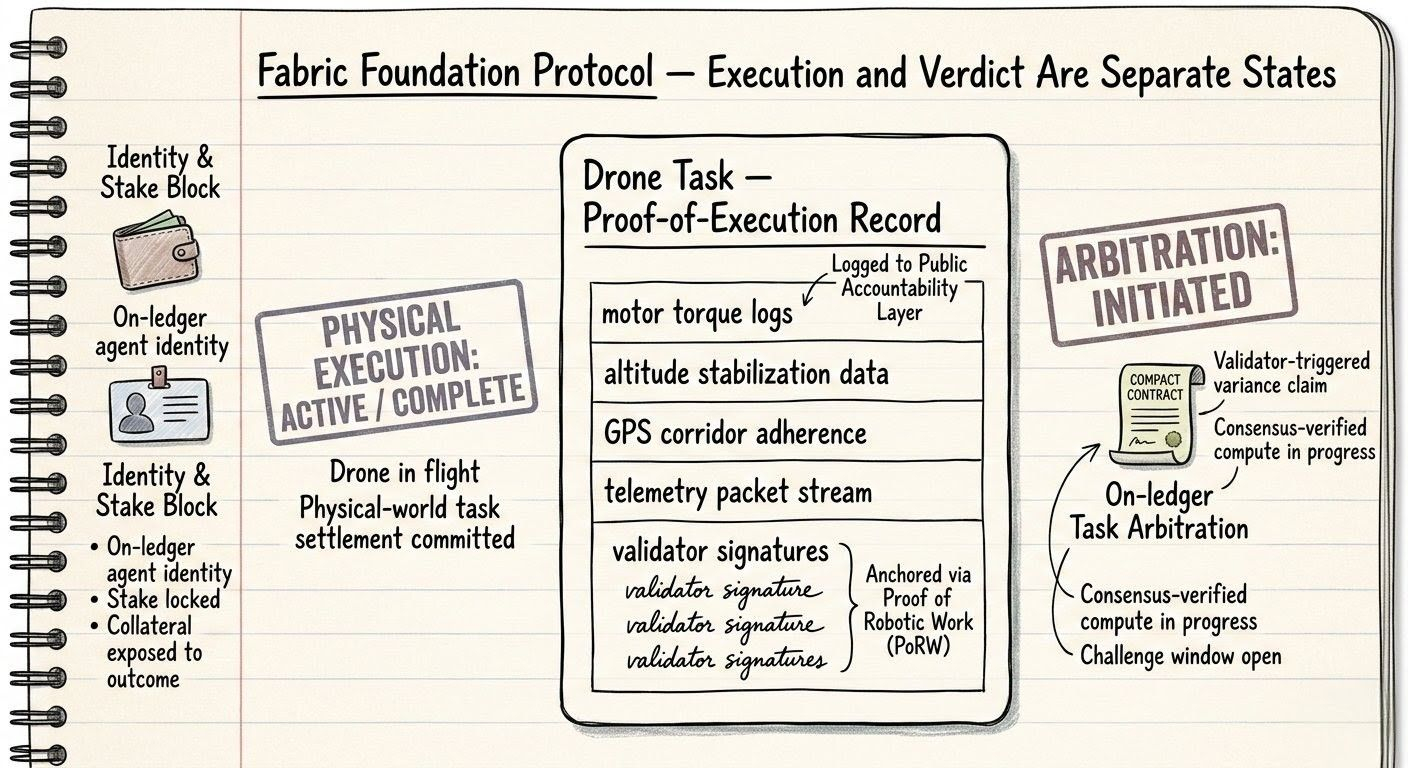
The proof bundle even showed clean telemetry: actuator drift minimal, load distribution stable, alignment correction inside tolerance. Every line pointed toward provable machine performance, the kind that normally keeps a robot high in the queue.
Still, the next job went elsewhere.
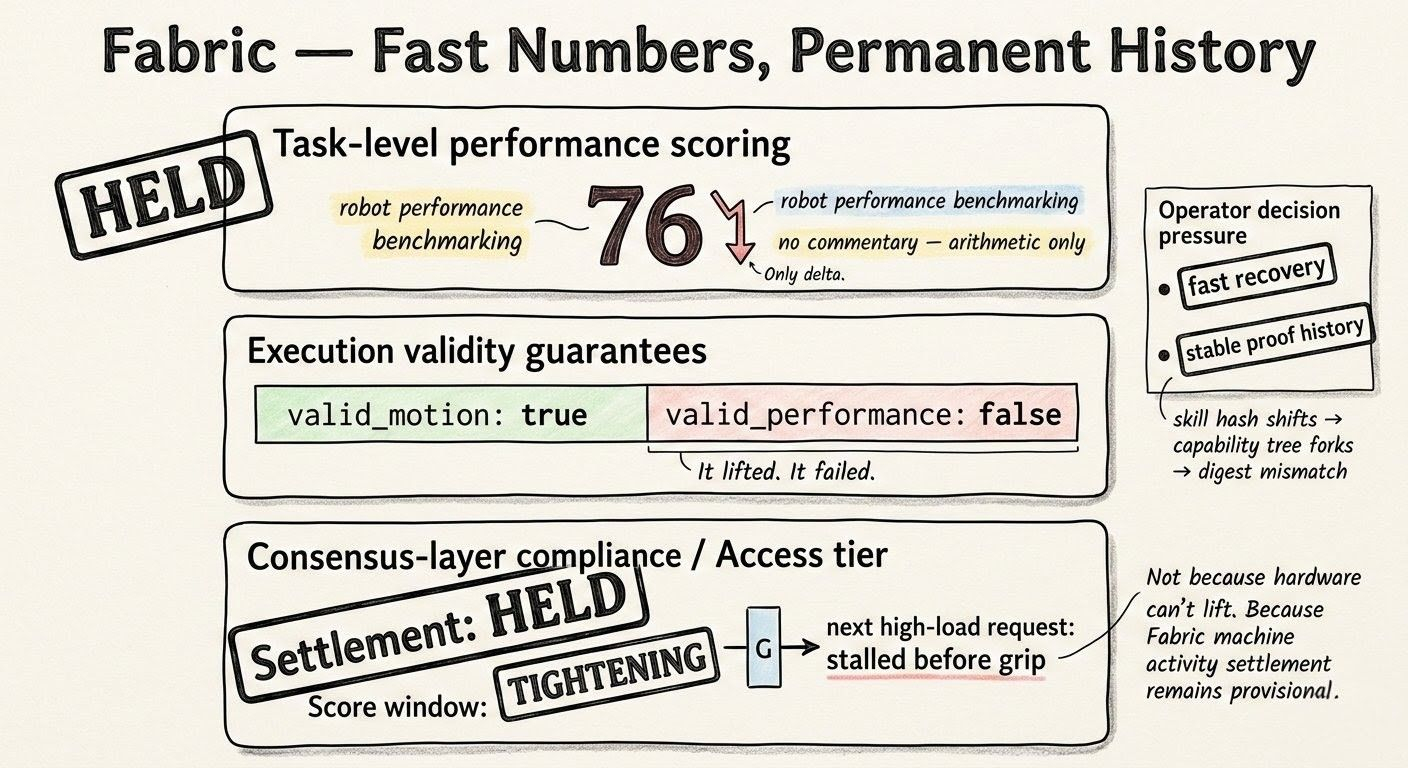
I scrolled deeper and found the quiet part of the system working underneath the dispatch board. The fabric robot performance benchmarking panel had updated a moment earlier, sliding a thin adjustment into the task-level performance scoring column.
Not a failure.
Small enough to ignore if you weren’t watching.
Large enough for the queue to notice.
I clicked the trace again and caught my own mistake, wrong column. I’d been staring at execution latency. The real friction lived inside machine reputation scoring.
The lift had finished correctly. Another robot finished faster.
That’s all it takes.
The adjustment flowed outward through fabric machine participation governance like a quiet current, pushing eligibility thresholds slightly closer together. No vote. No argument. The governance panel logged the recalculation in the transparent governance logs, timestamped like weather data.
I watched the queue redraw itself.
Three jobs moved. Two robots advanced.
Mine didn’t.
“penalty?”
Not technically.
Eligibility tightening didn’t revoke access. It just changed where the machine appeared when the next crate entered the economy.
You still operate.
Later.
The task feed refreshed again and I felt the small tension of watching a fabric robot economy sort itself without asking permission. Every dispatch decision flowed through machine regulatory alignment, comparing telemetry against network rules before the crate even left the floor.
Compliance looked perfect.
Another robot’s actuator profile beat ours by a fraction of a second.
The crate that should have been ours rolled past the aisle toward a different unit, the forklift already extending its arm while my console stayed still.
I refreshed too early. Got the stale queue. Refreshed again.
Same loss.
I opened the settlement trace again hoping for something dramatic, an error spike, a sensor wobble, a sign the system had misunderstood the work.
Nothing.
The task sat there sealed under execution validity guarantees, the ledger confirming that the job had been completed exactly as requested.
Correct.
Verified.
And slightly slower than someone else.
I leaned closer to the fabric performance board and watched the next recalculation ripple outward through the robot performance benchmarking feed. Another robot finished a delivery three milliseconds faster than predicted, its telemetry sliding into the ranking table before the crate even touched the ground.
The score dipped again.
Still valid.
Still compliant.
The queue didn’t care.
A quiet reshaping of access wrote itself directly into the public robotics settlement layer, the kind that moves economic priority in decimals instead of arguments.
The console didn’t accuse the robot of anything.
It simply offered fewer opportunities.
I hovered over the queue and waited for the next assignment refresh, the cursor blinking like hesitation might influence the order.
It didn’t.
The next crate routed past us again, the dispatch logic closing around another machine whose numbers sat a fraction higher inside fabric machine reputation scoring.
No alarms.
No governance vote.
Just the ledger remembering what every robot did, and deciding who gets the next chance to prove it.