

A thought crossed my mind recently while reading about how quickly robotics is evolving.
For years, we have mostly seen robots as individual machines.
A robot completes a task, follows instructions and operates inside a controlled system.
Once the job is finished, the machine simply waits for the next command.
But the direction robotics is moving in now feels very different.
Robots are slowly becoming part of larger connected systems where many machines interact at the same time.
Instead of working alone, they are starting to operate in environments where coordination between machines matters just as much as the machines themselves.
That shift introduces a new challenge.
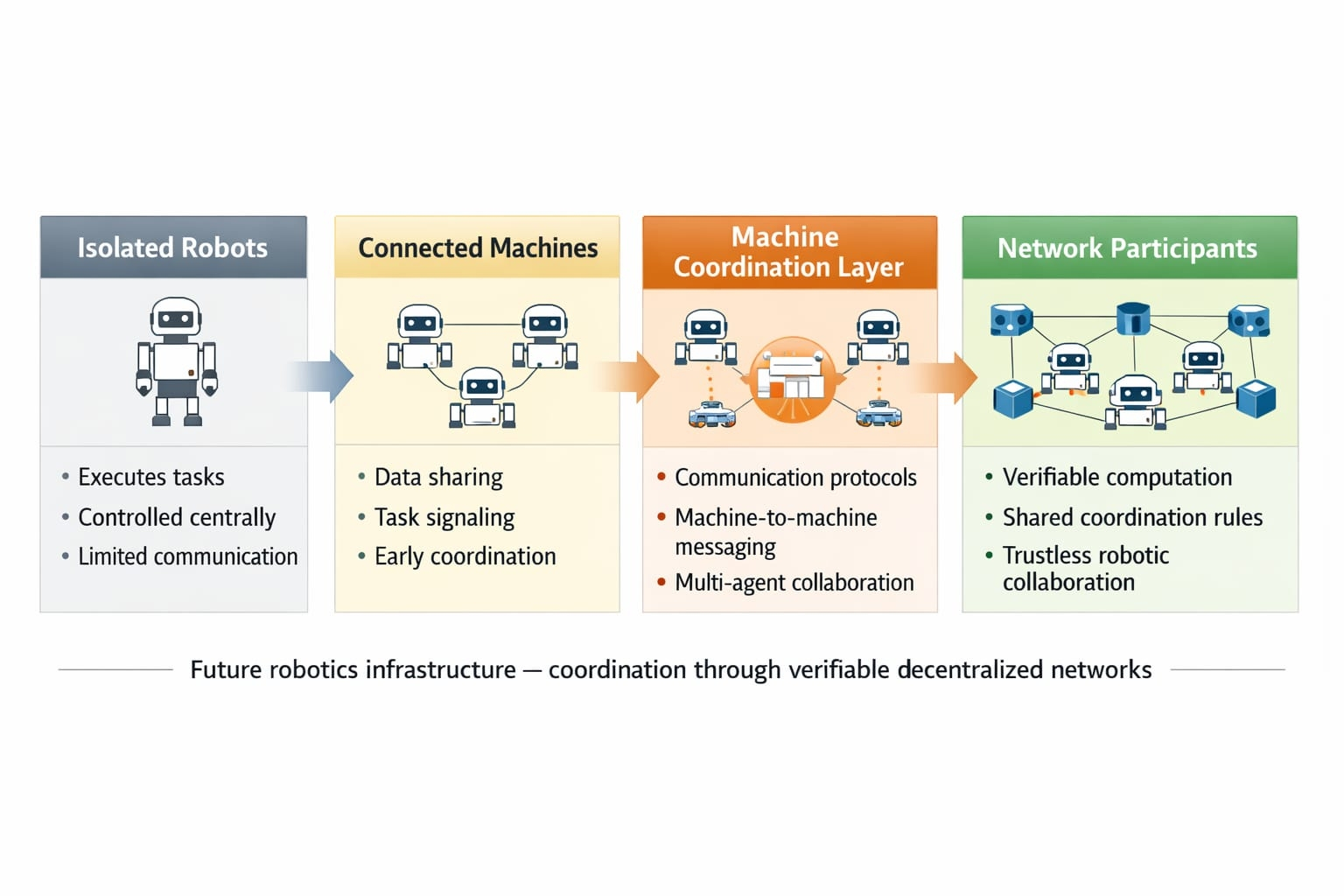
When many robots operate across different environments and organizations, relying only on centralized control becomes difficult.
Machines must exchange data.
They must coordinate tasks.
And their actions must be verified so different participants can trust the system.
This is where ideas behind Fabric Protocol, supported by the @Fabric Foundation become interesting.
Fabric approaches robotics from an infrastructure perspective.
Rather than focusing only on building smarter robots, it focuses on how robots can operate inside shared networks.
Through verifiable computing and agent-native infrastructure, machine actions, data and computation can be coordinated through a public ledger.
This means robotic actions are not only executed.
They can also become transparent and verifiable.
Such infrastructure makes it easier for machines from different operators to follow shared rules and collaborate safely with humans.
What makes this idea powerful is the shift in thinking.
The future of robotics may not depend only on better machines.
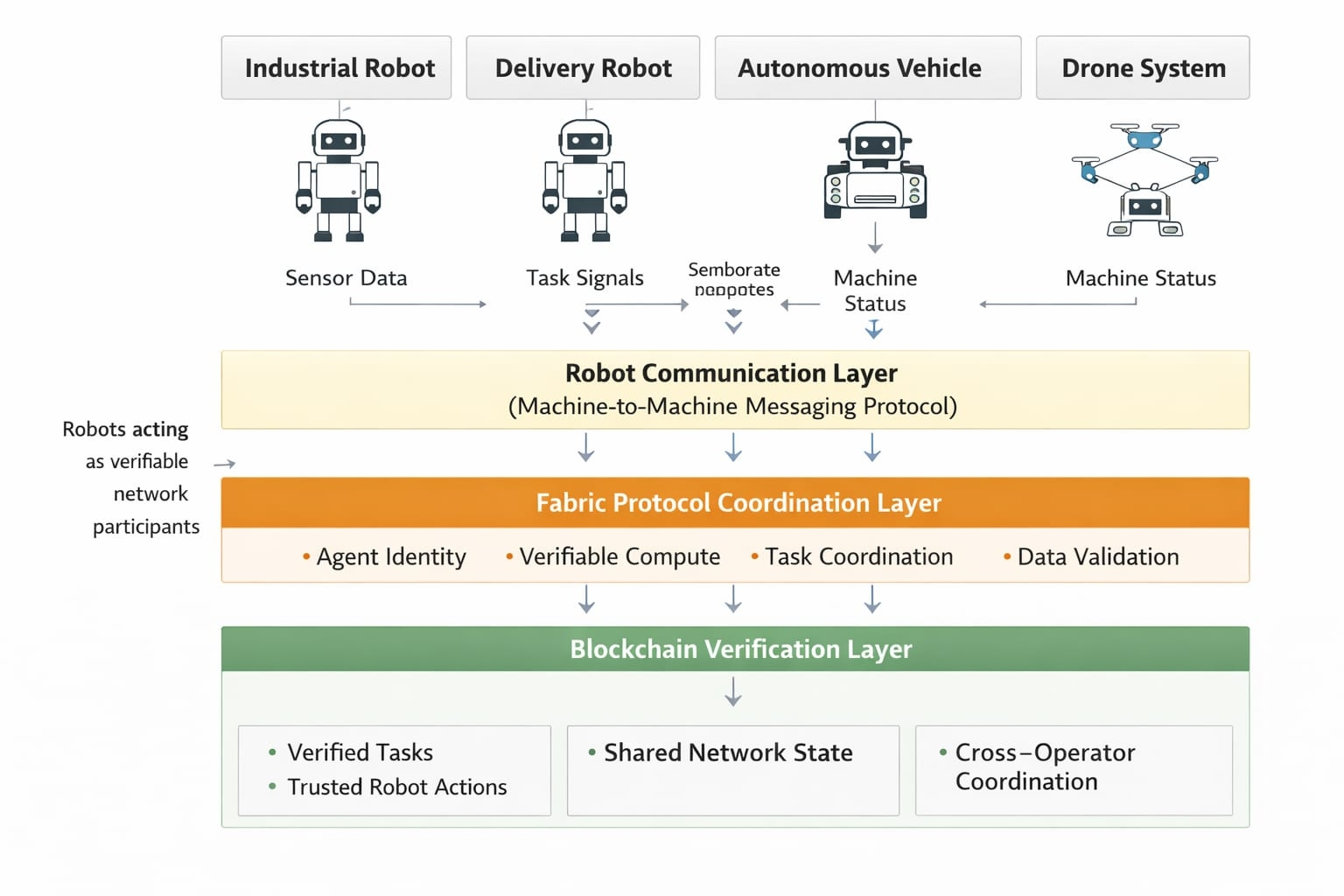
It may depend on the infrastructure that allows those machines to coordinate, evolve and work together across open networks.
