
The bullish case for Fabric foundation isn't robot chain soon, It is that these base layers might get too important to stay on shared systems. That is why Fabric protocol stands out to me.
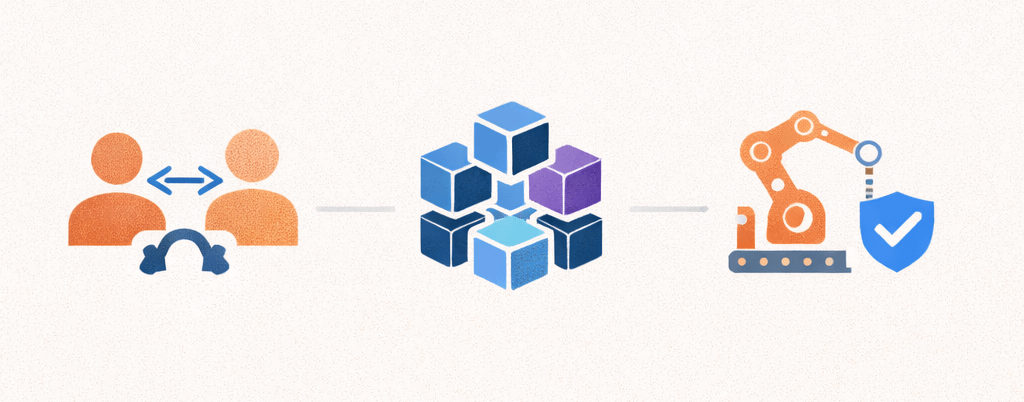
I used to think the biggest part of the story would be the chain itself. New architecture. New consensus. New machine native narrative. Now I think that is the part the market jumps to too early. Because before a robot economy earns a custom L1, it has to prove something much simpler and much harder: can machines hold identity, settle work, verify actions, and align incentives on existing rails in a way that survives contact with reality? That is the real trade here.
The product today is not the L1, The product is evidence. Evidence that identity is portable. Evidence that settlement maps to real completed work. Evidence that verification holds up when tasks get messier. Evidence that incentives improve behavior instead of just inflating activity.
Crypto is full of projects that try to sell the terminal valuation before they prove the base primitive. Fabric foundation, from this angle, looks like it is trying to do the opposite: de risk the core layers first, then earn the right to move more of that stack into a dedicated base layer later.
That is a better market story than it sounds at first.
Because if robots still cannot prove who they are, what they did, who controlled them, and why payment was triggered, then launching an L1 is not real progress. It is just more architecture wrapped around unresolved coordination risk. And markets usually figure that out eventually.
The missing layer in machine economies is not more autonomy. It is portable accountability.
That is where identity, settlement, verification, and incentives stop looking like side features and start looking like the valuation layer. If those primitives work, the Fabric foundation's L1 story gets stronger. If they do not, the L1 story was early narrative leakage.
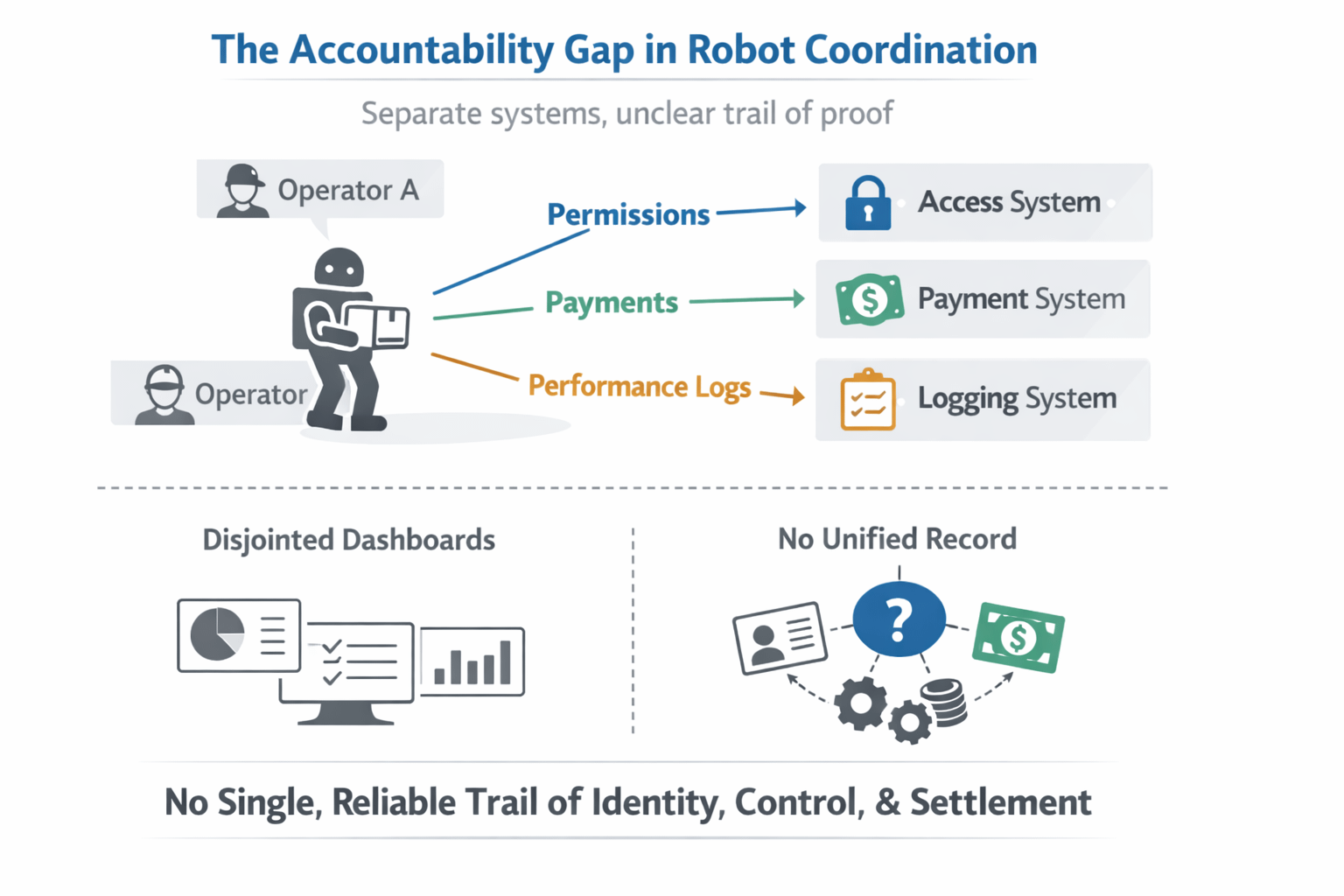
A simple way to think about it is this: imagine a robot completing a warehouse task across two operators, using one system for permissions, another for payments, and a third for logging performance. If something goes wrong, everyone can point to a dashboard, but nobody can point to a single reliable trail of identity, control, execution, and settlement. That is the kind of gap Fabric protocol is trying to make legible. The issue is not whether the robot moved. The issue is whether the system can prove what happened in a way that other parties can trust.
That is the part I think people are still underpricing: a credible machine native chain probably does not begin when the chain launches. It begins when the primitive stack becomes too real, too valuable, and too operationally demanding to stay on generic rails forever. Fabric protocol is interesting to me because it seems to understand that order. Prototype coordination now. Earn the L1 later.
My guess is that the market will not re rate this story when people hear the words machine native L1. It will re rate when the primitive layer starts showing visible economic gravity: repeated task settlement, stronger identity linked coordination, better verification loops, and infrastructure that other robotic or agent systems can plug into because it is easier than rebuilding the stack themselves. If that happens, Fabric foundation stops looking like a speculative extension and starts looking like a necessary migration path.
@Fabric Foundation #ROBO $ROBO
