
It was late in the evening when I first noticed something. I wasn’t even looking at price charts. I was checking search traffic. This kind of data that most traders ignore. On Google Trends the phrase "MIRA token" had started to climb. It was a start then suddenly it spiked over two days. That kind of change always makes me wonder. Is attention driving the price. Is the price pulling attention towards it?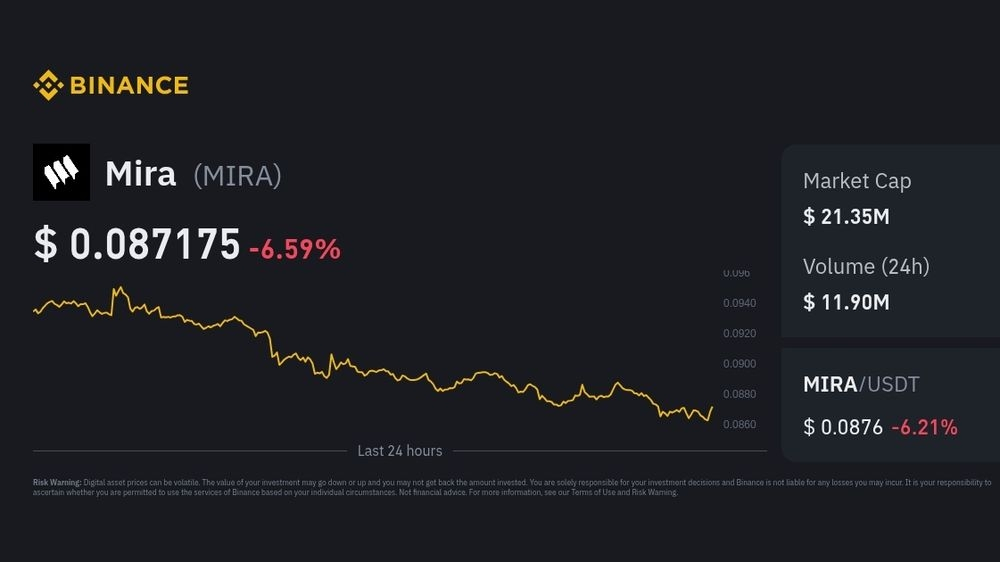
This tension is right in the middle of what’s happening with Mira.
Now the token trades around $0.14. The market cap is near $31 million. There are about 223 million tokens circulating. These numbers matter. They tell us how sensitive the asset is to attention. A $31 million market cap is small in crypto. It means that small amounts of money can move the price a lot. A million dollars in new demand can change the entire chart.
When attention arrives through search engines it doesn’t arrive evenly.
Look at the volatility. In the 24 hours the price has traded between $0.134 and $0.1597. That’s a 19% range. It sounds dramatic. It shows something about the market. The market is still thin. When there isn’t liquidity small bursts of buying push the price up quickly.. Then profit-taking pushes it back down just as fast. The chart shows emotion much as fundamentals.
Search traffic feeds into that layer.
When search volume rises it signals curiosity. Curiosity is expanding beyond the people who already hold the token. New people discovering the token often follow a path. They search, read, open an exchange and sometimes buy. Even if only a small percentage of them buy it can affect a $31 million asset.
This creates a feedback loop.
Price moves attract searches. Searches bring people. Some of those people buy. Their buying pushes the price again. That triggers searches. It’s not manipulation. It’s how attention moves through markets.
You see this pattern with assets like Bitcoin.. The difference is scale. Bitcoin’s market cap is huge. A spike in Google searches barely affects it. With tokens like Mira attention itself becomes important.
Liquidity tells another part of the story.
The current 24-hour trading volume is near $46 million. That’s interesting because it’s higher than the market cap. The volume-to-market-cap ratio is over 100%. That means the market value of the token changes hands in a day.
On the surface it looks like activity is high.
Underneath it signals something more fragile. High turnover often means short-term traders are in control. When traders control most of the volume the price becomes reactive. Small changes in sentiment can trigger moves.
Search trends make this behavior worse.
If a surge of Google searches happens during a moment of sentiment the price can climb quickly.. If those searches happen after the price has already moved the dynamic changes. New buyers become liquidity for earlier traders exiting positions.
There’s another layer to this.
The token’s diluted valuation is roughly $140 million. Only about 223 million of the 1 billion tokens are circulating. That means less than a quarter of the supply is currently active.
On the surface limited circulating supply can support price reactions.
Fewer tokens available means demand pushes prices faster.. It also creates a structural risk. Future token unlocks introduce supply. When that supply meets demand driven by attention spikes the result can be uneven price behavior.
That uncertainty is why listed tokens behave so differently from mature assets.
Exchange listings act as attention catalysts. When a token appears on an exchange it becomes searchable in two different ecosystems. That dual exposure often produces the pattern we’re seeing now.
Attention is not the same as conviction.
If you compare this with Ethereum’s cycles something interesting appears. Ethereum saw spikes in search traffic during its early growth years.. Those spikes stabilized as the network developed. Liquidity pools expanded. Institutional participation increased. Search volume became less predictive of short-term price moves.
Mira is still far from that stage.
At this size the asset behaves more like a reflection of narrative velocity. If search traffic accelerates sharply the price often follows. If interest fades, liquidity. Volatility increases.
None of this means the correlation between Google searches and price will always hold.
Sometimes search spikes represent curiosity after a rally.. Sometimes attention rises because of speculation rather than genuine adoption.
Early signs suggest both forces may be present here.
The project sits in the AI infrastructure narrative. That alone brings attention cycles.. Attention is not stable capital. It moves quickly from one narrative to the next.
Which brings us back to the tension.
Are people searching for Mira because the price is moving or is the price moving because people are searching for it? The honest answer is probably both.
That’s something traders often underestimate.
In early-stage crypto markets attention is not a signal. Sometimes it becomes the fuel itself.
Zooming out this pattern is appearing across the altcoin landscape.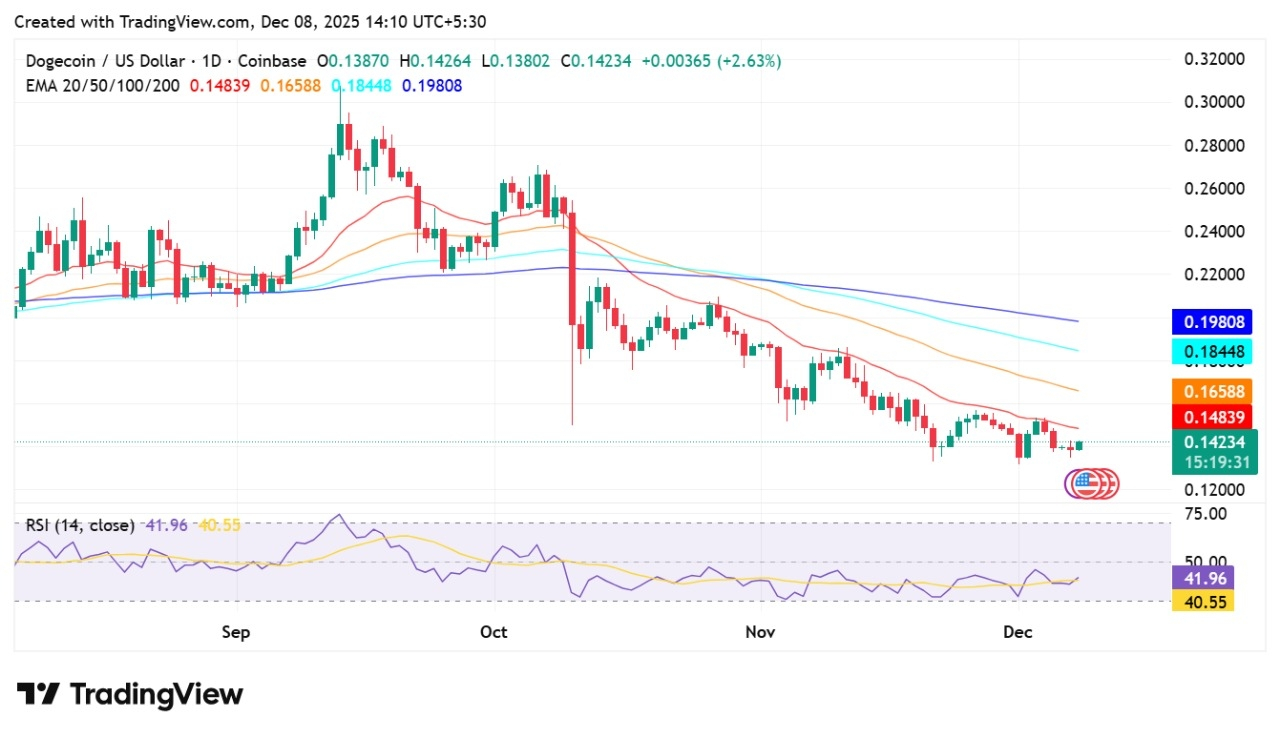
Capital isn’t flowing evenly anymore. Instead it rotates through pockets of attention. One token catches a narrative, search traffic spikes liquidity surges for a days then attention moves somewhere else.
Understanding that rotation may matter more, than predicting any price move.
Because in crypto the charts show where money is.. Search data quietly reveals where curiosity is heading next.#mira $MIRA
