

There is a point in the life of every technology where the conversation changes.
At first the discussion is about capability. People ask whether the system works, whether it is faster, whether it can do something that older systems could not do. That stage is exciting because everything feels new.
Later the conversation becomes quieter.
The question is no longer whether the technology works. The question becomes whether other systems can rely on it.
That is the stage where infrastructure begins to matter.
I started thinking about Fabric Protocol through that lens.
Most discussions around robotics still live in the first stage. They focus on capability. Better sensors, smarter decision-making, faster navigation. The machines themselves are the center of the story.
But when automation spreads beyond isolated environments something else begins to matter more than capability.
Coordination.
A robot working inside a single factory is relatively simple to manage. One company owns the machine, controls the software, and supervises the tasks. Responsibility is clear because the system lives within a single organization.
The situation changes when automation moves across organizational boundaries.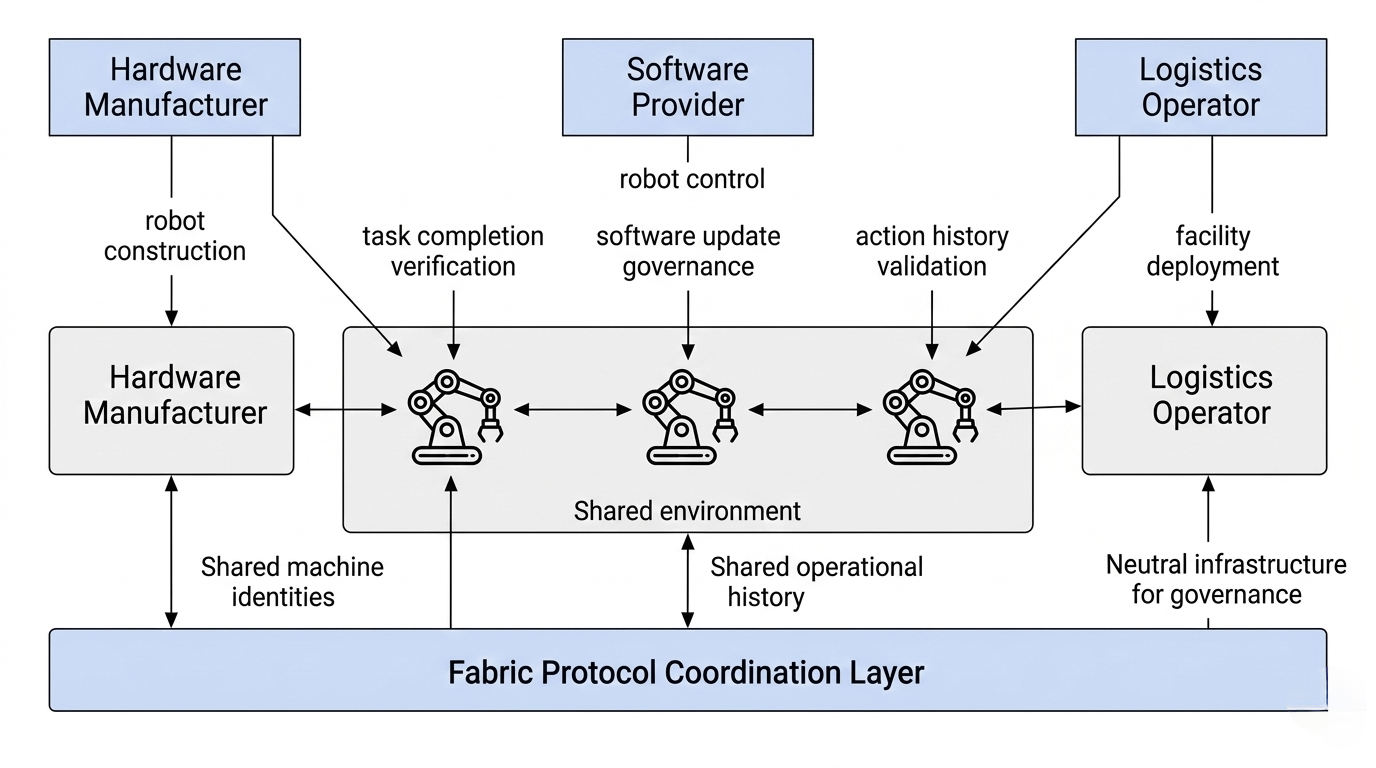
Imagine a logistics network where different companies operate robots in shared spaces. One company builds the hardware, another writes the control software, and a third company deploys the machines in its facilities.
Now the question is no longer just what the machines can do.
The question becomes how all those actors coordinate around the machines.
Who records what happened when a robot completes a task?
Who decides when a software update changes how that robot behaves?
Who verifies the history of actions if two organizations disagree about what occurred?
Those questions rarely appear when people talk about automation.
But they appear very quickly when automation becomes infrastructure.
Fabric Protocol is built around the idea that this coordination layer should exist outside of any single company. Instead of each organization maintaining its own records and control mechanisms, the protocol proposes a shared system where machine identities, actions, and governance decisions can exist on a neutral infrastructure.
That concept does not feel urgent when automation is still limited.
It becomes more interesting when machines begin interacting across networks of organizations.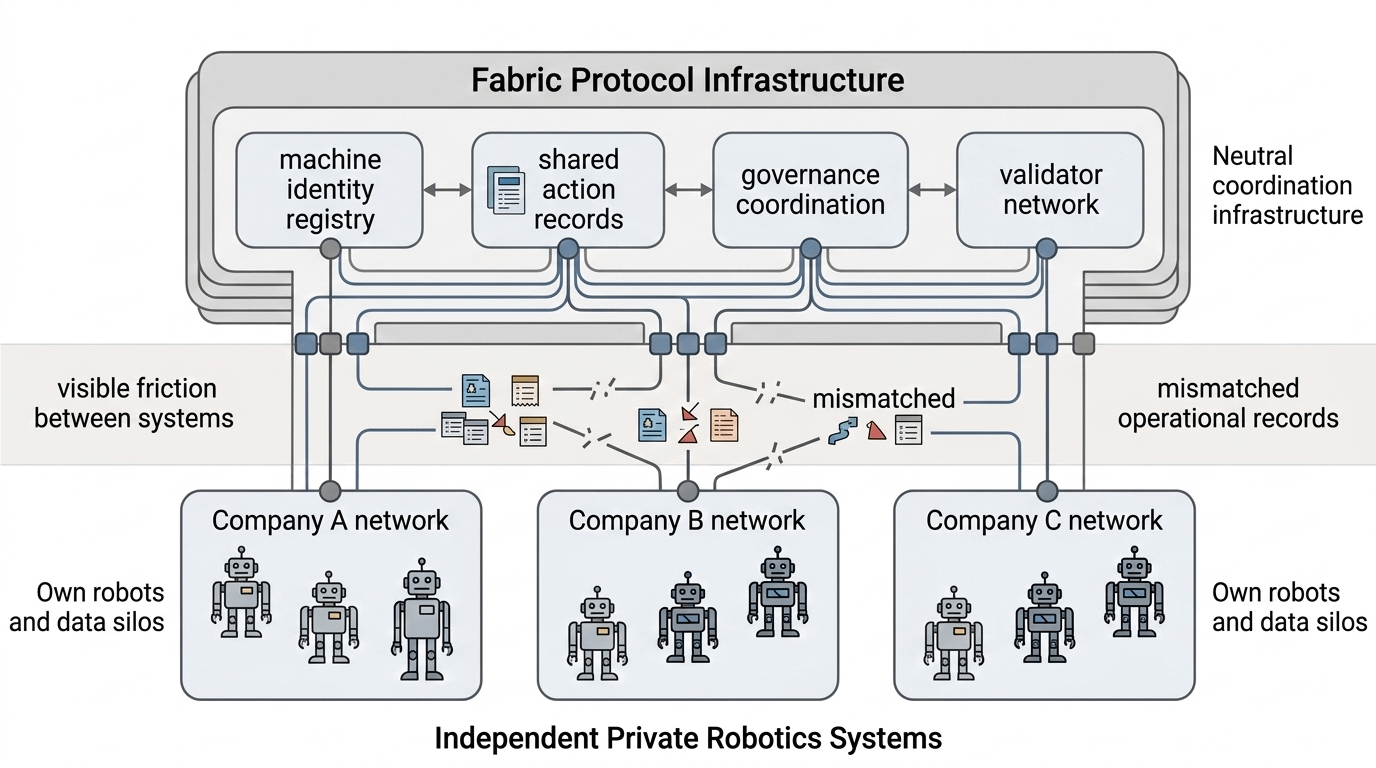
Shared infrastructure often appears when coordination becomes difficult enough that private systems start to conflict with one another. The internet itself followed this pattern. Early networks were isolated until open protocols made it possible for them to connect.
Fabric is exploring whether robotics may follow a similar path.
The presence of the $ROBO token introduces the economic layer that allows such a system to function. Validators secure the network, participants contribute to governance, and incentives align around maintaining the coordination infrastructure.
But the token alone does not create importance.
Infrastructure only becomes meaningful when the environment around it begins to depend on it.
That dependency is what Fabric still needs to demonstrate.
If robotics ecosystems remain largely controlled by individual companies, the need for a shared coordination protocol may remain theoretical for a while. Companies often prefer systems they can control directly.
If automation expands into environments where multiple organizations rely on the same machines, coordination complexity will grow quickly.
At that moment a neutral infrastructure layer stops looking experimental.
It starts looking necessary.
The interesting thing about infrastructure projects is that they rarely feel urgent until the moment they become unavoidable.
Fabric Protocol is building in anticipation of that moment.
Whether that moment arrives sooner than people expect, or later than the market hopes, will determine how important the protocol ultimately becomes.
For now the machines are still learning how to work together.
Eventually the systems around them will have to learn the same thing.