

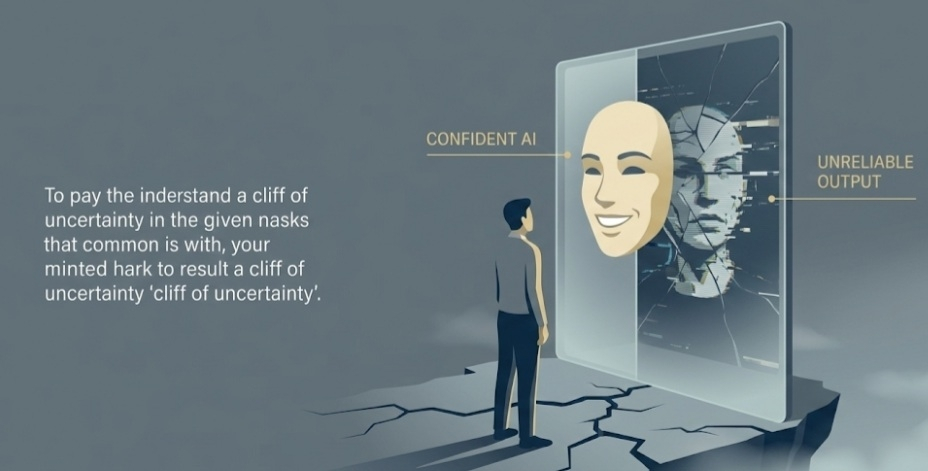
As I observe the current AI landscape, I feel we are rushing toward a "cliff of uncertainty." To me, the core issue isn't the machine's intelligence, but its reliability. We are facing a technology that is incredibly powerful yet often "deceptive"—delivering biased or flat-out wrong answers with absolute confidence. This is why Mira Network caught my attention; not because it’s trying to build a "smarter" model, but because it aims to "tame" the output.
My Philosophy on Mira: Verification Over Intelligence
What draws me to Mira is its departure from the arms race of building massive models. The vision here is clear: AI is unreliable and requires verification.
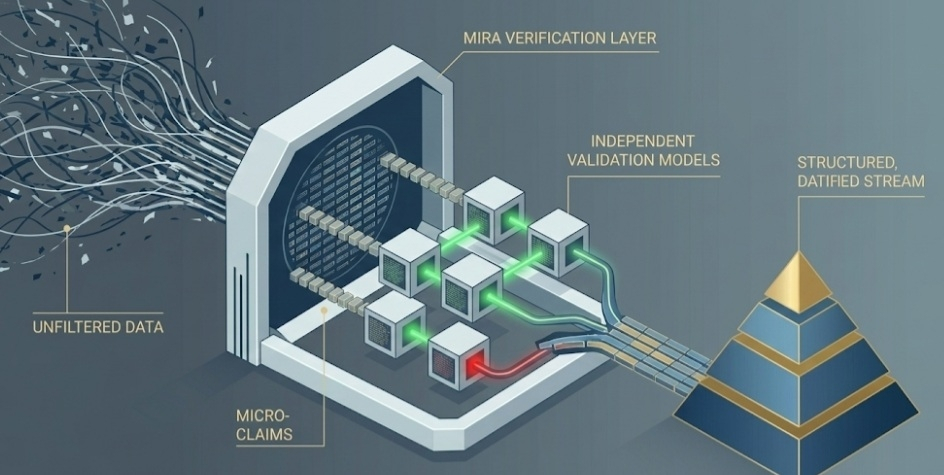
Instead of trying to make a model "infallible," Mira breaks down an answer into "micro-claims." Imagine taking a long text, splitting it into small sentences, and cross-checking each sentence across multiple independent models. If they agree, we trust it; if they conflict, a warning flag is raised. This type of "multi-model verification" is exactly what we need to build a credible internet.
Blockchain: A Necessity, Not a "Trend"
I often ask myself: Why do we need blockchain for everything? In Mira’s case, the answer is logical to me. Blockchain acts as a neutral arbiter. It doesn’t just record data; it provides an "incentive system" that prevents validators from "lazy approval." In this system, you are rewarded for being accurate and for catching errors, creating a solid layer of trust above the noise of AI.
The Real Challenge: Speed vs. Substance
I admit, I see massive hurdles for Mira's adoption. We live in a market (especially the crypto world) that worships speed and simplicity. The verification process Mira proposes adds complexity, increases costs, and takes more time. Developers usually choose the fastest tool, not necessarily the most "philosophical or ideal" one.
Furthermore, we are suffering from "hype fatigue." We’ve been through DeFi, NFTs, and GameFi—now it’s AI. In this chaos, it is difficult to distinguish "quiet infrastructure" like Mira from projects that are just empty marketing campaigns.
The Economic Angle: Is the Token Truly Necessary?
This is a point I reflect on deeply. Does Mira actually need a token, or is it just a standard template for crypto projects?
The risk I fear is the token turning into a purely speculative asset, losing its technical utility. In my view, the project's success depends on the token acting as "real fuel" for the verification process, rather than just a tool for temporary attention.
My Vision for the Future: A Moving Target
AI is evolving at a staggering pace. If future models (like GPT-5 and beyond) become 100% self-reliable, the market's need for Mira might weaken. However, if AI continues to permeate every aspect of our lives while still "hallucinating," Mira will shift from being an "elegant technical choice" to "vital infrastructure" that no one can live without.
Conclusion: Why I am "Hesitant but Following"
What I appreciate about Mira is the absence of noise. The project doesn't promise price explosions or fake "trending" moments. The work here is quiet, focusing on SDKs, documentation, and backend integration. These elements are "unattractive" to speculators, but they are "sacred" to those looking for real substance.
I cannot guarantee Mira’s ultimate success, as the gap between "technical elegance" and "economic gravity" is vast. Economic gravity requires other systems to depend on Mira and move value through it—which is the ultimate test. I will continue to watch with patience, because infrastructure projects like this don’t give quick growth signals; they accumulate quietly until they become an established reality.
My Personal Take: Mira is a bet on "Reliability" in the age of "Deepfakes." Will that bet pay off? Only time will tell, but it is certainly an experiment that deserves respect and close observation.
#Mira @Mira - Trust Layer of AI $MIRA
