
I’ve watched enough crypto cycles to know that narratives often move faster than infrastructure. A compelling story can attract attention long before a system proves its practical value. When I started looking at Robo Coin, I tried to separate the narrative from the underlying mechanics. The story around ROBO is appealing: a digital economy where machines perform work, verify their actions, and settle value autonomously. It’s a powerful image. But, as with most narratives in emerging technologies, the real question is whether the infrastructure behind it can support the idea.
What draws investors to ROBO, at least from what I can see, is the intersection of two powerful themes: robotics and decentralized finance. Robotics already carries a sense of inevitability. Autonomous systems are appearing in warehouses, logistics hubs, agriculture, and infrastructure monitoring. At the same time, decentralized networks promise new ways of coordinating economic activity without relying entirely on centralized platforms.
ROBO sits right at that intersection.
Instead of focusing solely on improving robotics hardware or advancing artificial intelligence models, the project frames itself around coordination. If robots are going to perform tasks across shared environments—delivering goods, inspecting assets, collecting data—there has to be a way to verify that those tasks were completed and settle payment accordingly. In that sense, the narrative suggests a financial layer for machine activity.
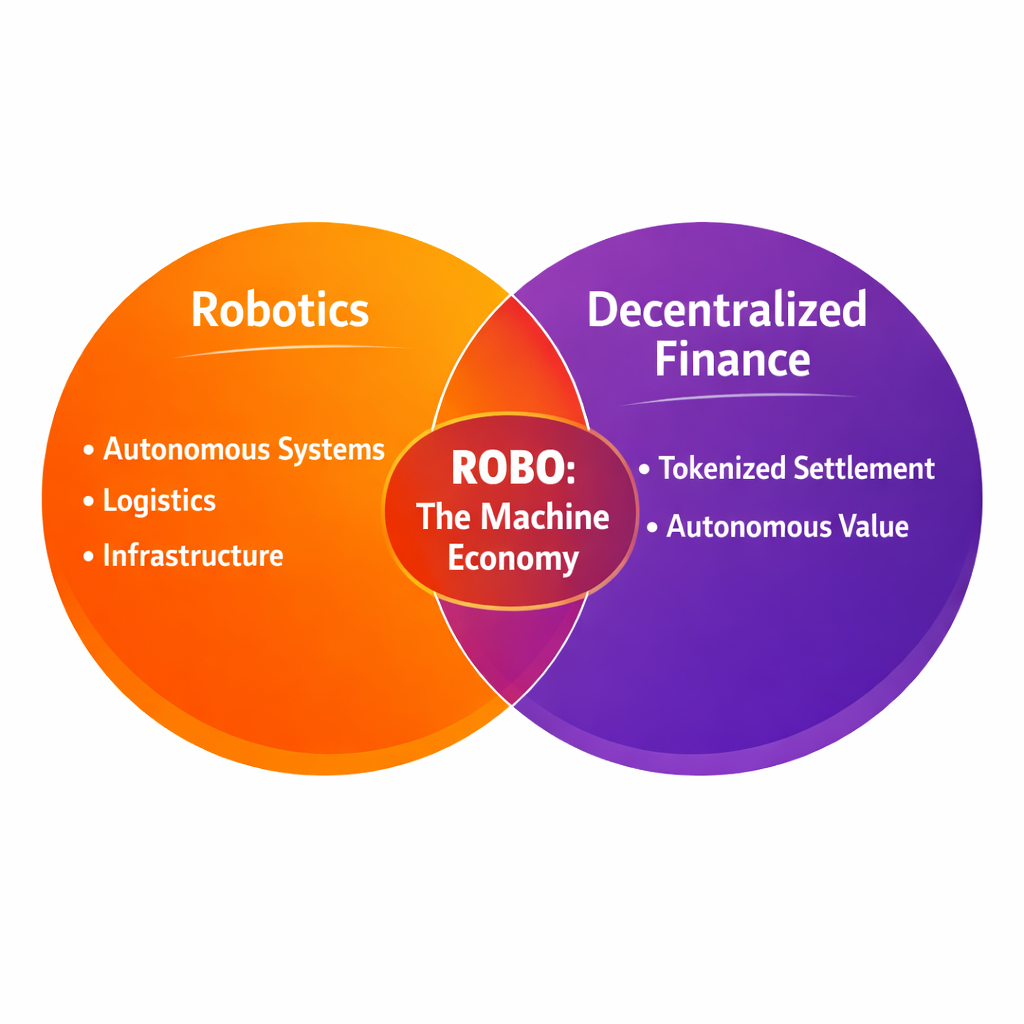
From an investor’s perspective, that idea carries a certain logic. If autonomous machines generate economic value, some infrastructure will eventually need to handle transactions between those machines and the systems around them. The concept of a tokenized settlement layer tied to robotic activity becomes easier to imagine within that framework.
Still, I approach the story with some caution.
Narratives often simplify the complexity of real systems. Robotics is not a uniform industry. A robot operating inside a controlled factory environment faces very different constraints from a drone inspecting infrastructure or a delivery robot navigating public spaces. Each environment has its own safety requirements, operational costs, and regulatory considerations. Any infrastructure meant to coordinate robotic work across those environments must handle a wide range of conditions.
I also think about adoption timelines. Investors are often drawn to technologies that promise exponential growth, but robotics tends to evolve incrementally. Machines need to prove reliability before they become widely trusted. Hardware deployments take time. Maintenance cycles matter. Regulatory frameworks develop slowly. All of those factors can stretch the timeline between narrative and practical implementation.
That doesn’t necessarily weaken the appeal of the ROBO narrative, but it does suggest that its impact may unfold more gradually than some investors expect.
Another factor that resonates with investors is the idea of verifiable machine work. Traditional automation systems typically rely on centralized operators to confirm what tasks were completed. A decentralized verification layer introduces the possibility of shared trust between different organizations. If robots from multiple vendors operate in the same environment, having a neutral system that records and validates their activity could reduce disputes and simplify coordination.
The appeal of that concept is understandable.
At the same time, decentralized verification introduces its own challenges. Networks require validators, consensus rules, and incentive structures that function reliably under real conditions. If verification becomes too slow or expensive, operators may revert to simpler centralized solutions. Infrastructure ultimately succeeds not because it sounds elegant but because it proves practical.
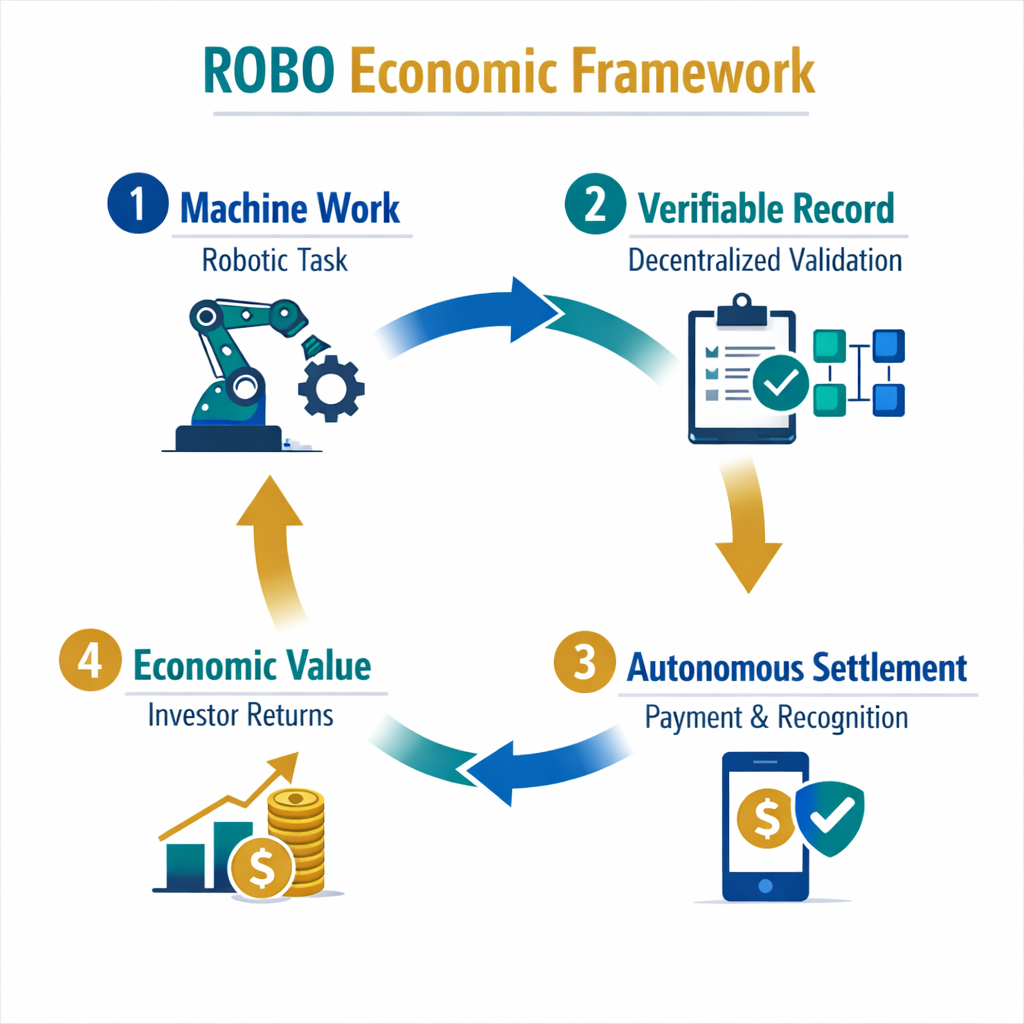
What I find most interesting about the ROBO narrative is that it doesn’t try to replace robotics itself. Instead, it attempts to build the economic framework around robotic activity. In other words, the story is less about machines becoming more intelligent and more about how their work becomes recognized and settled across different systems.
That framing gives the narrative a certain durability. Even if specific implementations change, the underlying problem—how autonomous systems coordinate economic activity—will likely remain relevant as robotics expands.
Whether Robo Coin ultimately becomes the infrastructure that supports that coordination is still uncertain. Investors may be responding to the vision of a machine economy that feels increasingly plausible, even if the details remain unfinished.
For now, the narrative seems to be doing what narratives often do in emerging technologies: creating a lens through which people imagine a future that hasn’t quite arrived yet.