

If you spend enough time in crypto, you develop a certain kind of fatigue.
I’m not talking about market volatility. That’s normal. I mean the whitepaper fatigue. The kind that hits when you have skimmed your hundredth protocol document in a week and every single one sounds suspiciously similar.
Modular infrastructure.
Next-generation architecture.
AI-powered coordination layer.
Different logo. Same vocabulary.
After a while you stop getting excited. You start scanning instead. Looking for the one or two projects that aren’t just rearranging the same ideas.
That’s roughly where I was when I stumbled across Fabric Protocol.
My first reaction? Skepticism. Obviously.
But after digging a bit, I didn’t immediately throw it into the “another token looking for a narrative” pile. The reason is simple the problem they’re pointing at is real.
And it’s not about trading.
It’s about machines.
Not in the sci-fi sense. In the very practical sense that robots are quietly taking over large parts of logistics, manufacturing, and infrastructure. Warehouses already run on fleets of robots. Drones inspect power lines. Autonomous systems manage industrial processes.
That world is growing fast.
And there’s a coordination problem hiding underneath it.
Right now most robotic systems operate inside centralized infrastructure. A company owns the robots, the servers, the logs, the data pipelines. Everything runs through their internal systems.
Works fine until multiple parties need to collaborate.
Let’s say three companies operate robots inside the same logistics network. Maybe different vendors. Maybe different AI systems controlling them. Suddenly trust becomes messy.
Who verifies what the machines actually did?
Who confirms that a robot followed instructions correctly?
Who controls the logs?
Right now the answer is usually: whoever owns the servers.
Fabric Protocol is basically asking a different question.
What if machine coordination lived on shared infrastructure instead?
Not company A’s database. Not company B’s cloud account.
Something neutral.
That’s the angle here.
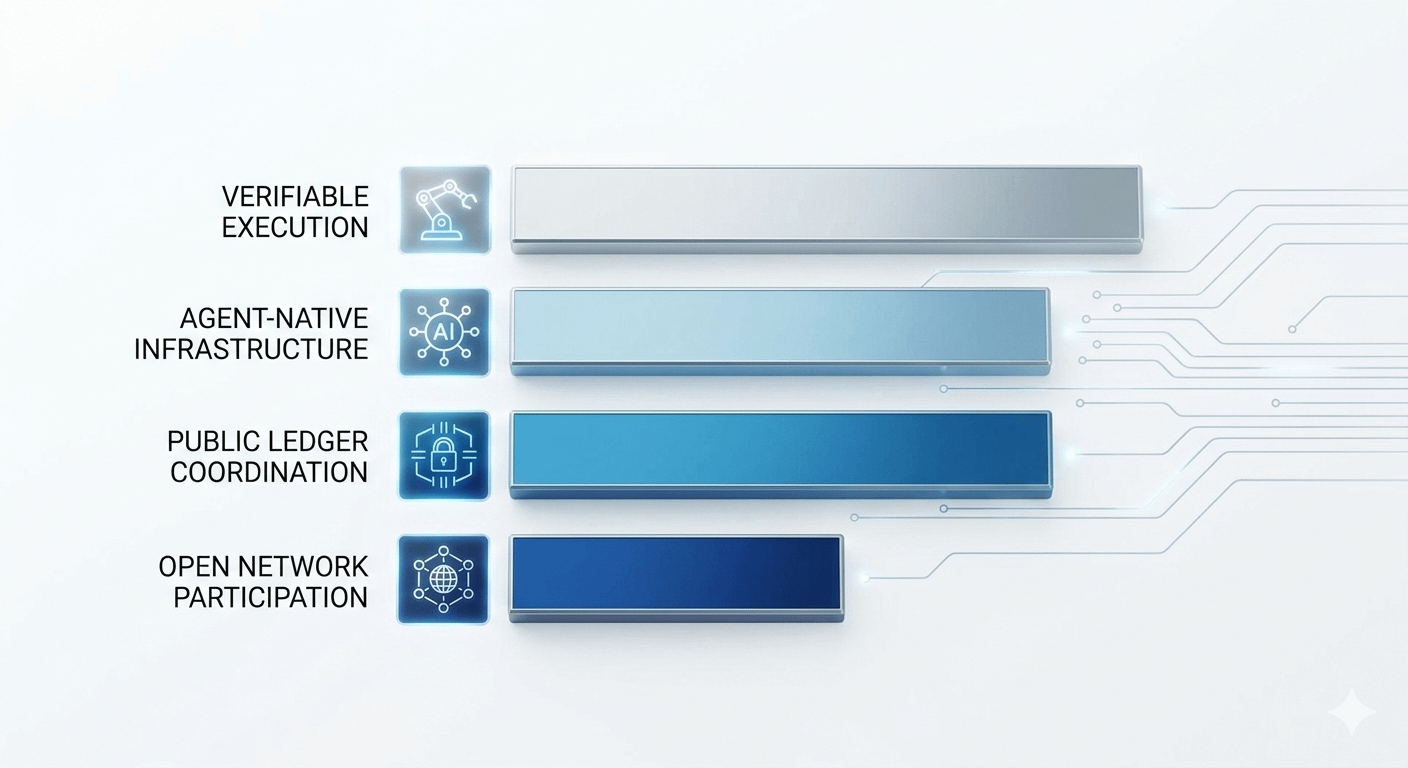
@Fabric Foundation describes itself as an open network designed to coordinate robots, AI agents, data, and computation through a public ledger and verifiable computing system.
Sounds complicated. But the idea underneath isn’t that exotic.
Machines perform tasks.
Instead of trusting their internal logs, the system generates cryptographic proofs that those tasks were executed correctly.
Think of it like a receipt.
A robot moves an object.
A drone follows a route.
An AI agent processes a dataset.
The system produces proof the task happened according to defined rules. Other parties can verify it without rerunning the entire computation.
That’s the verifiable computing piece.
And honestly, that part is interesting.
Because once machines start interacting across organizations, verification becomes a serious issue. Nobody wants to rely entirely on another company’s internal logging system when automated machines are making decisions.
Fabric also pushes this idea of agent-native infrastructure.
Which basically means the system assumes machines—not humans—are the main participants.
That’s a subtle shift.
Most software infrastructure today is built for people. Machines are secondary users inside human-designed workflows.
Fabric flips that model.
Robots, AI agents, and automated systems become network participants. They can submit data, execute actions, verify outputs, and interact with other agents.
In theory, you end up with a coordination layer where machines talk to machines while humans define the rules.
Now, before anyone gets carried away, let’s slow down for a second.
Infrastructure projects in crypto have a brutal track record.
They don’t usually fail because the technology is bad. They fail because nobody builds on them.
You can design beautiful architecture. Elegant protocols. Perfect whitepapers.
But if developers don’t show up?
You’re left with an empty network.
The ghost town problem.
And honestly, I’ve seen this movie before.
I remember looking at a robotics-meets-blockchain project back in 2019 that promised to coordinate global robot fleets through decentralized infrastructure. The pitch sounded incredible. Autonomous machines, shared networks, programmable coordination the whole vision.
The reality? Six months later the community disappeared, the developers went quiet, and the network never actually launched anything meaningful.
So yeah, I’m naturally wary when I see similar narratives today.
That experience alone makes me cautious.
Which brings us back to the real question.
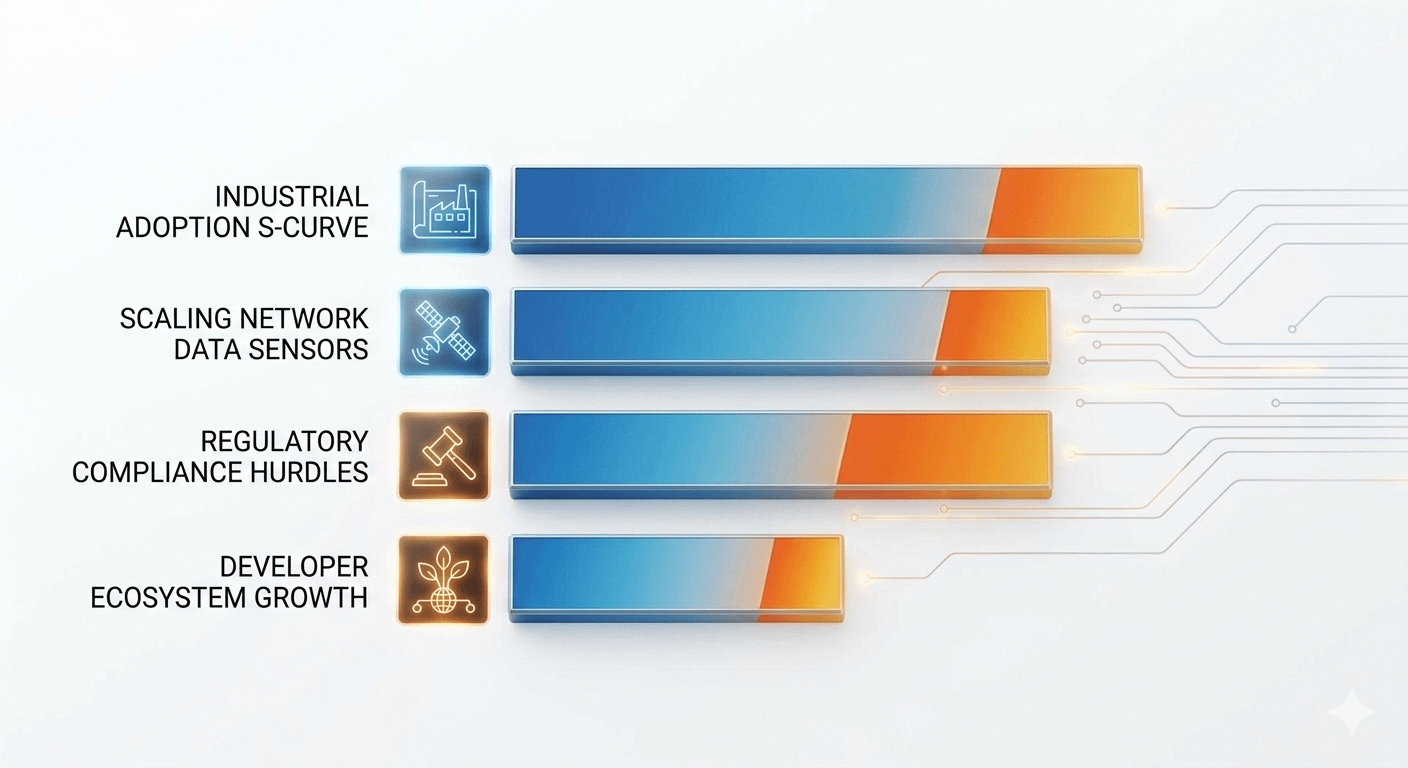
Who is actually going to use this?
Robotics companies tend to move slowly. Industrial systems don’t swap infrastructure every six months like DeFi protocols do.
Then there’s scaling.
Machine networks generate insane amounts of data. Warehouse robots alone produce constant streams of telemetry and sensor output. Coordinating that through a public infrastructure layer isn’t trivial.
Can they actually scale this?
That’s not a small engineering problem.
Regulation is another wrinkle. Robotics and autonomous systems operate in heavily regulated industries transportation, manufacturing, healthcare. Introducing decentralized coordination into those environments means dealing with compliance frameworks that weren’t designed with blockchains in mind.
None of these are deal breakers.
But they’re real obstacles.
Still, what caught my attention about Fabric isn’t the tech stack. It’s the direction.
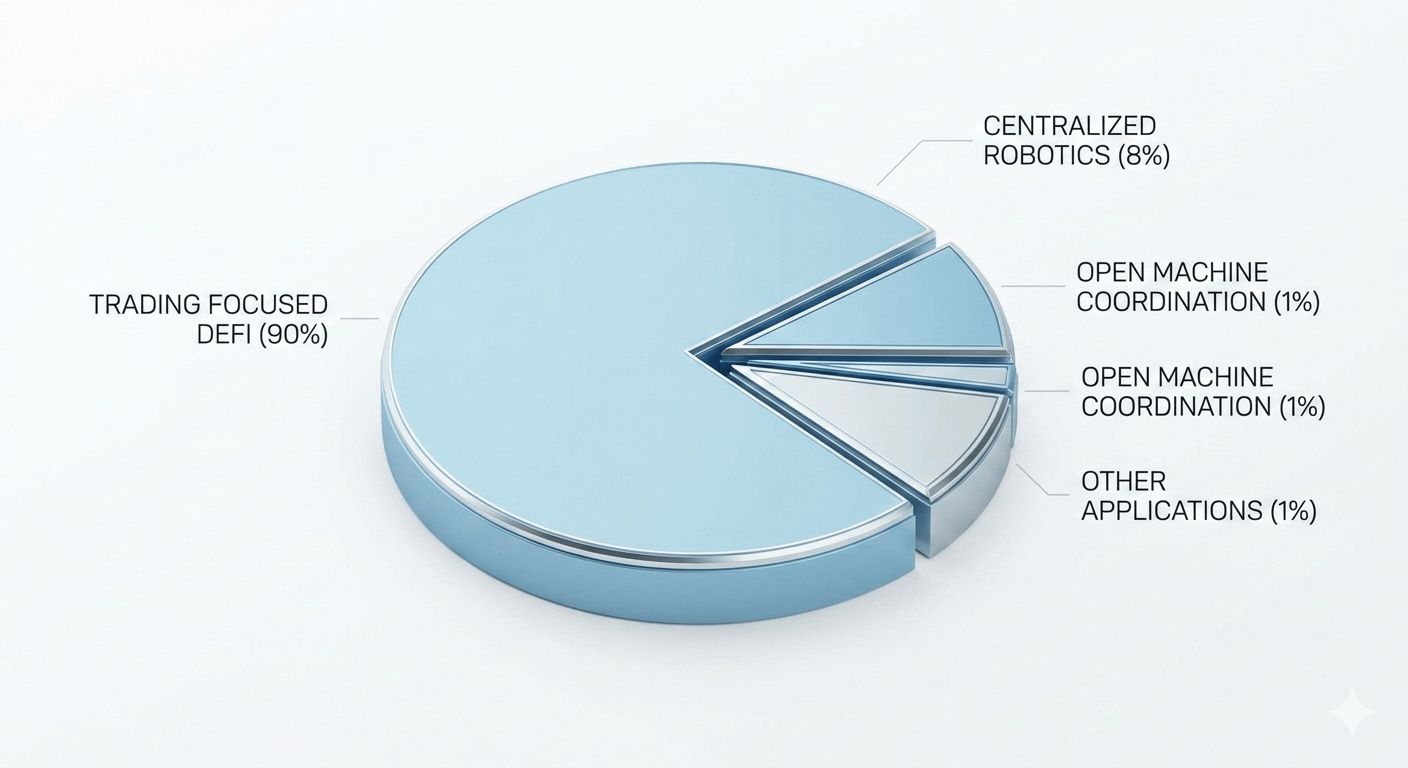
Crypto spent the better part of a decade building financial infrastructure for traders. Exchanges, liquidity pools, yield strategies. Entire ecosystems dedicated to moving tokens around.
Useful, sure.
But narrow.
Projects like Fabric hint at something broader.
A future where blockchain infrastructure is used by machines, not just traders.
Where networks coordinate automated systems instead of just wallets and smart contracts.
That’s the kind of shift that actually matters long term.
Will Fabric be the protocol that pulls it off?
No idea.
Infrastructure plays are slow. Adoption takes years. Most attempts quietly fade before they reach critical mass.
But I’ll say this.
In a space obsessed with loud marketing and fast narratives, it’s refreshing to see a project tackling a real coordination problem tied to the physical world.
Robots. AI agents. Machine collaboration.
Those things aren’t theoretical anymore.
Whether Fabric becomes part of that infrastructure or just another ambitious experiment is still an open question.
But compared to the hundredth DeFi fork promising next-gen yield, this kind of attempt at least earns a second look.
And these days, that alone puts it ahead of most whitepapers I read.