

Mira Network is what I’m watching when people start trusting AI output faster than they should. I’m looking at it less like a crypto product and more like a venue where judgment can get turned into action before anyone has had enough time to question the setup. I’ve seen too many systems look disciplined when conditions are easy and then show their real shape when flow gets crowded. I focus on what happens when confidence hits the queue all at once.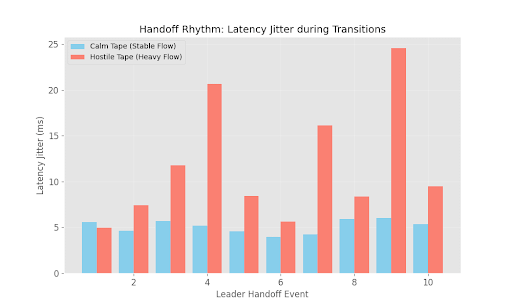
That is the only frame that matters here. The problem is not whether AI can be useful. The problem is what kind of market structure gets built when machine output starts sitting close to execution. Once that happens, the conversation changes. It is no longer about intelligence in the abstract. It is about who controls priority, who absorbs delay, who gets the cleaner path through congestion, and who pays when the system encourages people to act before they understand what they are acting on.
A lot of crypto writing still gets this wrong because it treats the chain like a social object. It talks about participation, alignment, and the comfort language of shared upside. That misses the risk entirely. Mira Network makes more sense when treated like a trading venue. The right question is not whether people like it. The right question is whether its rules stay clean when the tape turns hostile. That is where credibility lives.
Raw speed is almost beside the point. Fast systems get praised too early because people confuse motion with control. But speed by itself does not tell anyone whether the queue remains fair under pressure. It does not tell anyone whether leader transitions stay clean when activity clusters. It does not tell anyone whether cancellation races are real or cosmetic. It does not tell anyone whether spread behavior reflects honest risk pricing or hidden discomfort with the matching environment. In markets, the harder question is never whether a system moves quickly. It is whether policy survives stress.
That matters even more when AI sits near the decision loop. The faster machine-generated judgment can flow into action, the more expensive priority becomes. The more expensive priority becomes, the more incentive there is to exploit the path between observation and execution. At that point, better execution does not automatically make the system safer. It can do the opposite. It can sharpen competition, increase the value of getting in first, and quietly turn weak constraints into a profit center for anyone who understands the queue better than the average user.
This is where the danger becomes quiet instead of obvious. Nobody needs to believe the AI is perfect. That is not how this breaks. What matters is whether the venue makes it too cheap to behave as if the output is good enough. That is a structural problem, not a philosophical one. Traders do not need certainty to move. They just need a reason to think other people will move first. Once that dynamic starts, the chain is not processing information. It is processing reflex.
On a calm day, reflex looks harmless. The queue clears. Cancellations appear to work. The handoff rhythm between leaders seems smooth enough. People point at clean screens and call it proof. But calm tape is a bad teacher. Weak rules hide well when no one is desperate. The real test comes when the market stops being polite.
Take a liquidation cascade. Price moves hard, collateral weakens, positions begin to compress, and suddenly everyone is trying to do three things at once: cut risk, update orders, and avoid being the last one still exposed. In that environment, who gets filled first is not a footnote. It is the event. Who gets clipped because their cancellation lost the race is not bad luck. It is market structure. If Mira Network gives even a small edge to better locality, better timing around leader transitions, or better understanding of how the queue is actually sequenced under stress, that edge will not stay theoretical for long. Someone will turn it into money.
Volatility spikes make the same point from a different angle. The first move never stays isolated. AI-linked output, or even the expectation that others will trust it, can trigger the initial reaction. Then that reaction becomes price. Then price becomes urgency. Then urgency widens spreads because no serious liquidity provider wants to quote tightly inside a queue they do not fully trust. Once that starts, the venue is no longer being judged by architecture diagrams. It is being judged by what happened in the few seconds when participants needed clarity most.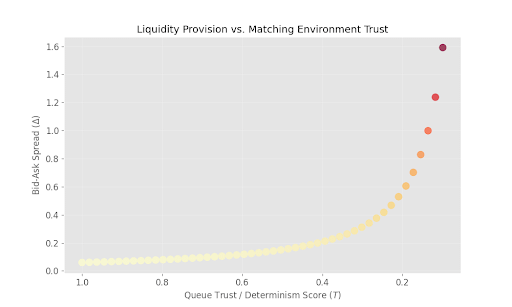
That is why handoff rhythm deserves more attention than it usually gets. Systems love to present control changes as neat and mechanical, but markets do not experience them that way. Markets experience them through edge cases. One leader hands off to the next while flow is heavy. A tiny wobble appears. Recovery is mostly clean but not identical. A few messages land differently than participants expected. That is enough. A seam has been found. And once the market finds a seam, it trades it until the venue either closes it or loses the confidence of anyone serious enough to notice.
The same goes for determinism, though that word is often made to sound cleaner than it feels in practice. Traders do not care about it as an abstract ideal. They care because it decides whether bad moments remain bounded. They care because jitter, recovery, and tail behavior decide whether a venue can be priced honestly. Known pain can be managed. Hidden inconsistency cannot. If a system behaves one way during easy flow and another way during congested flow, not by policy but by side effect, then the venue is teaching the market to distrust its surface.
Interoperability makes the picture tougher, not easier. Every outside flow source acts like a pressure test. Every bridge, every connected venue, every path that allows capital or intent to enter from somewhere else creates another opportunity for arbs to examine whether the internal sequencing policy is actually robust. That is what connected markets do. They do not politely accept claims. They attack them. The moment there is money in the gap between what a venue says and how it behaves under load, that gap gets harvested.
That is also why controlled participation is not automatically reassuring. Curated validators or tighter operator sets can absolutely improve discipline, but only if the rules around that control are explicit. Control without clear boundaries is just another way of asking the market for trust without showing the terms. If a smaller group has influence over the queue, over recovery, or over what happens when the system gets messy, then the burden is simple: show the guardrails, show the logs, show what cannot be done, and show how enforcement works when the pressure is real.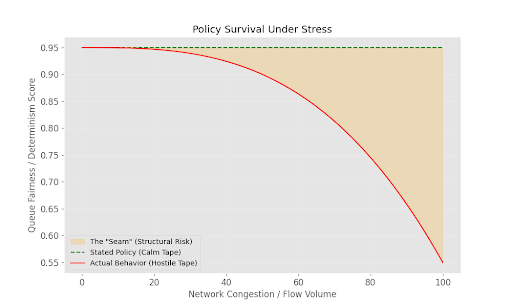
Transparency only matters if it arrives in a form traders can actually use. Late explanations do not help. Selective disclosure does not help. Branding language definitely does not help. What matters is whether, after a bad stretch, the venue leaves enough evidence to reconstruct the truth. Who got priority. Who was delayed. Whether cancellations lost cleanly or got trapped in ambiguity. Whether spread widening was natural fear or rational adaptation to weak queue rules. If post-trade reality is fuzzy, the market will fill in the blanks with its own answer, and that answer is usually harsher than anything the venue would have written for itself.
That is the real issue with believing AI too fast. The chain can accidentally train people to convert confidence into action before the venue has shown it deserves that kind of trust. Once that habit forms, the damage is no longer about one wrong output. It becomes systemic. Participants stop asking whether the signal is good and start asking whether they can afford to wait while everyone else acts. That shift is dangerous because it turns judgment into herd timing. From there, fragility is not a bug. It is the product of the incentives.
So Mira Network should be judged in the only language that matters once real money leans on a system: what does it make expensive, what does it quietly reward, and what remains clean when stress strips the story away. If better execution makes bad ordering games more profitable because constraints are soft, then the problem is not intelligence. The problem is venue design.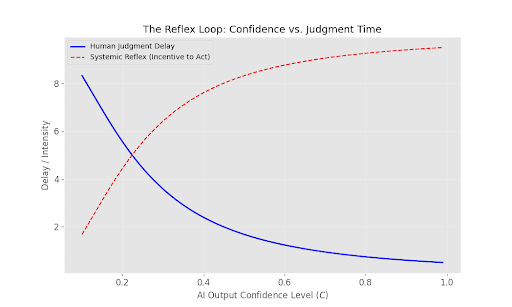
And in a market, bad venue design always gets exposed at the exact moment people can least afford to find out.