
The world is slowly learning a strange lesson about artificial intelligence. Machines can sound confident even when they are wrong. They can generate convincing answers in seconds, but confidence and truth are not the same thing.If you have ever asked an AI system a complicated question, you probably noticed this feeling. The answer arrives quickly. It looks clean and intelligent. It reads like it was written by someone who knows exactly what they are talking about.
But sometimes it is not correct.That small gap between confidence and accuracy is becoming one of the most important problems in technology today. It is also the reason projects like Mira were created. Mira is not trying to build another AI model. Instead, it is trying to solve something deeper. It is trying to answer a simple question.How do we trust machines that can speak faster than humans can verify?
I keep thinking about that question whenever I imagine how the future might look. If artificial intelligence is going to make decisions, guide systems, or help people in critical situations, then trust becomes more important than speed. And right now, trust is the weakest part of the AI revolution.Most AI systems still rely on human supervision because they can hallucinate facts or show hidden bias in their responses. These errors are not rare mistakes. They are a natural result of how large language models generate information. They predict words based on patterns instead of verifying facts in real time.
That means the output can look perfect while still containing something completely wrong.For small tasks this might not matter much. If an AI suggests a recipe with the wrong spice, nobody gets hurt. But if AI starts helping with legal advice, financial decisions, healthcare guidance, or infrastructure management, then mistakes become dangerous.This is the environment where Mira appears.Instead of trying to make AI models themselves perfect, Mira introduces something that acts like a verification layer. Imagine a system that listens to what AI says, breaks it apart, and then checks every claim before it is accepted as truth.
That is the idea behind Mira.When an AI produces an answer inside the Mira ecosystem, the output is not treated as final information. Instead it goes through a process called claim decomposition. The text is divided into smaller pieces of information that can be verified individually. If a response contains ten factual claims, those claims are examined separately.
This step is important because long paragraphs often hide small errors. When information is broken into smaller pieces, it becomes easier to test whether each piece is true or false.Once the claims are separated, they are sent across a network of independent verification nodes. These nodes run different AI models and analysis tools that check whether the claim holds up. Some nodes might agree. Others might disagree.The system then reaches a consensus.
If most validators confirm the claim, it is accepted. If they reject it, the claim is marked as false or uncertain. If the network cannot agree, the system signals that the information may require further inspection.It reminds me of how humans verify knowledge. We do not trust one voice. We look for multiple confirmations before accepting something as reliable.Mira is trying to give machines the same habit.The result is a form of decentralized verification where no single authority decides what is true. Instead, trust emerges from agreement between many independent participants.
This method can significantly reduce hallucinations produced by AI systems. Some reports suggest that Mira’s approach can improve factual accuracy from around seventy percent to as high as ninety six percent by forcing models to verify their claims collectively. If that improvement continues to scale, it could change how artificial intelligence is used in the real world.But verification alone is not enough. The network also needs incentives to make sure participants behave honestly.
This is where the economic layer enters the story.Like many decentralized systems, Mira uses a native digital token that helps secure the network. Participants stake tokens in order to take part in verification tasks. Staking acts as a form of responsibility.If someone participates honestly and contributes accurate verification work, they receive rewards. If they behave dishonestly or attempt to manipulate the system, they risk losing the value they placed at stake.
This structure creates a simple motivation system. Participants earn rewards for protecting the accuracy of the network.At the same time, the system becomes resistant to centralized control. No single company decides which AI outputs are correct. The process is distributed among many contributors across the network.In many ways, it reflects one of the core ideas behind blockchain technology.
Trust should not depend on one authority.Instead it should emerge from transparent rules and shared incentives.Over time the Mira ecosystem has grown rapidly as developers explore ways to build applications around verified intelligence. The network has already processed billions of tokens worth of AI computation and verification tasks, demonstrating how much demand exists for reliable machine generated information. This growth suggests something important.
People are beginning to realize that speed alone is not enough for artificial intelligence.The first generation of AI focused on generating answers quickly. But the next generation may focus on proving that those answers are correct.For developers, Mira offers tools that allow verified intelligence to be integrated directly into applications. The system provides APIs and software development kits that allow programs to generate AI responses and verify them automatically through the network.Instead of building complex verification systems themselves, developers can rely on the infrastructure that Mira provides.
This approach opens the door to autonomous applications that can operate without constant human supervision. In theory, a system could generate information, verify it through the network, and then deliver the verified result to users.The process becomes automated while still maintaining accountability.
Behind the scenes, a large amount of computing power supports this verification process. Decentralized GPU networks and cloud providers contribute computational resources that allow Mira to scale verification across millions of claims every day. These distributed resources help ensure that verification remains fast enough to keep up with modern AI workloads.
But even with all this technology, I think the most interesting part of the Mira story is philosophical rather than technical.It forces us to rethink how we interact with machines.

For years people imagined AI as something that would produce perfect knowledge instantly. But the reality turned out to be more complicated. AI is powerful, but it is also uncertain.It can generate ideas and answers faster than any human.But that speed creates a new responsibility.Someone still has to check the truth.
If no system exists to verify machine outputs, then society risks building infrastructure on top of information that may not be reliable.Imagine a world where automated systems write news, conduct research, provide legal analysis, and guide financial markets. Without verification, small errors could spread rapidly through digital networks before anyone notices.That is the real danger.The faster information moves, the faster mistakes travel with it.
Projects like Mira attempt to slow down that risk without slowing down innovation. Instead of blocking AI development, they add a layer of accountability that travels alongside it.It is similar to how scientific research works.
Scientists do not accept a single result immediately. They replicate experiments. They test claims. They compare results with independent teams.Only when evidence aligns do they begin to trust the conclusion.
Mira is trying to bring that same culture of verification into artificial intelligence.Machines can still move quickly.But the truth must survive a process before it becomes trusted.I sometimes imagine what the digital world might look like if systems like this become standard infrastructure.
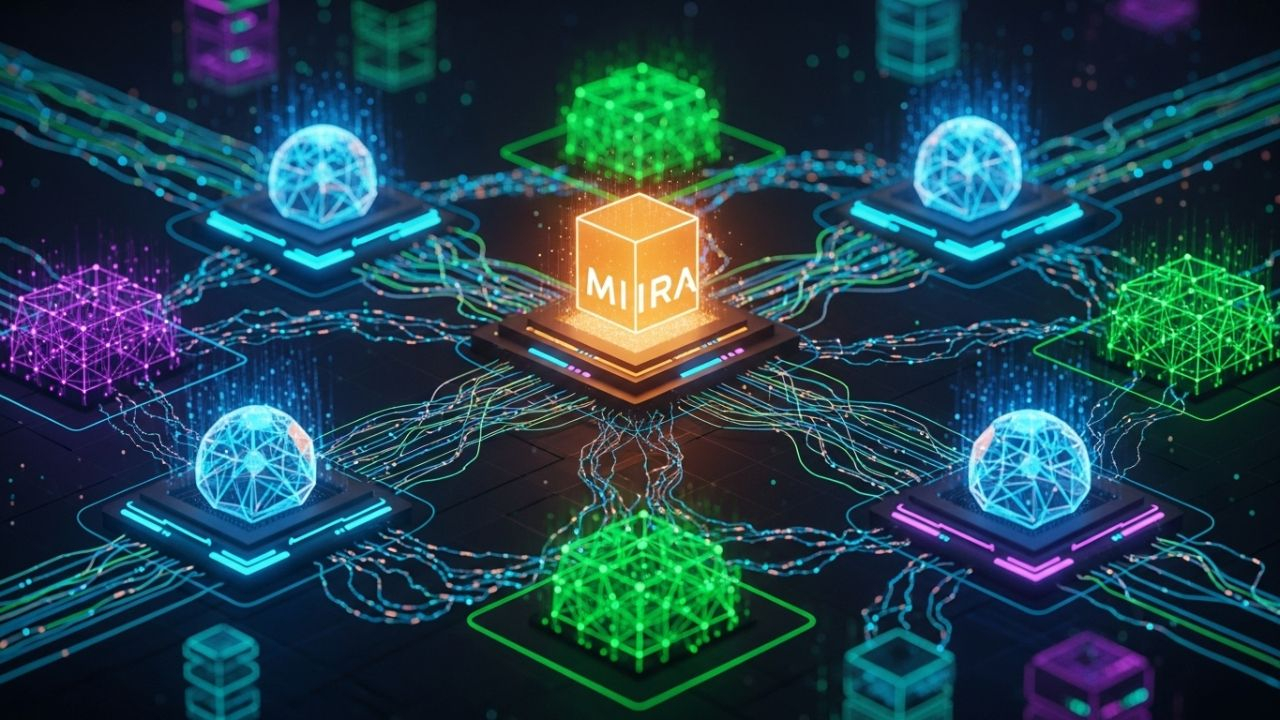
AI could operate with far greater autonomy because verification would happen automatically. Applications could rely on machine generated insights without constant human supervision. And users could see not just the answer, but the evidence behind it.Information would become more transparent.Mistakes would still happen. But they would be caught earlier, before they spread too far.
In that future, trust would not depend on believing machines blindly.Trust would come from systems designed to question them.And that might be the most important lesson of all.The next stage of artificial intelligence will not belong to the fastest machines.It will belong to the systems that know how to check themselves.
#Mira @Mira - Trust Layer of AI $MIRA
