
When I started studying the Fabric Protocol, one question kept coming to my mind: how do you build trust between machines that don’t know each other? In traditional robotics systems, trust is simple. One company owns the robots, controls the software, and verifies the work internally. But the moment robotics becomes decentralized, that model stops working.
This is where ROBO and the Fabric Foundation start to make sense. The entire concept behind the Fabric Protocol is not just about connecting robots — it is about creating a trust layer for distributed robotics.
And honestly, that might be the most important problem to solve if a real robot economy ever emerges.
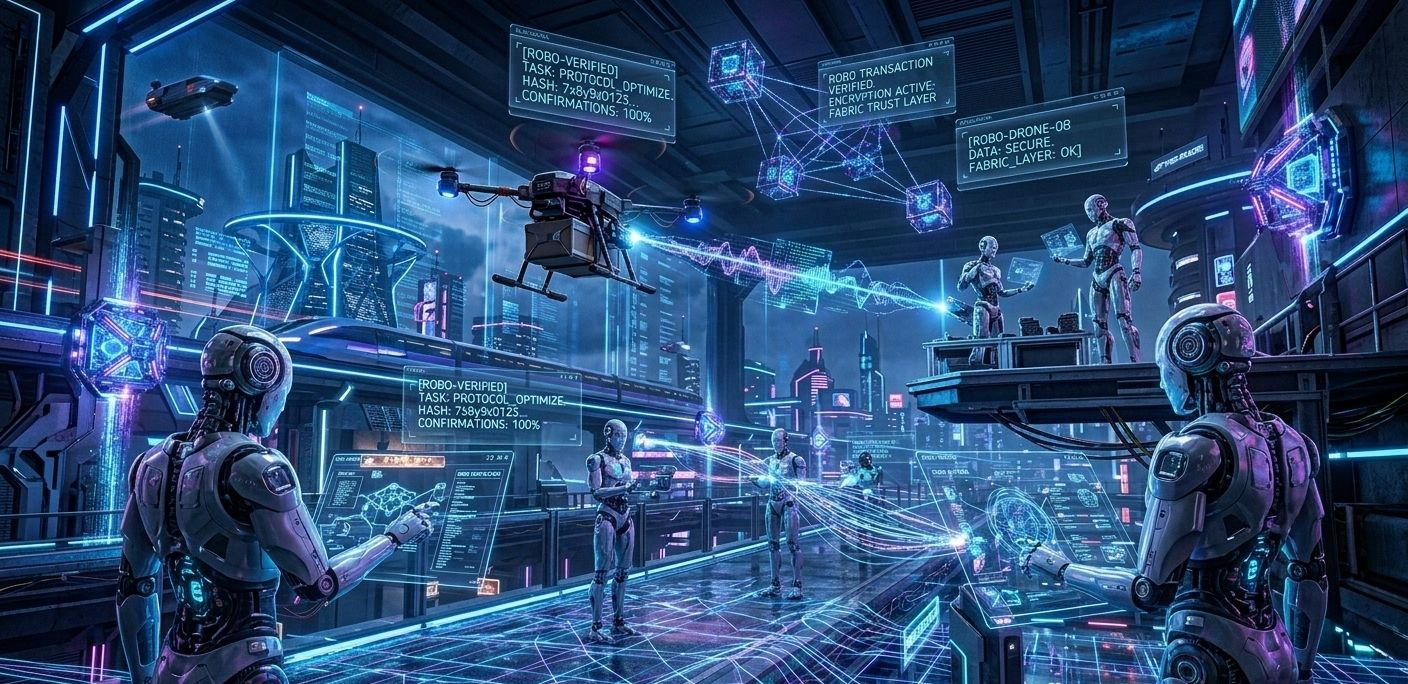
The Hidden Problem in Distributed Robotics
Let’s imagine a simple scenario.
A delivery robot completes a task. It moves from point A to point B and confirms the package was delivered. In a centralized company like a logistics firm, their internal system verifies everything. The robot belongs to them, the software belongs to them, and the payment system belongs to them.
But now imagine something different.
A robot from one manufacturer performs a task requested by a company using software developed by another team. The payment comes from a third participant in the network. Suddenly the question appears:
Who verifies that the task actually happened?
This is exactly the challenge that the Fabric Foundation is trying to address with its infrastructure. The network needs a system where robots can perform tasks, prove completion, and settle value in a way that everyone involved can trust.
That is where ROBO enters the picture.
ROBO as a Coordination and Trust Mechanism
Inside the Fabric ecosystem, ROBO is not positioned as a speculative asset. Instead, it functions as an economic coordination tool.
When a robot performs work, the network needs several things to happen:
• Identity verification
• Task confirmation
• Payment settlement
• Data validation
All of these actions require infrastructure. The Fabric Foundation designed ROBO to support these layers.
For example, robots operating within the Fabric network may have on-chain identities. That identity allows the system to track actions and maintain accountability. When tasks are executed, proof records can be stored and verified within the protocol.
This means the system does not rely on blind trust. It relies on verifiable activity.
And ROBO helps coordinate the incentives that make those verification processes possible.
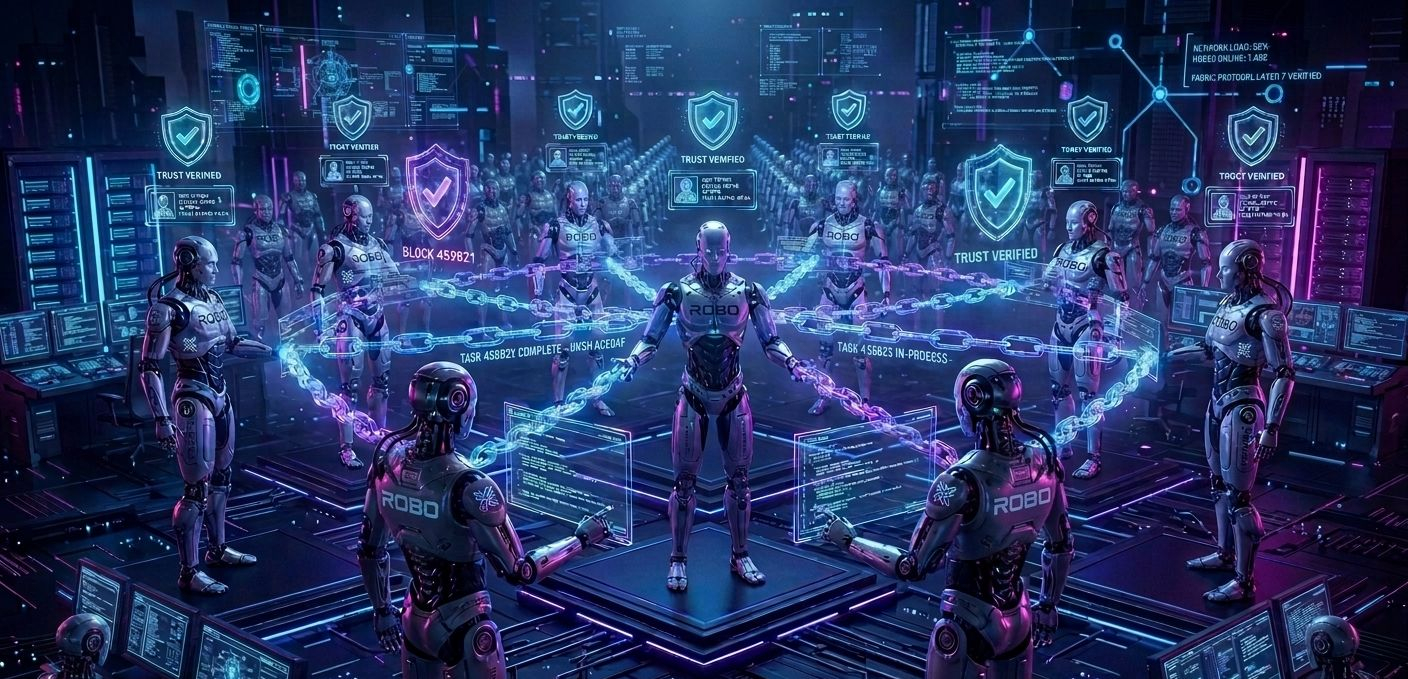
Why Trust Infrastructure Matters
The moment robotics becomes decentralized, trust becomes the bottleneck.
Without a trust layer, distributed robotics would face several problems:
Robots could claim work they never performed.
Developers could manipulate task records.
Payments could be disputed without evidence.
In other words, the network would collapse under uncertainty.
The Fabric Foundation appears to understand that robotics is not just a hardware challenge. It is also an economic and governance challenge.
The trust layer must ensure that:
Robots are identifiable.
Tasks are verifiable.
Participants are accountable.
And this is where ROBO becomes more than a token. It becomes part of the protocol incentive system that keeps the network functioning.
A Shared System for Robotic Activity
Another interesting aspect of the Fabric Protocol is how it encourages collaboration between participants.
Instead of isolated robotics systems, the Fabric Foundation is trying to build a shared infrastructure layer. Developers can contribute robotic skills, operators can deploy machines, and companies can request services.
All of these interactions happen inside a coordinated environment.
If a robot performs a task, the system records it. If verification is required, the network processes it. If value needs to move between participants, ROBO becomes the settlement layer.
Over time, this creates a transparent activity ledger for robotics operations.
From my perspective, that transparency is exactly what distributed robotics will need in the future.
The Long-Term Vision
When people hear about ROBO, many initially assume it is just another crypto token linked to artificial intelligence.
But after studying the Fabric Foundation, it becomes clear that the vision is much larger. The goal is to build a protocol where robots, developers, and operators interact within an open economic system.
In that system:
Robots can request or perform tasks.
Developers can deploy capabilities.
Participants can verify outcomes.
And ROBO acts as the coordination mechanism tying everything together.
If the robot economy really expands — warehouses, logistics, smart cities, autonomous services — then infrastructure like the Fabric Protocol could become extremely important.
Because machines operating across shared environments will need something fundamental:
A trust layer.
Final Thoughts
The more I explore the Fabric Foundation, the more I realize that the real innovation is not the robots themselves. Robotics hardware already exists and continues to improve every year.
The real challenge is coordination.
How do machines interact economically?
How do they prove work across decentralized networks?
How do participants trust results without relying on centralized authorities?
The Fabric Protocol attempts to answer those questions through infrastructure, incentives, and verification systems.
And at the center of that architecture sits ROBO.
If distributed robotics becomes a real industry in the coming decade, trust layers like this will not be optional. They will be essential.
@Fabric Foundation #ROBO $ROBO #robo
