Most people do not think about where a technology company is legally based. If you open an app, read a post, or check a trading dashboard, it all feels borderless. The internet rarely shows you the legal structures sitting behind it. Yet the moment a project begins to grow—especially in crypto or AI infrastructure—the question of location quietly becomes important. Not for marketing, but for stability. Rules, regulators, banking access, investor trust… all of that still depends on physical jurisdictions, even in a digital industry.
This is where the Swiss city of Zug often enters the conversation. At first glance the place does not look like a technology hub at all. It is small, quiet, built around a lake, closer to the image of a calm European town than a center of global infrastructure. But over the last decade something unusual happened there. Blockchain foundations, protocol teams, legal advisors, and token projects slowly started clustering in the same area. The nickname “Crypto Valley” appeared later, but the real story was more gradual. Switzerland simply provided something that most countries did not at the time: regulatory clarity without hostility.
Around 2018 the Swiss Financial Market Supervisory Authority began publishing guidelines explaining how different types of blockchain tokens might be classified. Payment tokens, utility tokens, asset tokens. The categories were not perfect, and debates still continue, but the important part was that companies could finally understand how regulators might interpret their structures. In an industry where many projects operated in legal grey zones, that kind of clarity mattered more than tax benefits or branding.
That environment is part of the background behind Mira Network AG choosing Switzerland as its legal base. The “AG” structure—short for Aktiengesellschaft—is similar to a public limited company. It requires formal governance, a board of directors, defined share capital, and clear reporting responsibilities. In the Web3 world, where some ventures operate through loose foundations or informal token structures, this kind of setup signals something slightly different. It suggests the founders expect scrutiny. Maybe even welcome it.
The interesting part is that Mira Network itself sits in a space that already raises questions about trust. The project focuses on AI verification infrastructure. In simple terms, the idea is that as artificial intelligence systems produce more claims, predictions, and generated information, other systems—or networks of participants—might be needed to verify those outputs. The internet is already full of machine-generated content. Some of it useful, some of it misleading, most of it impossible for individuals to check on their own.
I noticed something related to this while browsing discussion feeds recently. On platforms like Binance Square, credibility often emerges through small signals rather than formal authority. A writer with consistent analysis, reasonable data references, and steady engagement slowly builds trust with readers. Meanwhile another account might post dramatic predictions every day and still struggle to gain serious attention. Visibility metrics, ranking systems, follower counts—they quietly shape how information spreads. You do not always notice it happening, but the system nudges behavior.
Verification networks are trying to formalize something similar. Instead of relying on a single organization to judge whether information is accurate, a distributed set of participants evaluates claims. Their credibility grows or shrinks depending on how reliable their evaluations are over time. It starts to resemble a reputation economy for truth checking. Not perfect, of course. But interesting.
Placing a project that like this in Zug actually makes it more sense than it might be appear at first. The region has spent years discussing decentralized governance and token-based incentives. Lawyers there understand staking models. Economists debate game theory around participation rewards. Engineers think about distributed consensus. When those disciplines overlap, conversations tend to move quickly because people already share the same vocabulary.
Still, location alone solves very little. Switzerland provides structure, but it does not magically eliminate complexity. Verification networks raise difficult questions. If people are rewarded for validating claims, what prevents coordinated manipulation? If a network decides a claim is “true,” who carries responsibility when the decision turns out wrong later? And perhaps more quietly: how does a system prevent reputation scores from becoming another popularity contest?
Those concerns do not disappear simply because a company sits in a well-known crypto jurisdiction.
There is also something else worth mentioning, and it rarely appears in official documents. Crypto hubs like Zug can become intellectual bubbles. When founders, investors, and developers all gather in the same region, ideas sometimes reinforce each other without enough outside criticism. What sounds logical inside a conference room filled with blockchain engineers may feel less convincing when explained to regulators in Asia or financial institutions in the United States.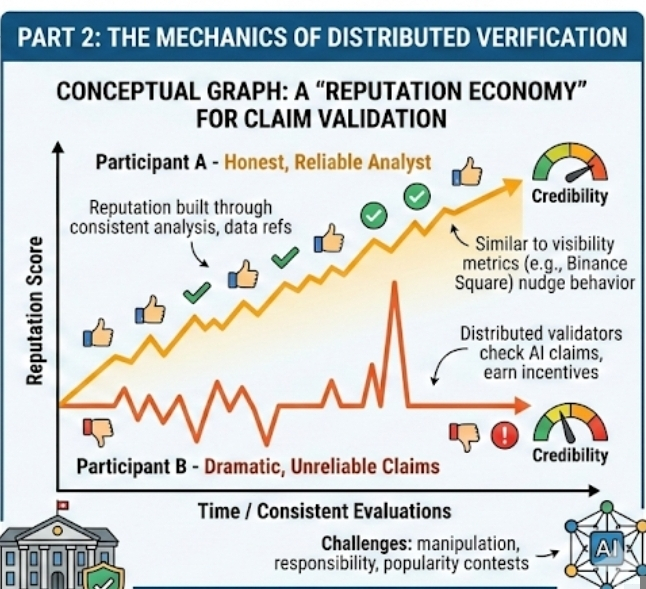
Verification infrastructure will eventually face that test. If AI continues producing massive volumes of information—research notes, financial predictions, automated reporting—then systems that evaluate credibility might become valuable. On the other hand, improvements in model training could reduce error rates enough that separate verification layers become less urgent than some people expect.
The truth is probably somewhere in the middle. Technology rarely replaces one system with another overnight. More often it adds layers.
For Mira Network AG, choosing Zug appears less like a publicity decision and more like a structural one. The city offers legal predictability, a deep pool of Web3 expertise, and a regulatory environment that understands token economics better than most jurisdictions. Those advantages matter when building infrastructure that depends on trust and incentives.
But in the end, geography can only provide the starting conditions. The real test will come from whether the network produces verification that people actually find useful. Because in a world increasingly filled with automated claims, credibility will not come from where a company is registered. It will come from whether its system helps people decide what to believe.

Articolo
Swiss Web3 Strategy: Why Zug Matters for Mira Network AG
Disclaimer: Include opinioni di terze parti. Non è una consulenza finanziaria. Può includere contenuti sponsorizzati. Consulta i T&C.
0
7
597
Esplora le ultime notizie sulle crypto
⚡️ Partecipa alle ultime discussioni sulle crypto
💬 Interagisci con i tuoi creator preferiti
👍 Goditi i contenuti che ti interessano
Email / numero di telefono