The Rise of the Robot Economy: Why @Fabric Foundation and $ROBO Matter in 2026
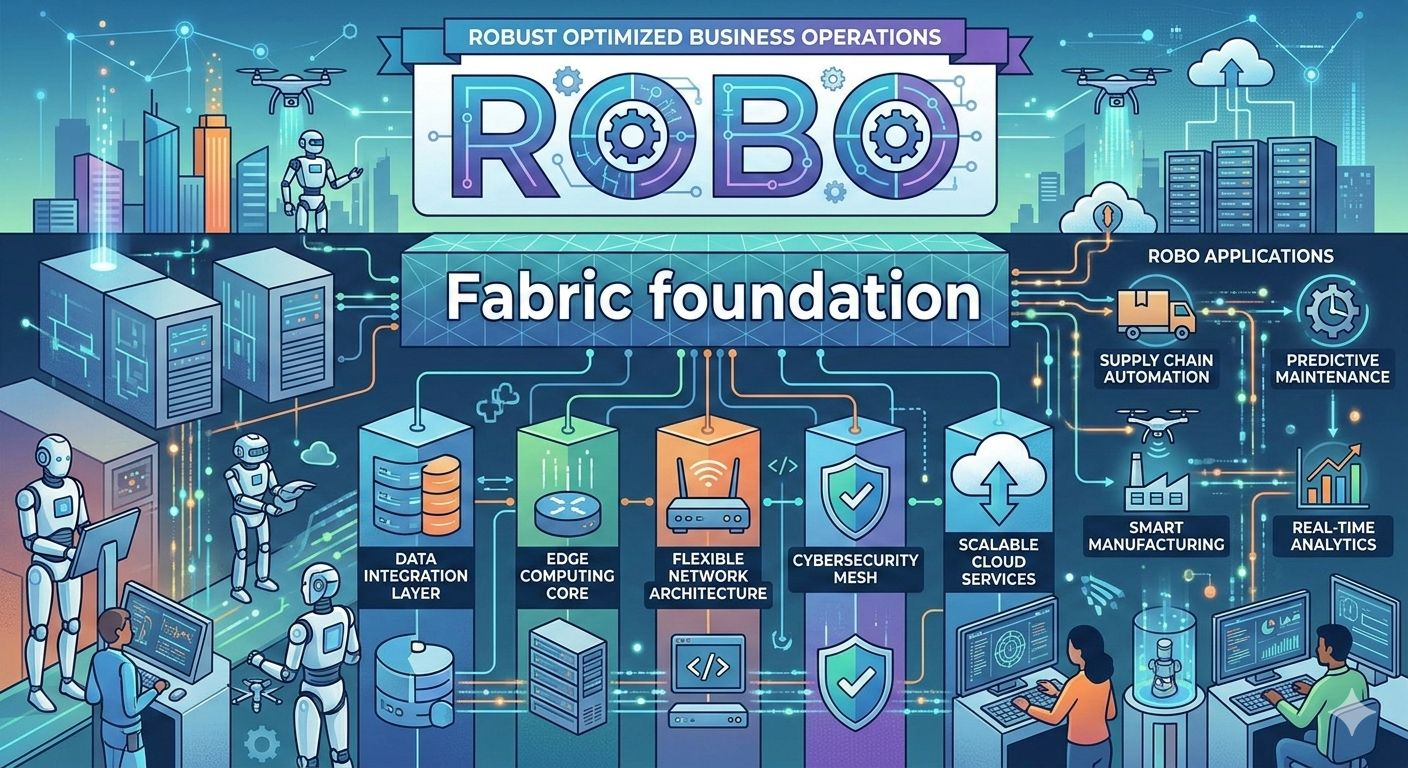
The intersection of AI and blockchain has long been a space of high "hype," but as we move through March 2026, the @Fabric Foundation is proving that utility can actually outpace speculation. While most projects focus on digital agents, the Fabric Protocol is building the essential economic rails for the physical world—enabling robots to act as independent economic actors.
Why Robots Need a Blockchain
Currently, most robotic fleets are siloed tools owned by single corporations. They lack a financial identity. They can’t own a bank account, sign a contract, or pay for their own maintenance.
@Fabric Foundation is changing this by providing:
On-Chain Identity: Every robot gets a unique, verifiable passport.
Autonomous Payments: Using $ROBO, machines can independently pay for charging, compute, or specialized "skill chips."
Proof of Robotic Work (PoRW): A consensus mechanism that rewards participants for verified machine labor and data contributions.
The Power of $ROBO
The $ROBO token is the heartbeat of this ecosystem. With a fixed supply of 10 billion tokens, it serves as more than just a medium of exchange; it is a governance and coordination tool.
Whether it's settling transaction fees, staking for priority task allocation, or participating in "Crowdsourced Robot Genesis" (where communities collectively fund robot fleets), $ROBO is the unit of account for the machine-to-machine (M2M) economy.
Looking Ahead
With the recent Binance Spot listing and the integration of the OM1 universal operating system, the barrier to entry for decentralized robotics has never been lower. As the network scales from its initial Base L2 deployment toward a dedicated Layer 1, the demand for $ROBO as a fee and staking asset is set to grow alongside real-world adoption.
The "Robot Economy" isn't a sci-fi concept anymore—it's booting up right now on the Fabric Protocol.