

I first started thinking about Fabric in the AI space, the first question that came to my mind was pretty simple: how does a project like this survive when the AI market is already so crowded?
Everywhere you look, there are new AI-related crypto projects appearing. Some are focused on building AI agents, others on decentralized compute, and some on data sharing for machine learning. From the outside, it sometimes feels like the space is already full.
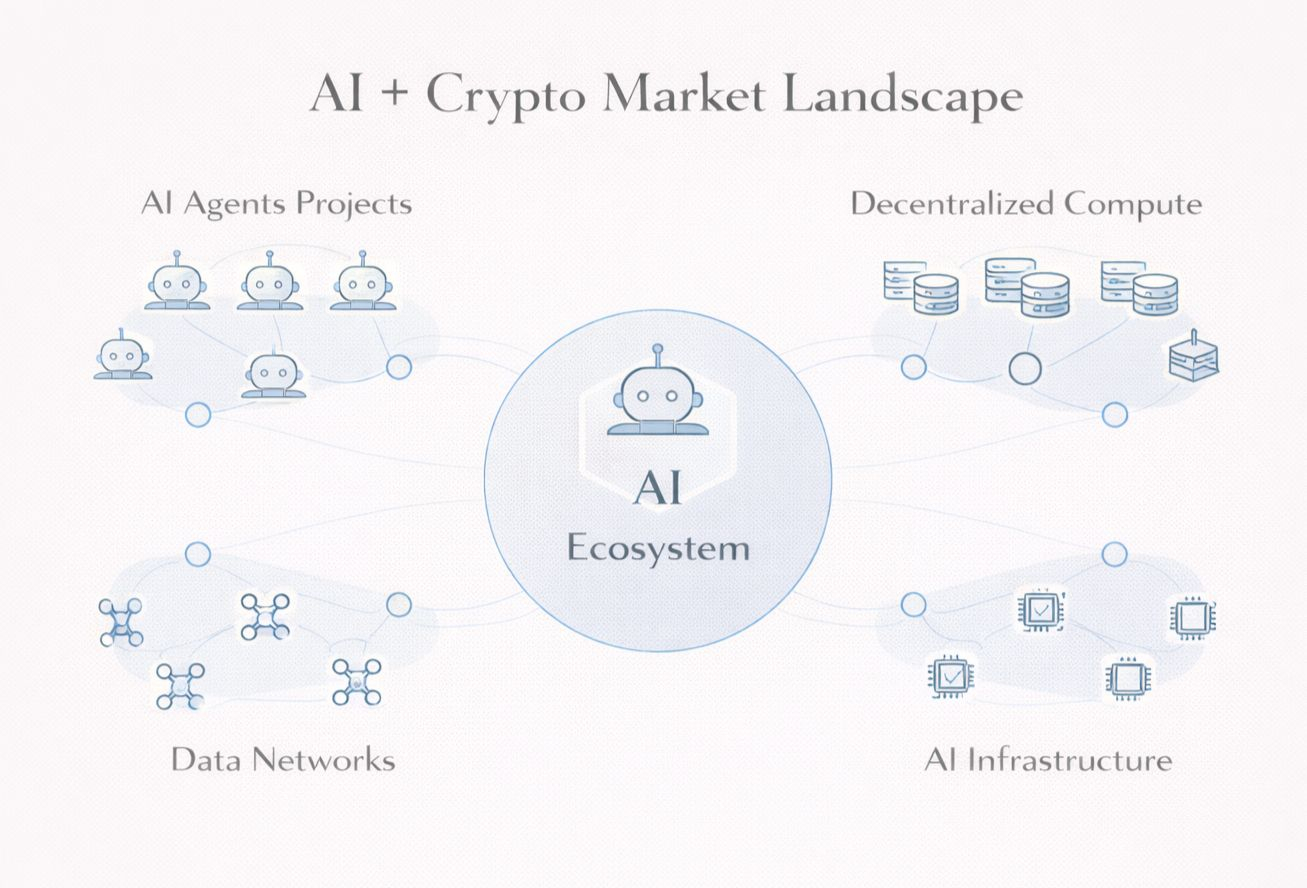
That’s why Fabric caught my attention for a slightly different reason.
Most AI crypto projects try to improve artificial intelligence itself. They want to make AI models run faster, cheaper, or in a more decentralized way. Their main focus is usually the technology behind AI.
Fabric seems to be thinking about a different layer.
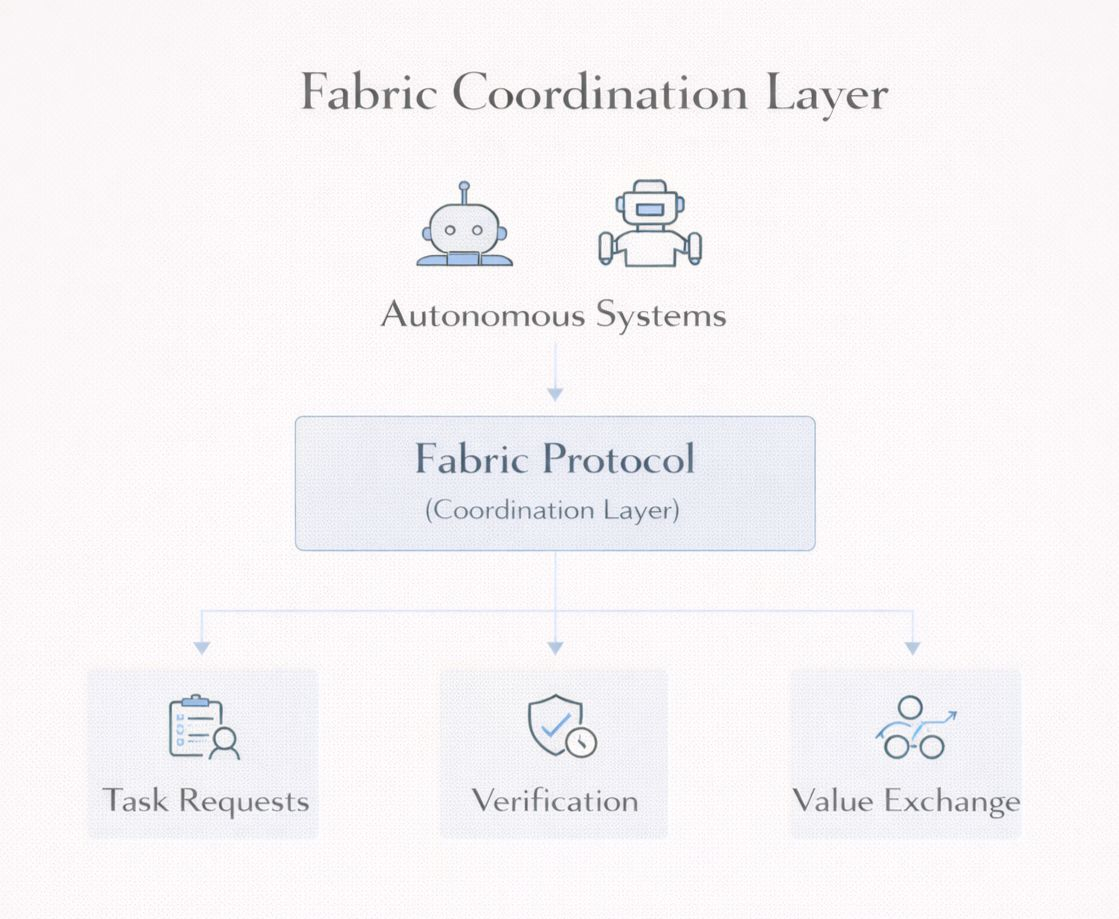
Instead of trying to make AI smarter, it appears to focus more on how intelligent systems interact with each other. If autonomous agents, machines, or automated systems start operating independently, they won’t exist in isolation. They will need to communicate, request services, verify tasks, and exchange value.
Those interactions require some kind of coordination system.
Fabric seems to be exploring that idea. It looks less like a tool for building AI and more like infrastructure that could organize how autonomous systems interact inside a network.
Of course, that doesn’t mean survival is guaranteed.
The AI market moves incredibly fast, and many large companies already dominate the space with powerful infrastructure and resources. Developers often choose tools that are simple, reliable, and widely supported. For a new protocol to compete, it needs a strong reason for people to use it.
That’s where adoption becomes the real challenge.

For Fabric to survive in a competitive AI market, the ecosystem around it would need to grow. Builders would need to find practical ways to use the coordination layer it’s trying to create. Without real activity, even interesting ideas can struggle to gain traction.
Timing is another factor.
Some infrastructure projects appear before the world is fully ready for them. If the environment evolves in the direction they expect, their technology suddenly becomes valuable. If not, they can remain underused for a long time.
Fabric’s vision seems to depend on a future where machine-to-machine interactions become more common.
Right now, that future is still developing.
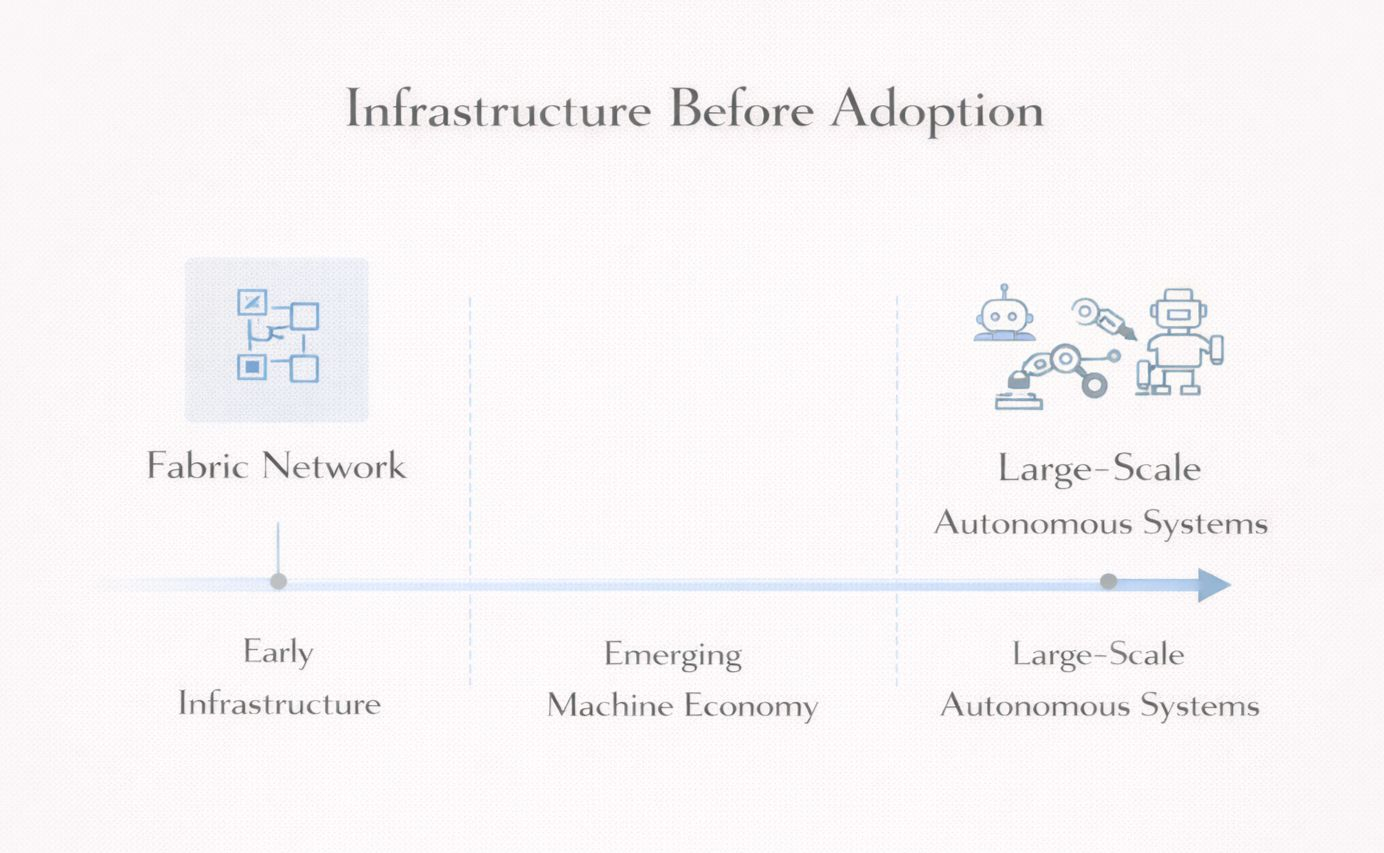
But sometimes the projects that survive the longest are the ones that quietly build infrastructure for problems that haven’t fully appeared yet.
Whether Fabric becomes one of those projects will depend less on the idea itself and more on whether developers and systems eventually need the kind of coordination layer it’s trying to create.